Join us on a literary world trip!
Add this book to bookshelf
Grey
Write a new comment Default profile 50px
Grey
Subscribe to read the full book or read the first pages for free!
All characters reduced
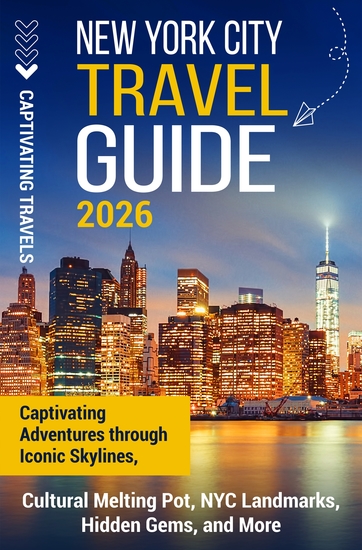
New York City Travel Guide - Captivating Adventures through Iconic Skylines Cultural Melting Pot NYC Landmarks Hidden Gems and More - cover

New York City Travel Guide - Captivating Adventures through Iconic Skylines Cultural Melting Pot NYC Landmarks Hidden Gems and More

Captivating Travels

Publisher: Captivating Travels

  • 0
  • 0
  • 0

Summary

Discover New York City – With Maps, Amazing Pictures, and Easy QR Codes

Whether it's your first trip or you're back for more, this guide makes exploring New York City fun and simple. With over 80 colorful pictures and maps and  40+ QR codes, you'll find your way to famous landmarks, hidden treasures, and the best spots all around the city.

Why You'll Love This Guide: 

- Explore Famous and Hidden Places:  Perfect for first-timers and visitors looking to uncover new favorites. 
- Easy to Use: maps and pictures make navigating the city a breeze. 
- Quick Help with QR Codes:  Scan 40+ QR codes to get directions to must-see places and attractions. 
 
 What's Inside the Book: 

- Fun facts about New Yorkers and what makes them special. 
- Stories about the city's history and why it's so important. 
- Tips for visiting famous attractions, with hours and ticket prices. 
- Family-friendly ideas for activities everyone will love. 
- Shopping and food guides, from big stores to local spots. 
- Day trips to explore outside the city. 
- Easy tips to get around on buses, subways, and taxis. 

 Made for Everyone: 

- Fun plans for short trips or week-long stays. 
- Great advice for first-time visitors and exciting tips for those returning to see more. 
- Hotel and neighborhood guides to find the perfect place to stay. 
 
 More Than a Guidebook: 

- 80+ pictures and maps to inspire and guide you. 
- 40+ QR codes to quickly find must-see places and attractions. 
- Appendix and tips to make your trip smooth and fun. 

Don't miss out on all the fun NYC has to offer. This book will help you see it all!

Click "Buy Now" and start your New York City adventure today! 
 
Available since: 12/19/2024.
Print length: 185 pages.

Other books that might interest you

  • The Role of the Nile River in Ancient Egyptian Civilization - cover

    The Role of the Nile River in...

    Omar Khalil

    • 0
    • 0
    • 0
    The Nile River was more than just a water source for the ancient Egyptians; it was the very foundation upon which their civilization thrived. Stretching over 4,000 miles, the river provided sustenance, enabled agriculture, and shaped daily life in profound ways. Without the Nile, the flourishing civilization that we now associate with ancient Egypt would have been impossible. 
    The river’s importance was most evident in its role as a source of life. Flowing from the heart of Africa to the Mediterranean Sea, the Nile brought fertile silt during its annual inundation. This natural event transformed the arid desert landscape into a lush and arable strip of land, ideal for farming. The nutrient-rich soil deposited by the flooding allowed ancient Egyptians to grow crops like wheat, barley, and flax, which were essential for food, trade, and textile production. This dependable agricultural cycle fostered stability, reducing the risks of famine and ensuring food security for the population. 
    The river also played a crucial role in sustaining both humans and animals. Its waters provided drinking sources not only for the people but also for livestock, which were integral to agricultural practices. Additionally, the Nile supported a wide variety of fish and attracted wildlife to its banks, allowing ancient Egyptians to develop fishing and hunting practices that supplemented their diet. Daily life revolved around the river, as it supplied the necessary resources for cooking, cleaning, and irrigation.
    Show book
  • The Three Wives of Charlie Mellon - In search of lost souls - cover

    The Three Wives of Charlie...

    Ian Siragher

    • 0
    • 0
    • 0
    Meet Charlie Mellon, a man juggling more than just his love life—he’s navigating three very different wives, a mounting pile of debts, and a kitchen renovation that’s going nowhere fast. Between his ex-wife’s demands, a present wife with expectations, and someone's wife who entangles  Charlie’s life is a comic rollercoaster of misunderstandings, mishaps, and schemes that spiral hilariously out of control. 
    Packed with wit, outrageous situations, and a cast of unforgettable characters, The Three Wives of Charlie Mellon is a lighthearted, fast-paced ride through love, loyalty, and the chaos of trying to keep everyone happy—sometimes at your own expense. Perfect for fans of clever, contemporary humor with a touch of heartfelt chaos.
    Show book
  • Travels with a donkey in the cevennes - cover

    Travels with a donkey in the...

    Robert Louis Stevenson

    • 0
    • 0
    • 0
    "Travels with a Donkey in the Cévennes" is a classic travel memoir written by Robert Louis Stevenson. The book recounts Stevenson's journey through the Cévennes region of France in 1878. The author embarked on this trek with a donkey named Modestine, and the narrative captures the landscapes, people, and challenges encountered during the journey.
    Show book
  • Your Magical Garden - cover

    Your Magical Garden

    Clare Gogerty

    • 0
    • 0
    • 0
    Discover how to awaken the magic of the elements in your outdoor space through thoughtful planting, careful planning of features and simple spells and rituals.
    
    Modern witchcraft is a nature-based discipline, harnessing the power of plants, the spirit of the land, the benefits of each season and the cycle of nature. Inspired by the Five Elements – Spirit, Air, Fire, Water and Earth – and based on author Clare Gogerty's own experience, Your Magical Garden will encourage you to look at your outdoor space with a witch's eye. Each chapter is based on one of the Five Elements and offers details about the element and its potency, how to work with it in your garden, what plants are associated with it, and corresponding remedies, rituals and spells. You will learn how to create spiritual features, such as a moon gate, leaf mandala, scrying pool and fire pit, as well as ways to care for nature, such as rewilding to create a haven for plants and wildlife. Discover the wonder of re-enchanting your garden, however small, and creating a place of contemplation, meditation and connection with the earth.
    Show book
  • GLOBO ARTE NOVEMBER 2022 ISSUE - AN art magazine for helping artist in their art career - cover

    GLOBO ARTE NOVEMBER 2022 ISSUE -...

    Globo Arte team

    • 0
    • 0
    • 0
    Hi guys this is the November 2022 Magazine issue, s contains artists interviews to inspire artists, and so much more to help the artist in their art career,it contains artist interviews, art-related topics articles and question of the month, step of the month and social media updates
    Show book
  • Following Caesar - From Rome to Constantinople the Pathways That Planted the Seeds of Empire - cover

    Following Caesar - From Rome to...

    John Keahey

    • 0
    • 0
    • 0
    In 66 BC, young, ambitious Julius Caesar, seeking recognition and authority, became the curator of the Via Appia. He borrowed significant sums to restore the ancient highway. It was a way to curry favor from Roman citizens in villages along the route, built from Rome to Brindisi between 312-191 BC. After achieving greatness in Rome and the far reaches of Gaul, he led armies along this road to battle enemies in Roman civil wars. And then, across the Adriatic Sea, he joined Via Appia's sister road, the Via Egnatia that began in today's Albania. Other armies followed these two roads that eventually connected Rome to Byzantium, today's Istanbul. In the early second century AD, the emperor Trajan charted a new coastal route between Benevento and Brindisi, later called the Via Traiana. 


    Today, short stretches of the original three roads can be seen in the ruins of ancient Roman cities, now preserved as archaeological wonders, and through the countryside near, and sometimes under, modern highways. Following those routes is the purpose of treading along the path that Caesar and so many others took over the early centuries. Modern eyes, seeing through the mists of more than two thousand years of history, lead the traveler along these three roads coursing through six countries between Rome and Istanbul.
    Show book