Join us on a literary world trip!
Add this book to bookshelf
Grey
Write a new comment Default profile 50px
Grey
Subscribe to read the full book or read the first pages for free!
All characters reduced
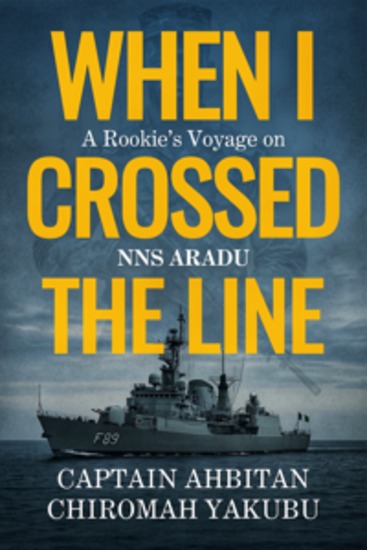
When I Crossed the Line - A Rookie’s Voyage on NNS ARADU - cover

When I Crossed the Line - A Rookie’s Voyage on NNS ARADU

Captain Ahbitan Chiromah Yakubu

Publisher: Commune Global Multi-Concept

  • 0
  • 0
  • 0

Summary

“When I Crossed the Line: A Rookie’s Voyage on NNS ARADU” is an engaging autobiographical account narrating the author’s formative experiences onboard Nigerian Navy Ship ARADU during a significant maritime voyage to Brazil. Set against the backdrop of August 2007, this narrative transforms a rookie sailor’s experiences into a tale of growth, camaraderie, and adventure.This book stands as not only a tribute to the Nigerian Navy but a powerful testament to the spirit of exploration and the bonds created through shared experiences at sea. Captain Yakubu’s storytelling brings to life a world that only a few could experience directly, inviting readers to navigate the waves
Available since: 07/08/2025.

Other books that might interest you

  • Clitophon - The Unfinished Conversation – Plato’s Mysterious and Brief Challenge to Socrates’ Teaching - cover

    Clitophon - The Unfinished...

    Plato, Tim Zengerink

    • 0
    • 0
    • 0
    What if the most admired teacher in philosophy couldn’t show you how to live well? 
    In Clitophon, Plato gives voice to a disillusioned disciple. Clitophon, once captivated by Socrates’ speeches, now questions their value—arguing that Socrates inspires but never instructs. In this brief yet bold exchange, the roles of teacher and student are reversed. 
    This modern translation captures the tension, ambiguity, and unresolved nature of Plato’s shortest dialogue—offering a powerful look at the limits of inspiration without action. 
    What you'll discover inside: 
    •	A Direct Challenge to Socratic Philosophy – Clitophon accuses Socrates of failing to guide others to virtue 
    •	A Dialogue Unlike Any Other – Brief, mysterious, and unresolved—leaving interpretation open 
    •	The Limits of Inspiration – Explore the gap between admiration and transformation 
    •	A Clear, Thoughtful Translation – Perfect for anyone studying the role of philosophy in real-life virtue 
    Experience Clitophon, Plato’s most cryptic confrontation, and decide for yourself—can words alone lead to wisdom?
    Show book
  • Baloney - cover

    Baloney

    Raymond Bock

    • 0
    • 0
    • 0
    A Tristram Shandy–esque novella about failing memory and failed writing, from one of French Canada’s most exciting new voices.
      
       
    A young, floundering author meets Robert ‘Baloney’ Lacerte, an older, marginal poet who seems to own nothing beyond his unwavering certainty. Over the course of several evenings, Lacerte recounts his unrelenting quest for poetry, which has taken him from Quebec’s Boreal forests to South America to East Montreal, where he seems poised to disappear without a trace. But as the blocked writer discovers, Lacerte might just be full of it.
      
       
    ‘[Bock’s] deeply original writing always seeks out the mot juste, then sculpts them into sentences that describe the slightest variations of human emotions in spectacular complexity, harnessing the power of form, rhythm, and sound.’
      
       
    —Mario Cloutier, La Presse (translated fromthe French)
      
       
    ‘Books are dangerous. They call into question the order of things, turn the world upside down to get a better sense of it and shake the dust off the lenses we look through. [...] No one can say where this book by Maxime Raymond Bock will take us. It’s an incandescent plea for the latent powers of literature, something like a necessity.’
      
       
    —Jérémy Laniel, Spirale (translated from the French)
      
       
    Praise for Atavisms:
      
       
    ‘Crackles with the energy of a Queébécois folk song, impassioned and celebratory but also melancholy and cheekily ironic ... As in Bolaño’s work, narrative itself is often the subject; stories are folded within other stories and narrators are constantly asserting their presence ... Like Bolaño, Bock alternates between rage, sorrow, protest, and dark comedy, and the two writers share a sense of urgency –of writing against time as much as about it.’
      
       
    —Pasha Malla, The New Yorker
    Show book
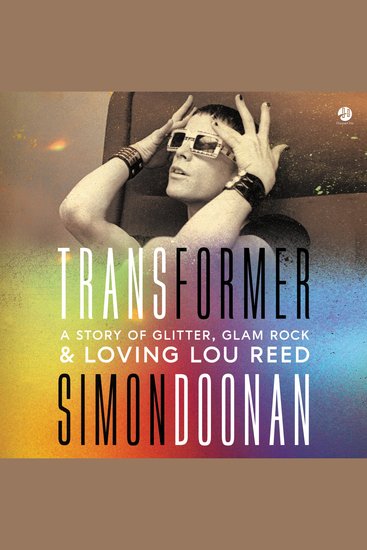
  • Transformer - A Story of Glitter Glam Rock and Loving Lou Reed - cover

    Transformer - A Story of Glitter...

    Simon Doonan

    • 0
    • 0
    • 0
    In this funny and poignant memoir and cultural history, the television personality, columnist, and author of Drag pays homage to Lou Reed’s groundbreaking album Transformer on its fiftieth anniversary and recalls its influence on his coming of age and coming out through glam rock. 
    In November 1972, Lou Reed released his album, Transformer because he thought it was “dreary for gay people to have to listen to straight people’s love songs.” That groundbreaking idea echoed with the times. That same year, Sweden was the first country to legalize gender-affirming surgery, and San Francisco struck down employment discrimination based on sexual orientation. 
    Sometimes an artistic creation perfectly aligns with a broader social and political history, and Transformer—with the songs “Walk on the Wild Side,” “Perfect Day,” and “Vicious”—perfectly captured its time. “Walk on the Wild Side” was banned on radio across the country but became a massive hit when young people threatened to boycott stations that would not play it. The album's cover featured a high-contrast image of Lou, flaunting a new mascara'd glamrock incarnation, shot by legend Mick Rock, thereby underscoring his intention to create ""a gay album."" 
    In Transformer, Doonan tells the story of how Lou Reed came to make the album with the help of David Bowie, and places its creation within the course of Reed’s life. Doonan offers first-hand testimony of the album’s impact on the LGBTQ+ community, recalling how it transformed his own life as a 20-year-old working class kid from Reading, England, who had just discovered the joys of London Glam Rock and was sparked by the artistic freedom of Warhol’s The Factory. Transformer was a revelation—hearing Reed’s songs, Doonan understood how the world was changing for him and his friends. 
    A poignant, personal addition to modern music and LGBTQ+ history, Transformer captures a pivotal moment when those long silenced were finally given a voice. As transgender icon Candy Darling, highlighted in his lyrics, told Reed, “It’s so nice to hear ourselves.” 
    Supplemental enhancement PDF accompanies the audiobook. 
    This book would make a great gift for any music lover, LGBTQ+ activist, or history buff looking to learn more about the cultural impact of Lou Reed's Transformer album on the world.
    Show book

  • The Life and Trials of Cliff Richard - The Biography - cover

    The Life and Trials of Cliff...

    Mark Langthorne, Matt Richards

    • 0
    • 0
    • 0
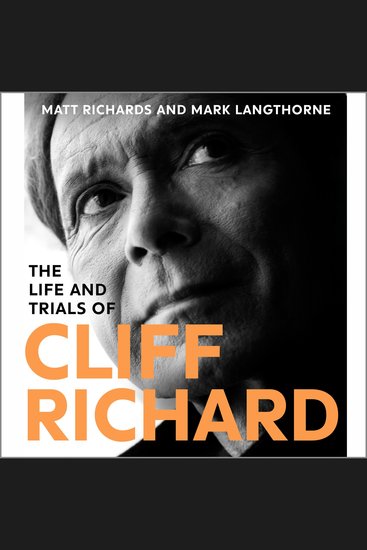
    'Cliff had exploded onto the scene, had become Britain's very own Elvis, and was about to embark on a career that, at the time of writing, has extended into its eighth decade. Nobody at that moment - least of all Cliff - could have foreseen the triumphs that lay ahead, and amongst them, the catalyst for the trial to which that stardom ultimately led.'Sir Cliff Richard is Britain's most successful home-grown pop star with a career that's unlikely ever to be surpassed. Since 1958 he's sold over 250,000,000 records, had fourteen Number 1 and sixty-seven Top 10 singles and, along with Elvis Presley, is the only act to make the UK Top 10 in six consecutive decades. Even now, in his ninth decade, he's still recording and touring to packed venues. With these sorts of figures, it's no wonder Sir Cliff Richard - the pop star - is an entertainment phenomenon. But Sir Cliff Richard - the person - is somewhat of an enigma. In this new book, authors Matt Richards & Mark Langthorne dig deep to find out who Sir Cliff Richard really is.In profiling his life and career, his success, his relationships and his beliefs, they uncover a man of contradictions; the rock & roller who rejected sex and drugs, the poster boy for Christianity, the very public performer who gives little away about his private life, the star who's a national treasure to many yet a figure of ridicule to others. From the stories behind the hit records to the battle to break America, from childhood memories in India to recent abuse allegations and career-threatening headlines, nothing is off-limits in this definitive portrayal, painting a picture of an artist and a man who has become increasingly misunderstood and maligned when he should simply be celebrated for the performer and the person he is.
    Show book
  • His Dead Wife’s Photograph - From their pens to your ears genius in every story - cover

    His Dead Wife’s Photograph -...

    S Mukerji

    • 0
    • 0
    • 0
    The bookshelves of World literature are incredible collections that have gathered together centuries of very talented authors.  From their countries and continents their fame spread and whilst among their number many are now forgotten or neglected their talents endure.  Among them is S Mukerji.
    Show book
  • Forgotten Authors The - Women - Volume 1 - Alice Askew to Ethel Dell - cover

    Forgotten Authors The - Women -...

    Louisa Baldwin, Aphra Behn,...

    • 0
    • 0
    • 0
    Throughout the long centuries of human history is the want, and the need, to share information, to exchange ideas and for that knowledge and experience, for curiosity and learning, to be the basis of a civil society. 
    In literature the ambition is much narrower.  In order to be known, to be popular, you had to be published.  And for that people had to know you existed and your ideas worth reading.  Obviously for most of humanity’s time people couldn’t read and texts couldn’t be published in any great number. 
    In the 15th Century Gutenberg’s printing press began the revolution to address the second and by the 19th century had gathered pace with startling speed and mass distribution.  Education for the many was brought in to help people understand more of their world and, with new skills, how to have a better place within it.  Now, if the powers that owned the presses and means of distribution agreed an audience would now be able to avail themselves of your ideas, your printed words.  
    All too often the talents of women have been scorned, mocked and laughed at.  In reality that was more usually by those who’s own talents were hardly fit to even grace their shadows.   
    But society in general still connived and set women to one side in almost everything that men considered their rightful territory.  And literature was one such territory.  Remarkably resilient as well as talented these women strove to be published, to show themselves as equals.  The results more often than not proved that they were.   
    Sadly, in the thirst for the new, the recent and the past fell from sight, relegated to dark corners and dusty shelves.    
    But the printed word is rarely without someone, somewhere busying themselves through piles of papers and books rediscovering what a good story is, whatever its age. 
    In this volume we offer up a small selection of talents whose time has now come again.
    Show book