¡Acompáñanos a viajar por el mundo de los libros!
Añadir este libro a la estantería
Grey
Escribe un nuevo comentario Default profile 50px
Grey
Suscríbete para leer el libro completo o lee las primeras páginas gratis.
All characters reduced
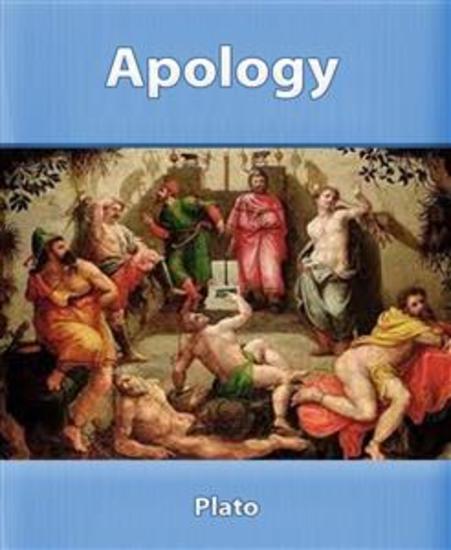
Apology - cover

Apology

By Plato

Editorial: BookRix

  • 0
  • 0
  • 0

Sinopsis

Apology is Plato's version of the speech given by Socrates as he defended himself in 399 BC against the charges of "corrupting the young, and by not believing in the gods in whom the city believes, but in other daimonia that are novel." 

Socrates begins by telling the jury that their minds were poisoned by his enemies when they were young and impressionable. He says his reputation for sophistry comes from his enemies, all of whom are envious of him, and malicious. He says they must remain nameless, except for Aristophanes, the comic poet. He later answers the charge that he has corrupted the young by arguing that deliberate corruption is an incoherent idea. Socrates says that all these false accusations began with his obedience to the oracle at Delphi. He tells how Chaerephon went to the Oracle at Delphi, to ask if anyone was wiser than Socrates. When Chaerephon reported to Socrates that the god told him there is none wiser, Socrates took this as a riddle. He himself knew that he had no wisdom "great or small" but that he also knew that it is against the nature of the gods to lie.

Socrates then went on a "divine mission" to solve the paradox (that an ignorant man could also be the wisest of all men) and to clarify the meaning of the Oracles' words. He systematically interrogated the politicians, poets and craftsmen. Socrates determined that the politicians were imposters, and the poets did not understand even their own poetry, like prophets and seers who do not understand what they say. Craftsmen proved to be pretentious too, and Socrates says that he saw himself as a spokesman for the oracle (23e). He asked himself whether he would rather be an impostor like the people he spoke to, or be himself. Socrates tells the jury that he would rather be himself than anyone else.
Disponible desde: 19/12/2023.
Longitud de impresión: 66 páginas.

Otros libros que te pueden interesar

  • The Burden Of Isis - cover

    The Burden Of Isis

    James Teakle Dennis

    • 0
    • 0
    • 0
    The Burden of Isis, being the laments of Isis and Nephthys, translated from the Egyptian by James Teackle Dennis, was first published in 1910. This edition is from a reprint in 1918. Includes "The Laments of Isis and Nephthys", "The Chants", and "Hymn to Osiris-Sokar".
    Ver libro
  • Border Bloodshed - Scotland and England at War 1369-1403 - cover

    Border Bloodshed - Scotland and...

    Alastair J. Macdonald

    • 0
    • 0
    • 0
    Scottish military offensives against England from 1369 were largely the product of government policy, were launched with careful timing and, in the reign of Robert II, involved close co-operation with France. They succeeded militarily, encouraging the Scots to the point where they were willing to engage in attacks on England beyond the ambition of their French allies. However, diplomatic gains fell well short of forcing English recognition of Scottish independence.
    Hopes of achieving this by military means were ended in the reign of Robert III when the Scots were heavily defeated in 1402. War was not solely fought with political objectives in mind or other 'rational' factors such as the quest for financial gain. The Scots went to war for emotive reasons too, such as hatred of the English, the search for renown and the sheer enjoyment of fighting. All these factors inspired the Scots to launch a series of bloody, brutal and ultimately futile offensives against England.
    Ver libro
  • Agreeing to Disagree - How the Establishment Clause Protects Religious Diversity and Freedom of Conscience - cover

    Agreeing to Disagree - How the...

    Nathan S. Chapman, Michael W....

    • 0
    • 0
    • 0
    The Establishment Clause of the First Amendment, "Congress shall make no law respecting an establishment of religion", may be the most contentious and misunderstood provision of the entire United States Constitution. What exactly is an "establishment of religion"? And what is a law "respecting" it? 


    Many commentators reduce the clause to "the separation of church and state." This implies that church and state are at odds, that the public sphere must be secular, and that the Establishment Clause is in tension with the Free Exercise of Religion Clause. All of these implications misconstrue the Establishment Clause's original purpose. The clause facilitates religious diversity and guarantees equality of religious freedom by prohibiting the government from coercing or inducing citizens to change their religious beliefs and practices. 


    In Agreeing to Disagree, Nathan S. Chapman and Michael W. McConnell detail the theological, political, and philosophical underpinnings of the Establishment Clause, state disestablishment, and the disestablishment norms applied to the states by the Fourteenth Amendment. In one of the most thorough accounts of the Establishment Clause, Chapman and McConnell argue that the clause is best understood as a constitutional commitment for Americans to agree to disagree about matters of faith.
    Ver libro
  • A Short History of Spaghetti with Tomato Sauce - cover

    A Short History of Spaghetti...

    Massimo Montanari

    • 0
    • 0
    • 0
    Intellectually engaging and deliciously readable, a stereotype-defying history of how one of the most recognisable symbols of Italian cuisine and national identity is the product of centuries of encounters, dialogue, and exchange.
     
    Is it possible to identify a starting point in history from which everything else unfolds—a single moment that can explain the present and reveal the essence of our identities? According to Massimo Montanari, this is just a myth: by themselves, origins explain very little and historical phenomena can only be understood dynamically—by looking at how events and identities develop and change as a result of encounters and combinations that are often unexpected.
     
    As Montanari shows in this lively, brilliant, and surprising essay, all you need to debunk the “origins myth” is a plate of spaghetti. By tracing the history of the one of Italy’s “national dishes”—from Asia to America, from Africa to Europe; from the beginning of agriculture to the Middle Ages and up to the 20th century—he shows that in order to understand who we are (our identity) we almost always need to look beyond ourselves to other cultures, peoples, and traditions.
    Ver libro
  • Epistemology - The Theory of Knowledge and Wisdom - cover

    Epistemology - The Theory of...

    Hector Davidson

    • 0
    • 0
    • 0
    Epistemology, the theory of knowledge, explores the nature, scope, and limits of human understanding. It is concerned with questions such as "What is knowledge?" "How do we acquire it?" and "What can we truly know?" While these questions may seem straightforward, they are deeply complex and have fascinated philosophers for centuries. The study of epistemology is central to philosophy because it examines the very foundation upon which all other knowledge rests. 
    At its core, epistemology is concerned with defining what it means to "know" something. Historically, philosophers have often defined knowledge as "justified true belief." This classic view holds that for someone to know a proposition, it must be true, they must believe it, and they must have sufficient justification for that belief. However, challenges to this definition have led to new theories about knowledge, suggesting that there may be more to understanding than simply having belief grounded in truth. 
    The importance of epistemology extends beyond abstract theory. In daily life, we rely on knowledge to make decisions, solve problems, and navigate our understanding of the world. Whether it is scientific research, moral reasoning, or even personal belief systems, the way we define and assess knowledge influences how we engage with reality. Epistemological questions therefore shape not only philosophical discussions but also practical outcomes in various fields such as education, science, and politics.
    Ver libro
  • Transform Your Sex Life: Uncover Shocking Secrets for Pleasure - cover

    Transform Your Sex Life: Uncover...

    Arden Rookwood

    • 0
    • 0
    • 0
    Transform Your Sex Life: Uncover Shocking Secrets for Pleasure 
    Are you ready to enhance your intimate experiences and unlock a world of pleasure? 
    Searching for an all-encompassing guide that reveals everything you need to know for a fulfilling sex life? 
    Your quest ends here! 
    This audiobook acts as your ultimate companion for deepening your understanding of intimacy, applying new skills, and engaging in transformative exercises designed for pleasure. 
    Updated for the latest insights into cultivating intimacy and enjoyment. 
    Key features of this enlightening guide include: 
    - Profound insights into embracing your uniqueness and discovering deeper intimacy 
    - Comprehensive explanations of intimate relationships and their nuances 
    - Effective strategies for enhancing pleasure and navigating personal connections 
    Our guide stands out with its thorough coverage, essential for achieving a rewarding sex life. Concepts are explored in-depth, leaving no stone unturned. 
    Please note that this guide is an independent resource, not affiliated with any official entities in the field. 
    Structured for clarity and presented in accessible language, our guide ensures seamless transitions between topics. Say goodbye to complicated jargon and welcome clear, precise, and relatable content. 
    So, why wait? Click the BUY NOW button, secure your audiobook, and embark on your journey to an enriched sex life now! 
    Transform your understanding of sex and discover the secrets waiting for you!
    Ver libro