
Join us on a literary world trip!
Add this book to bookshelf
Grey
Write a new comment Default profile 50px
Grey
Subscribe to read the full book or read the first pages for free!
All characters reduced
Apology - cover

Apology

By Plato

Publisher: BookRix

  • 0
  • 0
  • 0

Summary

Apology is Plato's version of the speech given by Socrates as he defended himself in 399 BC against the charges of "corrupting the young, and by not believing in the gods in whom the city believes, but in other daimonia that are novel." 

Socrates begins by telling the jury that their minds were poisoned by his enemies when they were young and impressionable. He says his reputation for sophistry comes from his enemies, all of whom are envious of him, and malicious. He says they must remain nameless, except for Aristophanes, the comic poet. He later answers the charge that he has corrupted the young by arguing that deliberate corruption is an incoherent idea. Socrates says that all these false accusations began with his obedience to the oracle at Delphi. He tells how Chaerephon went to the Oracle at Delphi, to ask if anyone was wiser than Socrates. When Chaerephon reported to Socrates that the god told him there is none wiser, Socrates took this as a riddle. He himself knew that he had no wisdom "great or small" but that he also knew that it is against the nature of the gods to lie.

Socrates then went on a "divine mission" to solve the paradox (that an ignorant man could also be the wisest of all men) and to clarify the meaning of the Oracles' words. He systematically interrogated the politicians, poets and craftsmen. Socrates determined that the politicians were imposters, and the poets did not understand even their own poetry, like prophets and seers who do not understand what they say. Craftsmen proved to be pretentious too, and Socrates says that he saw himself as a spokesman for the oracle (23e). He asked himself whether he would rather be an impostor like the people he spoke to, or be himself. Socrates tells the jury that he would rather be himself than anyone else.
Available since: 12/19/2023.
Print length: 66 pages.

Other books that might interest you

  • Ghost of kargil the - tgok season 1 - cover

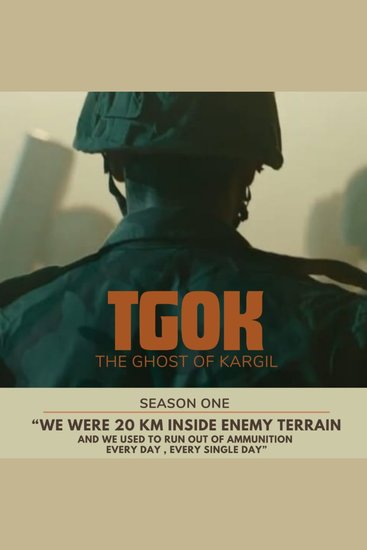
    Ghost of kargil the - tgok season 1

    NAVEED ALI SHEIKH

    • 0
    • 0
    • 0
     The Ghost of Kargil TGOK Season 1 - Audio book by Naveed Ali Sheikh 
    The Season 1 of TGOK Starts with The Ghost meeting Lalakjan on the Ammo Depo • The Ghost of Kargil was part of Special Unit whose task was to coordinate between Posts on when and where Required and Provide stationary posts , Ammo and Food Reserves. Season 1 Tells us more about How Pakistani Forces went into Dras , Kargil and Batalik Sector and Capture 100+ Posts from the Indians. 
    Run time : 2 Hours Approx 
    WHO IS THE GHOST OF KARGIL ?  
    Maximum known about the Ghost of Kargil is that , he got this name from the Indian Army Fighting the Kargil War , The Ghost was the Untouchable , The Cold blooded Assassin behind enemy lines Killing Hundred of Indians in Kargil War. It is said that The Ghost of Kargil is from Special Services Group , Special Operations .In Kargil War The Ghost was Junior Officer reporting to Capt. Sher Khan on Tiger Hill , His unit was handled by Capt. Ammar Hussain and the task of their unit was to Provide cover and help on when and where required basis. The Ghost Unit was also tasked to bring Ammunition and Food Stocks for all Captured Posts by Pakistan Army.  
     IMPORTANT NOTE BEFORE YOU START  
    The Ghost of Kargil Series is inspired from Real true events . The Writer plays the character of the Ghost of the Kargil and Narrates the Story from the Ghost's Eyes. 
    WHO IS NAVEED ALI SHEIKH THE WRITER ? 
    Naveed Ali Sheikh is a Pakistani historian, author, and social media influencer who has gained a significant following online for his insightful and thought-provoking content. He is known for his in-depth knowledge of history, particularly the history of Pakistan and the Indian subcontinent.
    Show book
  • Start of World War I The: The History of the Events at the Beginning of the Great War - cover

    Start of World War I The: The...

    Editors Charles River

    • 0
    • 0
    • 0
    By the 20th century, warfare was nothing new to the European powers, especially when it came to fighting each other. Conflicts had been a mainstay on the European continent for over two millennia. Even after the Napoleonic wars had enveloped Europe in large scale war for nearly 20 years in the 19th century, the Europeans’ imperialism continued unabated. It would take the devastation of World War I to shock Europe and jolt the world’s superpowers out of their imperialistic tendencies.  
    	 The final straw came June 28, 1914, when a Serbian assassinated Archduke Franz Ferdinand, the heir to the throne of Austria-Hungary, in Sarajevo, Bosnia. Austria-Hungary immediately issued ultimatums to Serbia. When they declared war on Serbia July 28, 1914, Russia mobilized for war as well. The Germans mobilized in response to Russia on July 30, and the French, still smarting from the Franco-Prussian War, mobilized for war against Germany. The British also declared war on Germany on August 4. Thus, in the span of one week, six nations had declared war, half of which had no interest in the Balkans.  
    	Needless to say, the First World War came at an unfortunate time for those who would fight in it. After an initial period of relatively rapid maneuver during which the German forces pushing through Belgium and the French and British forces attempting to stymie them made an endless series of abortive flanking movements that extended the lines to the sea, a stalemate naturally tended to develop. The infamous trench lines soon snaked across the French and Belgian countryside, creating an essentially futile static slaughterhouse whose sinister memory remains to this day, but if trench warfare was an inevitability during the war, it is only because the events leading up to the initial battles were quite different.
    Show book
  • Institutio Oratoria (On the Education of an Orator) volume 1 - cover

    Institutio Oratoria (On the...

    Marcus Fabius Quintilianus

    • 0
    • 0
    • 0
    Marcus Fabius Quintilianus was of Spanish origin, being born about 35 A.D. at Calagurris. At Rome he met with great success as a teacher and was the first rhetorician to set up a genuine public school and to receive a salary from the State. He left behind him a treatise "On the causes of the decadence of Roman oratory" (De causis corruptae eloquentiae), some speeches and his magnum opus, the only one to survive to our days. His Institutio Oratoria, despite the fact that much of it is highly technical, has still much that is of interest to-day, even for those who care little for the history of rhetoric. (Summary adapted from the translator's preface) This first volume covers books 1 to 3.
    Show book
  • They'll Never Hold Me - cover

    They'll Never Hold Me

    Michael Adams

    • 0
    • 0
    • 0
    The life and crimes of Kevin John Simmonds, Australia's most daring fugitive. 
     
    In 1959, Australians thrilled to every move made by a new criminal underdog, a Ned Kelly for the rock 'n' roll era. 
    Kevin John Simmonds was a charismatic crook whose brazen crime spree had scored him a lengthy prison sentence. But as he was led from court, he boasted, 'They'll never hold me.' 
    Two months later, Simmo made good on his promise, staging a daring escape from Long Bay Gaol. When his bid for freedom took a deadly turn, legendary Detective Ray 'the Gunner' Kelly took charge of the search, putting the fugitive in the crosshairs of the biggest armed manhunt in Australian history. 
    They'll Never Hold Me is the true story of an antihero with a code of honour who captured the public's hearts and minds even as he enraged the cops and the establishment. Brilliantly researched and written by Michael Adams, of the Forgotten Australia podcast, this never-before-told tale takes us beyond the public adventures that made Simmo into Public Enemy No. 1 to reveal the haunting tragedies he was trying to outrun – and the terrible fate that even he might not escape.
    Show book
  • The Sangamon Story - Selected Readings from Francis Grierson's The Valley of Shadows - cover

    The Sangamon Story - Selected...

    Francis Grierson

    • 0
    • 0
    • 0
    Francis Grierson's, The Valley of Shadows, is truly a lost American classic. Written at the dawn of the twentieth century, the author has remarkably captured his adventures and observations as a child growing up on the prairies of Illinois in the years leading up the Civil War, in a region that was neither North nor South; neither for slavery nor against it; and how their small family farm became an unscheduled stop on the Underground Railroad.Written in an authentic vernacular of the time, and populated by larger than life characters, Grierson has woven a tale of excitement and mystery, set in a second Garden of Eden of wildlife and nature. The prose and dialogue is like Shakespeare of the prairie. It reads like a cross between Tom Sawyer and Uncle Tom's Cabin, and stands out among all of the other books written about that era.What people are saying:“It has a quality not to be found in any other writing about the Civil War;""Its prose is alive, strong, subtle, of warm color, almost overpowering;""No one can read it, without finding new enlightenment about our past.”
    Show book
  • A Hundred Reasons Why - You Should NOT Vote for Donald Trump in 2024 - cover

    A Hundred Reasons Why - You...

    Science-Based Language Learning Lab

    • 0
    • 0
    • 0
    Reasons You Can't Ignore: The Urgent Case Against Donald Trump 
     
    A Hundred Reasons Why... You Should NOT Vote for Donald Trump in 2024 takes you on an essential journey to understand why another Trump term could be detrimental to America. This book provides an unfiltered examination of the controversies, failures, and polarizing decisions that marked his presidency. It's more than a critique; it's a roadmap to inform and protect our nation's future. 
     
    Are you worried about democratic institutions, economic policies, or the global standing of the United States? This book addresses these concerns with 100 detailed reasons, each concise enough for a quick read but impactful enough to inspire critical thought. 
     
    Every chapter, from Trump's controversial leadership style to his handling of the COVID-19 pandemic, dissects an aspect of his presidency, providing context and insights you won't find in mainstream media. Topics include his failure to condemn white supremacy and promotion of division and hate, painting a thorough picture of his time in office. 
     
    Imagine being able to hold crucial conversations about America's future with confidence. This book empowers you to become a well-informed citizen, ready to advocate for change. 
     
    Don't wait until it's too late. Every vote counts, and every informed citizen can make a difference. Dive into A Hundred Reasons Why... You Should NOT Vote for Donald Trump in 2024 and arm yourself with the facts. It's more than a book; it's your guide to safeguarding the future of American democracy.
    Show book