¡Acompáñanos a viajar por el mundo de los libros!
Añadir este libro a la estantería
Grey
Escribe un nuevo comentario Default profile 50px
Grey
Suscríbete para leer el libro completo o lee las primeras páginas gratis.
All characters reduced
The Yoga Sutras of Patanjali - cover

The Yoga Sutras of Patanjali

By Patanjali

Editorial: BookRix

  • 0
  • 0
  • 0

Sinopsis

The Yoga Sūtras of Patañjali are Indian sūtras (aphorisms) that constitute the foundational text of yoga. In medieval times, yoga was cast as one of the six orthodox āstika schools of Hindu philosophy.

The Yoga Sutras form the theoretical and philosophical basis of Rāja Yoga, and are considered to be the most organized and complete definition of that discipline. The Sutras not only provide yoga with a thorough and consistent philosophical basis, they also clarify many important esoteric concepts which are common to all traditions of Indian thought, such as karma.
Disponible desde: 19/12/2023.
Longitud de impresión: 14 páginas.

Otros libros que te pueden interesar

  • The Dangerous Life and Ideas of Diogenes The Cynic - cover

    The Dangerous Life and Ideas of...

    Jean-Manuel Roubineau

    • 0
    • 0
    • 0
    The ancient philosopher Diogenes—nicknamed "The Dog" and decried by Plato as a "Socrates gone mad"—was widely praised and idealized as much as he was mocked and vilified. A favorite subject of sculptors and painters since the Renaissance, his notoriety is equally due to his eccentric behavior, scorn of conventions, and biting aphorisms, and to the role he played in the creation of the Cynic school, which flourished from the 4th century B.C. to the Christian era. Jean-Manuel Roubineau paints a new portrait of an atypical philosopher whose life left an indelible mark on the Western collective imagination and whose philosophy courses through various schools of thought well beyond antiquity. 


    Roubineau sifts through the many legends and apocryphal stories that surround the life of Diogenes. Was he a counterfeiter? Did he meet Alexander the Great? Was he an apologist for incest, patricide, and anthropophagy? How did he actually die? Roubineau retraces the known facts of Diogenes' existence. 


    Beyond the rehashed clichés, this book inspires us to rediscover Diogenes' philosophical legacy—whether it be the challenge to the established order, the detachment from materialism, the choice of a return to nature, or the formulation of a cosmopolitan ideal strongly rooted in the belief that virtue is better revealed in action than in theory.
    Ver libro
  • Gentlemen of the Shade: My Own Private Idaho - cover

    Gentlemen of the Shade: My Own...

    Jen Sookfong Lee

    • 0
    • 0
    • 0
    Gus Van Sant’s film and the ’90s cult of the alternative Gus Van Sant’s 1991 indie darling My Own Private Idaho perplexed and provoked, inspiring a new ethos for a new decade: being different was better than being good. Gentlemen of the Shade examines how the film was a coming-of-age for a generation of young people who would embrace the alternative and bring their outsider perspectives to sustainability, technology, gender constructs, and social responsibility. My Own Private Idaho ― fragmented and saturated with colour and dirt and a painfully beautiful masculinity ― also crept into popular media, and its influence can still be traced. R.E.M. Portlandia. Hipsterism. James Franco. Referencing the often-funny and sometimes-tragic cultural touchstones of the past 26 years, Gentlemen of the Shade sets the film as social bellwether for the many outsiders who were looking to join the right, or any, revolution.
    Ver libro
  • History of Greece: An Enthralling Overview of Greek History - cover

    History of Greece: An...

    Billy Wellman

    • 0
    • 0
    • 0
    It’s really here: Greece’s entire history encapsulated in one volume!  
    This audiobook takes listeners on a succinct journey from Greece’s first settlements all the way to the 20th century. Its easy-to-follow yet meticulously-researched narrative will captivate history buffs, students, and anyone interested in learning more about Greece. 
    This concise overview covers Greece’s Stone Age and Bronze Age civilizations, its archaic and classical eras, its centuries under Roman rule, and the fascinating Byzantine Empire. It travels through Greece’s period under the Turkish Ottoman Empire, then its emancipation and formation of a parliamentary democracy that continued into the 20th century. 
    Here are some of the questions this audiobook will answer about Greece’s riveting history:     How did a catastrophic volcanic eruption impact Greece’s first advanced civilization?     Did the Trojan War really happen?     How did the Greeks defeat the Persians’ million-man army?     Which classical Greeks theorized that constantly moving atoms form all matter?     How did Alexander the Great conquer the Persian Empire in less than a decade?     Why was the New Testament first written in Koine Greek?     Why did the Byzantine Empire persist after the Western Roman Empire fell?     What Byzantine emperor’s daughter was a medical doctor and history writer?     How did a secret organization help free Greece from the Ottoman Empire?     Which Greek king died of a monkey bite? 
    To unpack the fascinating history of Greece, scroll up and click the “add to cart” button!
    Ver libro
  • Did Columbus discover America? - How was America discovered? - cover

    Did Columbus discover America? -...

    Shreyas Pande, Sharad Baggonkar

    • 0
    • 0
    • 0
    Christopher Columbus was an explorer, fine mapmaker and navigator. He also had deep interest in geography, astronomy, and history. Columbus loved sailing the high seas and was keen to explore a sea passage to the East which would help him reach India. With that in mind he went to the King of Spain in with a proposal in 1492 who immediately approved the plan. Thus began Columbus's voyage to reach India but little did he know that it was not going to be India but a completely different continent, that was waiting to be discovered.
    Ver libro
  • Against Massacre - Humanitarian Interventions in The Ottoman Empire 1815–1914 - cover

    Against Massacre - Humanitarian...

    Davide Rodogno

    • 0
    • 0
    • 0
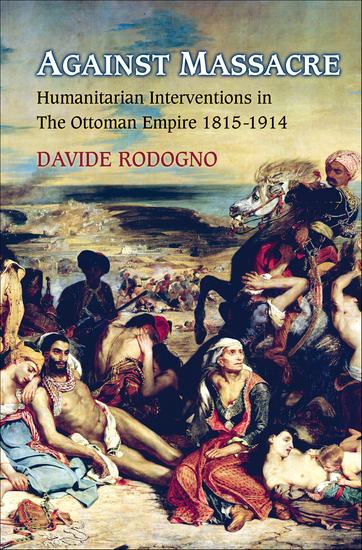
    Against Massacre looks at the rise of humanitarian intervention in the nineteenth century, from the fall of Napoleon to the First World War. Examining the concept from a historical perspective, Davide Rodogno explores the understudied cases of European interventions and noninterventions in the Ottoman Empire and brings a new view to this international practice for the contemporary era.  While it is commonly believed that humanitarian interventions are a fairly recent development, Rodogno demonstrates that almost two centuries ago an international community, under the aegis of certain European powers, claimed a moral and political right to intervene in other states' affairs to save strangers from massacre, atrocity, or extermination. On some occasions, these powers acted to protect fellow Christians when allegedly "uncivilized" states, like the Ottoman Empire, violated a "right to life." Exploring the political, legal, and moral status, as well as European perceptions, of the Ottoman Empire, Rodogno investigates the reasons that were put forward to exclude the Ottomans from the so-called Family of Nations. He considers the claims and mixed motives of intervening states for aiding humanity, the relationship between public outcry and state action or inaction, and the bias and selectiveness of governments and campaigners.  An original account of humanitarian interventions some two centuries ago, Against Massacre investigates the varied consequences of European involvement in the Ottoman Empire and the lessons that can be learned for similar actions today.
    Ver libro
  • From Plato to Christ - How Platonic Thought Shaped the Christian Faith - cover

    From Plato to Christ - How...

    Louis Markos

    • 0
    • 0
    • 0
    What does Plato have to do with the Christian faith? 


    Quite a bit, it turns out. In ways that might surprise us, Christians throughout the history of the church and even today have inherited aspects of the ancient Greek philosophy of Plato, who was both Socrates's student and Aristotle's teacher. 


    To help us understand the influence of Platonic thought on the Christian faith, Louis Markos offers careful readings of some of Plato's best-known texts and then traces the ways that his work shaped the faith of some of Christianity's most beloved theologians, including Gregory of Nyssa, Augustine, Dante, and C. S. Lewis. 


    With Markos's guidance, listeners can ascend to a true understanding of Plato's influence on the faith.
    Ver libro