Begleiten Sie uns auf eine literarische Weltreise!
Buch zum Bücherregal hinzufügen
Grey
Einen neuen Kommentar schreiben Default profile 50px
Grey
Jetzt das ganze Buch im Abo oder die ersten Seiten gratis lesen!
All characters reduced
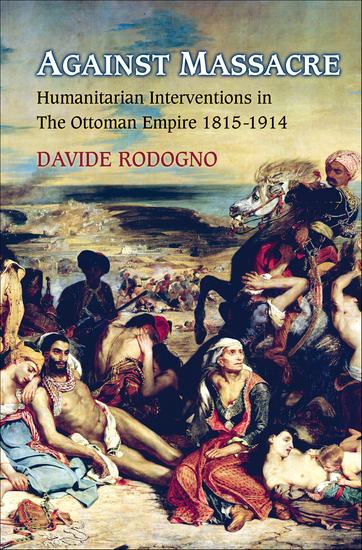
Against Massacre - Humanitarian Interventions in The Ottoman Empire 1815–1914 - cover

Against Massacre - Humanitarian Interventions in The Ottoman Empire 1815–1914

Davide Rodogno

Verlag: Princeton University Press

  • 0
  • 0
  • 0

Beschreibung

Against Massacre looks at the rise of humanitarian intervention in the nineteenth century, from the fall of Napoleon to the First World War. Examining the concept from a historical perspective, Davide Rodogno explores the understudied cases of European interventions and noninterventions in the Ottoman Empire and brings a new view to this international practice for the contemporary era.  While it is commonly believed that humanitarian interventions are a fairly recent development, Rodogno demonstrates that almost two centuries ago an international community, under the aegis of certain European powers, claimed a moral and political right to intervene in other states' affairs to save strangers from massacre, atrocity, or extermination. On some occasions, these powers acted to protect fellow Christians when allegedly "uncivilized" states, like the Ottoman Empire, violated a "right to life." Exploring the political, legal, and moral status, as well as European perceptions, of the Ottoman Empire, Rodogno investigates the reasons that were put forward to exclude the Ottomans from the so-called Family of Nations. He considers the claims and mixed motives of intervening states for aiding humanity, the relationship between public outcry and state action or inaction, and the bias and selectiveness of governments and campaigners.  An original account of humanitarian interventions some two centuries ago, Against Massacre investigates the varied consequences of European involvement in the Ottoman Empire and the lessons that can be learned for similar actions today.
Verfügbar seit: 07.11.2011.
Drucklänge: 408 Seiten.

Weitere Bücher, die Sie mögen werden

  • The Psychology of Christian Nationalism - Why People Are Drawn In and How to Talk Across the Divide - cover

    The Psychology of Christian...

    Pamela Cooper-White

    • 0
    • 0
    • 0
    How do we overcome polarization in American society? How do we advocate for justice when one side won't listen to the other and cycles of outrage escalate? 


    These questions have been pressing for years, but the emergence of a vocal, virulent Christian nationalism have made it even more urgent that we find a way forward. 


    In three brief, incisive chapters Pamela Cooper-White uncovers the troubling extent of Christian nationalism, explores its deep psychological roots, and discusses ways in which advocates for justice can safely and effectively attempt to talk across the deep divides in our society.
    Zum Buch
  • Social Justice for the Sensitive Soul - How to Change the World in Quiet Ways - cover

    Social Justice for the Sensitive...

    Dorcas Cheng-Tozun

    • 0
    • 0
    • 0
    Social justice work, we often assume, is raised voices and raised fists. But what does it look like for those of us who don't feel comfortable battling in the trenches? Sustaining justice work can be particularly challenging for the sensitive, and it requires a deep level of self-awareness. 


    In Social Justice for the Sensitive Soul, writer Dorcas Cheng-Tozun offers six possible pathways for sensitive types: Connectors: relational activists whose interactions and conversations build the social capital necessary for change; Creatives: artists and creators whose work inspires, sheds light, makes connections, and brings issues into the public consciousness; Record Keepers: archivists who preserve essential information and hold our collective memory and history; Builders: inventors, programmers, and engineers who center empathy as they develop society-changing products and technologies; Equippers: educators, mentors, and elders who build skills and knowledge within movements and shepherd the next generation of changemakers; and Researchers: data-driven individuals who utilize information as a persuasive tool to effect change and propose options for improvement. 


    Cheng-Tozun expands the possibilities of how to have a positive social impact, affirming the particular gifts and talents that sensitive souls offer to a hurting world.
    Zum Buch
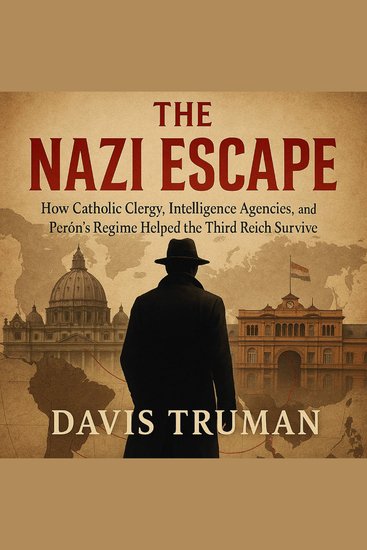
  • The Nazi Escape - How Catholic Clergy Intelligence Agencies and Perón's Regime Helped the Third Reich Survive - cover

    The Nazi Escape - How Catholic...

    Davis Truman

    • 0
    • 0
    • 0
    This audiobook is narrated by an AI Voice.   
    What if the fall of Hitler was only the beginning? 
    In The Nazi Escape, uncover the shocking, meticulously researched story of how a secretive global alliance, spanning Vatican corridors, Allied intelligence networks, and Argentina’s highest political ranks, engineered one of history’s most chilling cover-ups. With the Third Reich in ruins, elite Nazi war criminals vanished without a trace. But they didn’t disappear... they were helped. 
    This gripping exposé reveals how Catholic clergy operated covert escape routes known as “ratlines,” how Western intelligence agencies turned a blind eye, or lent a hand, and how Juan Perón’s Argentina became a haven for some of the most notorious figures of World War II. 
    From shadowy monasteries in Rome to the pampas of South America, The Nazi Escape reads like a thriller, but every word is true. Packed with declassified documents, firsthand accounts, and shocking revelations, this is the untold story the world wasn’t supposed to know.
    Zum Buch
  • The russian art of war How the West led Ukraine to defeat - cover

    The russian art of war How the...

    Jacques Baud

    • 0
    • 0
    • 0
    Why did Ukraine lose the war against Russia? How do the two sides think and conduct their operations? What mistakes were made on both sides? How did the West contribute to Ukraine's defeat? 
    To answer these questions and many others, Jacques Baud draws on official information, American, Western and Russian documents that analyse Russian (and Soviet) strategies and tactics over the last 50 years. He explains how Russia understands and conducts war, and shows how our ignorance of this reality has pushed Ukraine towards defeat. 
    This audiobook is read by a synthesized voice.
    
    Jacques Baud was a member of Swiss strategic intelligence, a specialist in Eastern Europe and former head of doctrine for UN peacekeeping operations. During the Cold War, he worked on Soviet military art and the war in Afghanistan. Within NATO, he was involved in programs in Ukraine, notably after the 2014 Maïdan revolution. In addition to his major works on the conflict in Ukraine, he is the author of several books on intelligence, war and terrorism, including Governing by Fake News, Defeating Jihadist Terrorism and The Navalny Case, all published by Max Milo.
    Zum Buch
  • A Constitution for the Common Good - Strengthening Scottish Democracy After 2014 - cover

    A Constitution for the Common...

    W Elliot Bulmer

    • 0
    • 0
    • 0
    If Scotland has voted YES on 18 September, how can a written Constitution be good for the people of Scotland?
    
    If Scotland has voted NO, how could a new Constitution protect and enhance Scottish democracy within a restructured UK?
    
    Whether YES or NO, a reconstituted Scotland is possible and good for all its citizens.
    
    
    Nearly every democracy in the world is built upon a written constitution, and constitutions have been at the core of citizens' demands for better governance in places as disparate as Kenya, Tunisia and Ukraine. With the Scottish National Party promising a written constitution in the event of a YES vote and other parties suggesting other possible options for constitutional change in the event of a NO vote, constitutional change looks certain to remain central to the political agenda in Scotland for some time to come.


    But what is a constitution for? Is it a defensive charter to protect the basic structures of democratic government, or is it a transformative covenant for a better society? How can the Constitution sustain democracy and promote ethical politics while at the same time recognising and accommodating differences in society? What difference would a good Constitution make to the poor? How can the Constitution help ensure that the common good of the citizenry prevails over private vested interests?


    In addressing these questions, this book sets out a vision for how Scotland could reconstitute itself. It emphasises the connection between the constitution, democracy and the common good, arguing that democratic self-government is the true prize, regardless of the relationship of Scotland to the rest of the UK.


    This book not only makes a vital contribution to Scotland's current and on-going constitutional debate, whatever the outcome in September 2014, but also engages with fundamental questions of constitutionalism and democracy that are of enduring relevance to both citizens and scholars around the world.
    Zum Buch
  • End of Poverty The: Book Summary & Analysis - cover

    End of Poverty The: Book Summary...

    Briefly Summaries

    • 0
    • 0
    • 0
    This is a concise summary and analysis of The End of Poverty, by Jeffrey D. Sachs.
     
    It is not the original book and is not affiliated with or endorsed by Jeffrey D. Sachs.
     
    Ideal those seeking a quick and insightful overview.
     
    The End of Poverty explores the critical steps required to eradicate extreme poverty in the world within a generation. Combining economic expertise with compelling narratives, this transformative book outlines how targeted aid, investment in infrastructure, and sustainable development practices can uplift the world's poorest communities. From real-world success stories to bold strategies, this book offers an actionable roadmap to address global inequality and build a more equitable future.
    Zum Buch