Join us on a literary world trip!
Add this book to bookshelf
Grey
Write a new comment Default profile 50px
Grey
Subscribe to read the full book or read the first pages for free!
All characters reduced
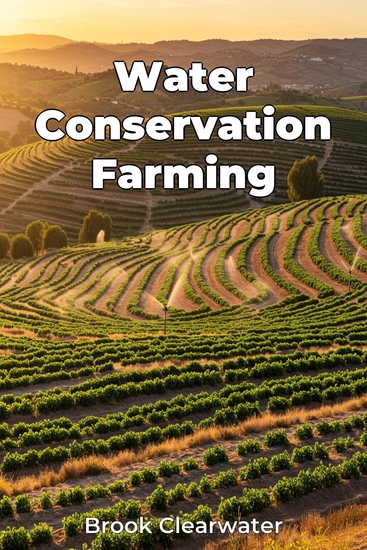
Water Conservation Farming - cover

Water Conservation Farming

Brook Clearwater

Translator A AI

Publisher: Publifye

  • 0
  • 0
  • 0

Summary

Water Conservation Farming addresses the critical need to reduce water consumption in agriculture amidst growing water scarcity and climate change concerns. It explores how innovative farming techniques can simultaneously decrease water usage and maintain, or even improve, crop yields. For instance, the book highlights how adopting efficient irrigation technologies, such as drip irrigation, can drastically reduce water waste compared to traditional flood irrigation methods. Furthermore, it emphasizes the importance of drought-resistant crops and effective soil health management in mitigating water scarcity, presenting a case for a paradigm shift in agricultural practices.

 
The book systematically progresses from introducing the global water crisis to detailing efficient irrigation techniques, drought-resistant crops, and soil health practices. It uniquely integrates modern science with traditional knowledge from indigenous farming communities, offering a holistic approach to water conservation.

 
By drawing on peer-reviewed studies, government reports, and real-world case studies, Water Conservation Farming equips farmers, policymakers, and environmental scientists with the knowledge and tools necessary to foster sustainable agricultural systems.
Available since: 02/27/2025.
Print length: 94 pages.
Other books that might interest you

  • Quack Quack - The Threat of Pseudoscience - cover

    Quack Quack - The Threat of...

    Joe Schwarcz

    • 0
    • 0
    • 0
    Let the one and only Dr. Joe battle pseudoscience and cast a life preserver out to all those drowning in a sea of misinformation
    		 
    “Ultimately, the author successfully demonstrates how claims should be queried and analyzed before they are accepted.” — Library Journal
    		 
    We are in a crisis. A tsunami of misinformation and disinformation is threatening to engulf evidence-based science. While quackery — loosely defined as the spread of false “knowledge,” often accompanied by various versions of “snake oil” — is not a novel phenomenon, it has never posed as great a threat to public health as today. COVID-19 has unleashed an unprecedented flurry of destructive information that has fueled vaccine hesitancy and has steered people toward unproven therapies. Conspiracy theorists have served up a distasteful menu of twisted facts that create distrust in science. 
    		 
    In Quack Quack, Dr. Joe Schwarcz, who has been battling flimflam for decades, focuses on the deluge of anecdotes, cherry-picked data, pseudoscientific nonsense, and seductive baseless health claims that undermine efforts to educate the public about evidence-based science. The wide scope of the topics drawn from past and present aims to cast a life preserver to people drowning in a sea of misinformation.
    Show book
  • In the Name of Sharks - 1st Edition - cover

    In the Name of Sharks - 1st Edition

    François Sarano

    • 0
    • 0
    • 0
    Twenty meters below water, the oceanographer François Sarano came face to face with a five-and-a-half-meter great white shark. Seduced by the gentle elegance of this majestic creature, Sarano experienced a profound sense of affinity with her as they swam side by side, shoulder to shoulder, eye to eye, cutting a single figure through the ocean depths. It was an experience which made him realize the depth of our ignorance of the lives of sharks, leading him to become a passionate advocate for their protection. 


    Drawing on the latest scientific research on the biology and ethology of sharks and their exceptional characteristics, this book aims to break through the barrier of prejudice and to pay homage to their true nature. Representing a last vestige of wildness, their populations are nevertheless under threat—like so many species, they have been hunted and exploited by humans. Sarano argues for a change of mindset in which we lose ourselves in the world of the other, so that each living entity, human and non-human, can take their rightful place in the broader global ecosystem.
    Show book
  • Why the Dose Matters - Assessing the Health Risk of Exposure to Toxicants - cover

    Why the Dose Matters - Assessing...

    Urs A. Boelsterli

    • 0
    • 0
    • 0
    Each day we are exposed to a myriad of natural and human-made chemicals in our food, drinking water, air, soil, at home or at the workplace—pesticide residues, food additives, drugs, household products—but how can we gauge the human health risk posed by these chemicals? Should we believe the somber headlines that depict a serious threat for humans and the environment, or should we follow the reassuring voices of others who claim that the angst is totally unfounded? 


    Why the Dose Matters: Assessing the Health Risk of Exposure to Toxicants uses a rational, science-based approach to explain in plain language that a quantitative view is key for understanding and predicting potentially toxic effects of chemicals. 


    Key Features: 


    ● Explains the basics of toxicology in easily understandable terms. 


    ● Includes numerous examples. 


    ● Clears up common misconceptions and dispels myths. 


    ● Provides take-home messages for each chapter.
    Show book
  • Introduction to Solid State Physics - The Basics of Solid State Physics - cover

    Introduction to Solid State...

    Mark Hedges

    • 0
    • 0
    • 0
    Crystal structure and bonding are fundamental to understanding the physical properties of solid materials. A crystal is a solid material whose atoms, ions, or molecules are arranged in a highly ordered, repeating pattern extending in all three spatial dimensions. The smallest repeating unit of this structure is called the unit cell. The unit cell defines the crystal’s lattice parameters, including the edge lengths a,b,ca, b, c and the angles between them α,β,γ\alpha, \beta, \gamma. The crystal lattice is generated by translating the unit cell along its edges, forming the complete crystalline structure. 
    Crystals are classified according to their symmetry into seven crystal systems: cubic, tetragonal, orthorhombic, monoclinic, triclinic, hexagonal, and rhombohedral. Each system is characterized by specific symmetry elements such as mirror planes, rotation axes, and inversion centers. The Bravais lattices describe the 14 distinct lattice types that can fill three-dimensional space using translational symmetry. The atomic positions within a unit cell are described by fractional coordinates relative to the lattice vectors. In a face-centered cubic (FCC) lattice, atoms are located at the corners and the centers of the faces of the cube, while in a body-centered cubic (BCC) lattice, an additional atom is placed at the center of the cube.
    Show book
  • CompTIA A+ Certification Guide - Ace Core 1 & Core 2 Exams with Confidence - cover

    CompTIA A+ Certification Guide -...

    David Blake

    • 0
    • 0
    • 0
    CompTIA A+ Certification Guide: Ace Core 1 & Core 2 Exams with Confidence 
    Unlock Your IT Career Potential with the Ultimate Study Guide! 
    Are you ready to pass the CompTIA A+ Certification (Core 1 & Core 2) exams on your first try? Whether you're an aspiring IT professional or looking to advance your career, this all-in-one guide is your key to success. Written by industry expert David Blake, this comprehensive resource covers every exam objective in detail and provides the tools you need to ace the exams with confidence. 
    What You'll Learn:Core 1 & Core 2 Breakdown: Master IT hardware, software, networking, mobile devices, virtualization, and troubleshooting techniques.Hands-On Troubleshooting: Get step-by-step guidance to tackle real-world IT problems like a pro.Advanced Security Strategies: Stay ahead of modern cyber threats and secure your IT systems.Practice Exams & Real-Life Scenarios: Test your knowledge with over 200 expertly crafted practice questions and performance-based exercises.Study Tips & Exam Strategies: Learn proven techniques to maximize your study time, avoid common pitfalls, and boost your confidence on exam day.
    Show book
  • LangGraph - A comprehensive guide to building LLM agent-based AI systems with LangGraph - cover

    LangGraph - A comprehensive...

    Et Tu Code

    • 0
    • 0
    • 0
    Unlock the power of Large Language Models (LLMs) and build intelligent, conversational AI systems with LangGraph.  
    This comprehensive guide provides a step-by-step approach to creating LLM agent-based AI systems using LangGraph, a cutting-edge technology for natural language processing.  
    Learn how to design, train, and deploy your own LLMs for applications such as chatbots, voice assistants, and text analytics.  
    With LangGraph, you'll gain insights into the inner workings of LLMs and master techniques for building scalable, robust AI systems that can understand and respond to human language.
    Show book