Join us on a literary world trip!
Add this book to bookshelf
Grey
Write a new comment Default profile 50px
Grey
Subscribe to read the full book or read the first pages for free!
All characters reduced
Highway Creation - cover

Highway Creation

Bridget Langston

Translator A AI

Publisher: Publifye

  • 0
  • 0
  • 0

Summary

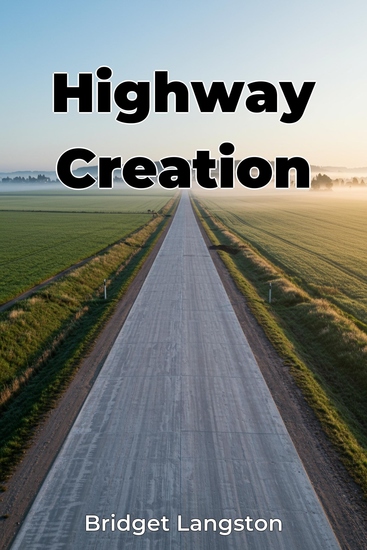
Highway Creation examines the transformative impact of the Interstate Highway System on American society and its economy. This book explores how the Federal-Aid Highway Act of 1956 spurred unprecedented mobility and economic development. It reveals that prior to this system, a fragmented network of poorly maintained roads hindered both interstate commerce and personal travel, underscoring the vital role of infrastructure in shaping a nation's trajectory.

 
The book delves into the historical context, economic transformations, and social consequences of highway creation, illustrating how this massive undertaking reshaped urban planning, spurred suburbanization, and influenced commuting patterns. It emphasizes that the Interstate Highway System was more than just a construction project; it acted as a catalyst for economic growth and societal change.

 
Each chapter builds upon the last, beginning with the political climate leading to the 1956 Act, then moving to the economic impacts, and finally assessing the long-term social consequences. Highway Creation offers a comprehensive understanding of a pivotal moment in American history by integrating economic data, historical records, and case studies. By connecting to fields such as urban planning and political science, the book provides valuable insights for students, policymakers, and anyone interested in the forces that have shaped modern America, addressing the lasting legacy of the Interstate Highway System and its relevance to modern transportation needs.
Available since: 05/06/2025.
Print length: 56 pages.

Other books that might interest you

  • Growing Up with Addiction - How Adult Children of Addicts Can Heal Family Trauma C-PTSD and Codependency - cover

    Growing Up with Addiction - How...

    Tian Dayton

    • 0
    • 0
    • 0
    From the leading expert on adult children of addicts, an essential guide to healing wounds of growing up with addiction and family dysfunction“Required reading for understanding the full picture of recovery, repair, and reclaiming our true selves.”—Aimie Apigian, MD, author of The Biology of TraumaApproximately 76 million adults in the U.S. share a family history of addiction. In this urgently needed resource, Dr. Tian Dayton draws on decades of expertise to help adult children of addicts (ACAs) recover from family trauma, reconnect with themselves, and heal relational wounds. If you’ve grown up with a parent’s addiction, it can leave a profound imprint on your development. Its ripple effects reach into every corner of adulthood—how you partner, parent, work, and form friendships. “Relational trauma weaves into the fabric of your life, shaping how you see yourself and the world,” writes Dr. Dayton. “It can leave you questioning your worth, mistrusting intimacy, and feeling disconnected from your inner world.” But it doesn’t have to stay this way. This book helps you explore the illness that shaped your family, understand the imprint it left on you, and set out on a path towards inner and relational recovery. “Healing begins with learning to distinguish real danger from old, outdated alarms,” writes Dr. Dayton. “It requires tuning into your nervous system, tracing your automatic reactions, and gently questioning the distorted beliefs and fear states your wounds left behind.” Throughout the book, you will learn how to:•  Process attachment wounds and cognitive distortions caused by gaslighting and denial•  Reawaken and reconnect with your body in ways that feel safe and grounding•  Understand your emotions and regulate them when they feel out of control•  Grieve unspoken losses and let your inner child find its own, authentic voice•  Heal from long-term CPTSD and codependency and find post-traumatic growth Grounded in research, enriched by client voices and narratives, and filled with experiential processes, light a path unearthing buried pain and transforming it into meaning and purpose. This book empowers you to flourish in recovery, break the chain of intergenerational dysfunction, and create a compassionate and connected future for yourself and those you love.
    Show book
  • How much do you know about geography - cover

    How much do you know about...

    Onofre Quezada

    • 0
    • 0
    • 0
    This audiobook is narrated by an AI Voice.  
     How Much Do You Know About Geography is an invitation to test your knowledge of the world around us. Through questions, trivia, and surprising facts, this book will take you on a journey through continents, countries, cities, rivers, mountains, and natural phenomena that are part of our planet. 
    Whether you love maps, enjoy intellectual challenges, or want to learn in a fun way, you'll find an entertaining and educational journey here. Discover little-known facts, expand your general knowledge, and challenge your friends to see who knows the most about geography. 
     Perfect for students, travelers, or just curious people, this book is a dynamic way to explore the world without leaving home.
    Show book
  • Capital Offence - Why Some Benefit At Your Expense - cover

    Capital Offence - Why Some...

    Paul Musson

    • 0
    • 0
    • 0
    In Capital Offence award-winning investor Paul Musson shows how the world is becoming increasingly divided on many fronts. One of the root causes of this is that well-intended policymakers have drunk the something-from-nothing Kool-Aid and are convinced that there is such a thing as a free lunch. There isn't. They believe that debt-fueled spending is what leads to economic prosperity. It doesn't. The direct result of these central bank-supported policies is growing wealth disparity where some people are able to extract more from our economic system than they create, while others are left to foot the bill. Most books on this subject speak in a language understood only by those steeped in financial jargon; Paul Musson uses everyday language and analogies to help readers understand why the economy is moving in the wrong direction. The next generation is now poised to be worse off than its predecessors, not because they are less productive, but because older generations are benefiting at their expense – an unsustainable and immoral reality. Paul Musson gives us steps for reform, and while the painful choices ahead are inevitable, facing them now will prevent even greater consequences later.
    Show book
  • Master Your Mindset: Daily Habits to Boost Confidence Crush Self-Doubt & Gain Mental Clarity - cover

    Master Your Mindset: Daily...

    Bob Babson

    • 0
    • 0
    • 0
    This audiobook is narrated by an AI Voice.  
    Master Your Mindset: Daily Habits to Build Confidence, Overcome Self-Doubt & Unlock Mental Clarity is your practical guide to rewiring your thinking and taking back control of your inner world. Whether you're feeling stuck, second-guessing yourself, or simply ready to level up your mindset, this book gives you simple, science-backed strategies to create lasting mental strength and clarity. 
    Inside, you’ll discover: 
    Daily habits that build real confidence and resilience 
    Tools to silence negative self-talk and overcome fear of failure 
    Mindset shifts that lead to better decisions, stronger focus, and lasting motivation 
    Morning and evening routines to support mental clarity 
    Practices to stay calm, grounded, and focused—no matter what life throws at you 
    Whether you want to improve your performance, find more inner peace, or step into your full potential, Master Your Mindset offers the habits and guidance to get you there—one powerful day at a time.
    Show book
  • Who Owns This Sentence? - A History of Copyrights and Wrongs - cover

    Who Owns This Sentence? - A...

    David Bellos, Alexandre Montagu

    • 0
    • 0
    • 0
    Copyright is everywhere. Your smartphone incorporates thousands of items of intellectual property. Someone owns the reproduction rights to photographs of your dining table. At this very moment, battles are raging over copyright in the output of artificial intelligence programs. Not only books but wallpaper, computer programs, pop songs, cartoon characters, snapshots, and cuddly toys are now deemed to be intellectual properties—making copyright a labyrinthine construction of laws with colorful and often baffling rationales covering almost all products of human creativity. 


    It wasn't always so. Copyright has its roots in eighteenth-century London, where it was first established to limit printers' control of books. But a handful of little-noticed changes in the late twentieth century brought about a new enclosure of the cultural commons, concentrating ownership of immaterial goods in very few hands. Copyright's metastasis can't be understood without knowing its backstory, a long tangle of high ideals, low greed, opportunism, and word-mangling that allowed poems and novels (and now, even ringtones and databases) to be treated as if they were no different from farms and houses. Principled arguments against copyright arose from the start and nearly abolished it in the nineteenth century. Nonetheless, countless revisions have made copyright ever stronger.
    Show book
  • Pain - The Search for Relief - cover

    Pain - The Search for Relief

    Scientific American

    • 0
    • 0
    • 0
    Burning. Shooting. Stabbing. Sometimes the cause is unknown. Sometimes it begins as the result of an injury. Whatever form it takes, chronic pain often resists treatment. In this audiobook, we examine the latest advances in understanding the pathology of chronic pain and the efforts to find better, nonopioid treatment options including electrical stimulation of nerves, venom from spiders and other creatures, and psychological interventions including virtual-reality therapy and acupuncture.
    Show book