

Join us on a literary world trip!
Add this book to bookshelf
Grey
Write a new comment Default profile 50px
Grey
Subscribe to read the full book or read the first pages for free!
All characters reduced
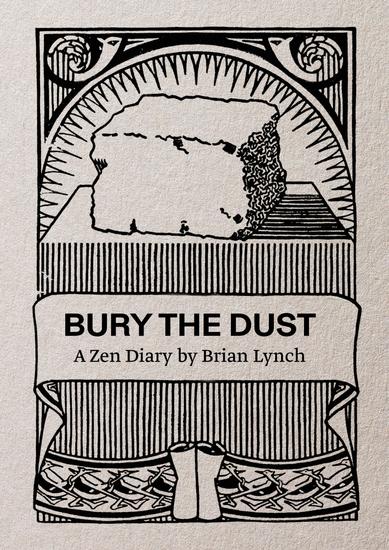
Bury the Dust - a Zen diary - cover

Bury the Dust - a Zen diary

Brian Lynch

Publisher: Duras Press

  • 0
  • 0
  • 0

Summary

As Brian Lynch begins writing Bury the Dust in Dublin, a movie he scripted, Love and Rage, starring Daniel Craig, is being edited in Berlin by its outstanding director, Cathal Black. The film looks good – not surprising since it was shot by Slawomir Idziak, cinematographer for Kieslowski's The Double Life of Veronique and Three Colours Blue. Meanwhile, the BBC loves the script Lynch is writing for them about the 18th century poet William Cowper. A contract is on the way. Caught in a Free State, his TV series about German spies in Ireland during World War 2, has sold all over the world. Crooked in the Car Seat, compared by the novelist Colm Tóibín to James Joyce's Exiles, has been nominated for best play in the Dublin Theatre Festival. In 1985, Samuel Beckett, praising Lynch's 'exceptional talent', has nominated him for election to Aosdána, the Irish government body set up to honour artists.

What could possibly go wrong? Everything. Or nothing.

Written in a garden shed beside a defective septic tank, Bury the Dust provides some of the answers. Or none?

The diary relies on many philosophical texts, from Kierkegaard to Wong Kiew Kit, the noted Kung Fu teacher. Wong is the author of The Complete Book of Zen, which says that you shouldn't meditate if you are 'suffering from frequent physical pain, manic-depression or imbecility'. Ruled out on at least two counts but undeterred, although he's unable to cross his legs in the Lotus position, Lynch sits down to follow the advice of the ancient Chinese poet Han Shan: 'Think of what does not think'. Only a fool could write a thoughtless book. Is this it?
Bury the Dust - a Zen Diary is dedicated to the memory of Maura O'Halloran, the author of Pure Heart, Enlightened Mind, whom Lynch describes, though she died at the age of twenty-seven, as perhaps 'the most interesting Irishwoman of her generation'.
Available since: 12/12/2025.
Print length: 116 pages.

Other books that might interest you

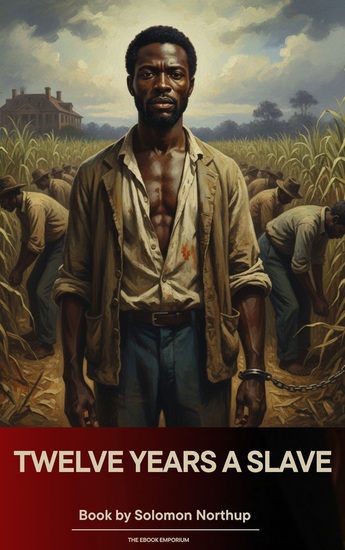
  • Twelve Years a Slave - cover

    Twelve Years a Slave

    Solomon Northup

    • 0
    • 1
    • 0
    "They can take your freedom, but they cannot take your identity."
    
    In 1841, Solomon Northup was a professional violinist and family man living in Saratoga Springs, New York. After being lured to Washington D.C. with the promise of work, he was drugged, shackled, and stripped of his name. For the next twelve years, he was passed from master to master in the bayous of Louisiana, enduring the sadistic cruelty of men like Edwin Epps while witnessing the quiet heroism of his fellow enslaved people. Twelve Years a Slave is a visceral, unflinching look at the "peculiar institution" through the eyes of a man who knew both the dignity of liberty and the agony of the lash. It remains a foundational text of American history and a testament to the endurance of the human spirit.
    
    The Mechanics of Oppression: Northup provides a meticulous, almost journalistic description of the economics and daily operations of the slave trade. He details the cultivation of cotton and sugar, the social hierarchies of the plantation, and the psychological warfare used to keep human beings in subjection.
    
    A Quest for Justice: The narrative is propelled by Northup's secret attempts to communicate with his family in the North. His eventual rescue is a heart-stopping moment of tension and triumph, highlighting the legal and social complexities of a divided nation where a man's status as "property" or "person" could depend entirely on the color of his skin and the geography of his location.
    
    Why It Is a Vital Classic: While many narratives were edited to suit political agendas, Northup's account is praised for its stark realism and descriptive power. It provides names, dates, and locations that were later verified by historians, making it one of the most credible and devastating indictments of slavery ever written.
    
    Bear witness to the truth. Purchase "Twelve Years a Slave" today.
    Show book
  • Sound N’ Fury - Rock N’ Roll Stories - cover

    Sound N’ Fury - Rock N’ Roll...

    Alan Niven

    • 0
    • 1
    • 0
    Most rock ’n’ roll books are a bore. They all have the same narrative arc and are aimed at the dwindling following that now follows an artist that has long passed their AARP date. 
    		 
    Sound N’ Fury does not have a story arc. It is a collection of anecdotes, like a record comprised of various tracks — each one has its point and purpose. Alan Niven, who guided Guns N’ Roses from the gutter of Los Angeles to Wembley Stadium, shares stories from his remarkable life as a manager with an immediacy delivered by an extraordinary recall of dialogue. Readers will encounter not just Guns N’ Roses (who have sold almost 10 million tickets to their shows) but The Rolling Stones, Aerosmith, Clarence Clemons, Whitesnake, Elton John, and others who came from humble origins and experienced fame known only to few. Small-town minds collided with worldwide adulation, expectations, and demands. The results are amusing, affirming, and, predictably, disastrous. Keep in mind that rock ’n’ roll is God’s occupation for the unemployable.
    		 
    Written with a crisp and fluid style, the magnificence and idiocy of the music world will dance off the pages and engross even those who are not rock fans.
    Show book
  • The Boy Who Survived Auschwitz - cover

    The Boy Who Survived Auschwitz

    Adriana Lerman

    • 1
    • 1
    • 0
    Levi Lerman was a cheerful and lively boy from the town of Ostrowiec. He was only fourteen years old when his life took an unimaginable turn with the outbreak of World War II in 1939, when the Nazi forces invaded Poland and occupied his hometown.
    Over a painful six-year period, Levi endured a harsh life in the Ostrowiec ghetto, suffered devastating losses, performed exhausting forced labor, and survived countless transfers to concentration camps, including the extermination camp of Auschwitz-Birkenau.
    In the middle of this torment, a single light guided him through the darkness: his unbreakable determination to live and to protect his father—a strength that helped him survive against all odds.
    Show book
