Join us on a literary world trip!
Add this book to bookshelf
Grey
Write a new comment Default profile 50px
Grey
Subscribe to read the full book or read the first pages for free!
All characters reduced
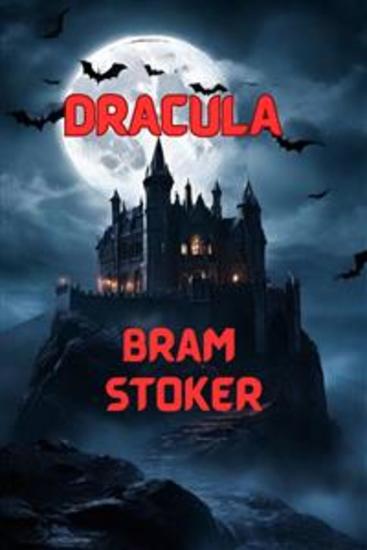
Dracula(Illustrated) - cover

Dracula(Illustrated)

Bram Stoker

Publisher: Micheal Smith

  • 0
  • 0
  • 0

Summary

Illustrated Edition: This special edition of “Dracula” includes 20 stunning illustrations, bringing Bram Stoker’s timeless tale to life.
	Inclusive of a Detailed Summary: Dive deeper into the story with a captivating and concise summary, perfect for both newcomers and returning readers.
	Comprehensive Characters List: Get to know the characters inside and out with an extensive list and description of all the major and minor players in the novel.
	Author Biography: Delve into the life of Bram Stoker with a unique and engaging biography, providing context to the creation of his most famous work.

Step into the shadowy world of Bram Stoker’s “Dracula,” brilliantly brought to life in this illustrated edition, complete with 20 evocative illustrations, a detailed summary, comprehensive character list, and an intriguing author biography.

From the eerie landscapes of Transylvania to the bustling streets of Victorian London, follow the harrowing journey of Jonathan Harker, Mina Murray, and their friends as they battle the enigmatic Count Dracula. Stoker’s masterful tale of suspense, horror, and the triumph of good over evil has captivated readers for over a century, and it is presented here in all its Gothic glory.

Discover or re-discover the chilling tale that introduced the world to the archetype of the vampire, a story rich in symbolism and complex themes. The added illustrations in this edition enhance the reading experience, providing visual depth to the novel’s haunting atmospheres and unforgettable characters.

With the included summary, character list, and author biography, this edition of “Dracula” offers a comprehensive and immersive experience. Whether you’re a lifelong fan or a newcomer to Stoker’s masterpiece, this edition is designed to enrich your understanding and enjoyment of this classic novel.

Immerse yourself in the mystery and horror of “Dracula,” and prepare to be captivated by the dark allure of Bram Stoker’s immortal creation.
 
Available since: 12/08/2023.

Other books that might interest you

  • Mateo Falcone - From their pens to your ears genius in every story - cover

    Mateo Falcone - From their pens...

    Prosper Mérimée

    • 0
    • 0
    • 0
    The bookshelves of European literature are incredible collections that have gathered together centuries of very talented authors.  From this continent their fame spread and whilst among their number many are now forgotten or neglected their talents endure.  Among them is Prosper Mérimée acknowledged as the first French short story writer.
    Show book
  • The Horse Dealer's Daughter - Poignant story exploring death and its effects by the author of Sons And Lovers - cover

    The Horse Dealer's Daughter -...

    D H Lawrence

    • 0
    • 0
    • 0
    David Herbert Lawrence was born on the 11th September 1885 in Eastwood, Nottinghamshire, a coal mining town where the reality of a harsh life was only useful as experiences for future literary works. 
     
    He was educated at Beauvale Board School and became the first local boy to receive a scholarship to attend Nottingham High School. After 3 years he became a junior clerk in Haywood’s surgical appliances factory. He was also attempting a literary career which, in the short term, led to a teacher training position in Eastwood and later a teaching qualification from University College, Nottingham.  
     
    Lawrence’s first efforts were poems, short stories and a draft of ‘The White Peacock’. Moving to London and a teaching position in Croydon his writing attracted the attention of Ford Madox Ford, editor of The English Review, and he commissioned him to write ‘Odour of Chrysanthemums’.  
     
    Wanting to write full-time he now began work on what would become ‘Sons and Lovers.   
     
    In 1912 he met the older and married mother-of-three Frieda Weekley. They eloped to Germany and here Lawrence could see for himself the growing tensions with France.  So keen was his interest that he was arrested and accused of being a British spy.  
     
    In early 1914 Frieda obtained her divorce and they returned to Britain to be married just days before the outbreak of war. Owing to her German parentage, and his own public dislike of militarism and violence, the couple were treated with contempt and suspicion throughout the war years.  
     
    Despite this he continued to write but his reputation in England was so tarnished and, mirrored by his own disdain for the country, he and Frieda left England in November 1919, first for Europe and then America via Ceylon and Australia. 
     
    They bought a ranch in Taos, New Mexico and visited Mexico several times. The third visit in March 1925 caused a near fatal attack of malaria. To convalesce they moved to Florence. Here he continued work on ‘Lady Chatterley’s Lover’ which for many years would cause controversy. A renewed interest in oil painting resulted in an exhibition in 1929 which was raided by the police and several works were confiscated.  
     
    D H Lawrence died of complications arising from a bout of tuberculosis on the 2nd of March 1930 in Vence, France.  He was 44. 
     
    In ‘The Horse Dealers daughter’ a young woman begins a relationship with a young doctor and a friend of her brothers.  What should be straight forward is intimately investigated by Lawrence’s foraging pen.
    Show book
  • Laura - From their pens to your ears genius in every story - cover

    Laura - From their pens to your...

    Saki Saki

    • 0
    • 0
    • 0
    Hector Hugh Munro, more familiarly known by his pen-name ‘Saki’ was born in what was then Akyab in British Burma on 18th December 1870. His father was an Inspector General for the Indian Imperial Police, and his mother the daughter of a Rear Admiral. 
    When he was 2 his mother died and he and his siblings were sent back to England to be raised by their grandmother and paternal maiden aunts in a strict, puritanical household near Barnstaple, Devon. Educated by governesses Saki used many of these women as character models for his later writing. 
    At 17 his father retried and returned to England and then embarked on a series of European travels with Saki and his siblings. 
    After a short stint working in Burma with the Indian Imperial Police Saki decided to move to London to make a living as a writer. Initially he wrote as a journalist for a number of newspapers and magazines before attempting an historical study, ‘The Rise of the Russian Empire’, whose real value lay in directing him to writing short stories instead, the first of which, ‘Dogged’, he published in 1899. 
    From here it was a short stab of the pen to writing political satire before in 1902 he became the foreign correspondent for The Morning Post, first in the Balkans, then Russia, Paris and back to London in 1908, where 'the agreeable life of a man of letters with a brilliant reputation awaited him.'  
    Collections of his short stories full of witty, mischievous and often macabre stories that satirized Edwardian society and two novels now appeared in the years up to the Great War.  At its’ outbreak he was 43 but managed to join as an ordinary trooper. More than once he returned to the battlefield when officially too sick or injured.  
    On 14th November 1916 Hector Hugh Munro was sheltering in crater during the Battle of the Ancre, when he was shot and killed by a German sniper. According to several sources, his last words were "Put that bloody cigarette out!"
    Show book
  • Jam For The Enemy - Former soldier and journalist that became a revered author and screenwriter - cover

    Jam For The Enemy - Former...

    Edgar Wallace

    • 0
    • 0
    • 0
    Richard Horatio Edgar Wallace was born on the 1st April 1875 in Greenwich, London.  Leaving school at 12 because of truancy, by the age of fifteen he had experience; selling newspapers, as a worker in a rubber factory, as a shoe shop assistant, as a milk delivery boy and as a ship’s cook.  
     
    By 1894 he was engaged but broke it off to join the Infantry being posted to South Africa. He also changed his name to Edgar Wallace which he took from Lew Wallace, the author of Ben-Hur.  
     
    In Cape Town in 1898 he met Rudyard Kipling and was inspired to begin writing. His first collection of ballads, The Mission that Failed! was enough of a success that in 1899 he paid his way out of the armed forces in order to turn to writing full time.  
     
    By 1904 he had completed his first thriller, The Four Just Men. Since nobody would publish it he resorted to setting up his own publishing company which he called Tallis Press. 
      
    In 1911 his Congolese stories were published in a collection called Sanders of the River, which became a bestseller. He also started his own racing papers, Bibury’s and R. E. Walton’s Weekly, eventually buying his own racehorses and losing thousands gambling.  A life of exceptionally high income was also mirrored with exceptionally large spending and debts.  
     
    Wallace now began to take his career as a fiction writer more seriously, signing with Hodder and Stoughton in 1921. He was marketed as the ‘King of Thrillers’ and they gave him the trademark image of a trilby, a cigarette holder and a yellow Rolls Royce. He was truly prolific, capable not only of producing a 70,000 word novel in three days but of doing three novels in a row in such a manner. It was estimated that by 1928 one in four books being read was written by Wallace, for alongside his famous thrillers he wrote variously in other genres, including science fiction, non-fiction accounts of WWI which amounted to ten volumes and screen plays. Eventually he would reach the remarkable total of 170 novels, 18 stage plays and 957 short stories. 
     
    Wallace became chairman of the Press Club which to this day holds an annual Edgar Wallace Award, rewarding ‘excellence in writing’.  
     
    Diagnosed with diabetes his health deteriorated and he soon entered a coma and died of his condition and double pneumonia on the 7th of February 1932 in North Maple Drive, Beverly Hills. He was buried near his home in England at Chalklands, Bourne End, in Buckinghamshire.
    Show book
  • Jo's Boys - cover

    Jo's Boys

    Louisa May Alcott

    • 0
    • 0
    • 0
    "Jo's Boys" is the third and final book in Louisa May Alcott's beloved trilogy that began with "Little Women" and continued with "Little Men." The novel picks up where "Little Men" left off, and follows the lives of the boys who attended Plumfield School and their transition into adulthood. The story focuses on the lives of several of the former students of Plumfield, including Nat, Dan, Emil, and Tommy. We see them face new challenges and struggles as they navigate their way through young adulthood. Nat and Dan, in particular, face difficult choices as they try to make their way in the world and come to terms with their pasts.
    Show book
  • The Outrage - A True Story - cover

    The Outrage - A True Story

    Aleksandr Kuprin

    • 0
    • 0
    • 0
    Ivan Alekseevich Kuprin, a Russian writer of the early 20th century, was renowned for his short stories and novellas imbued with deep psychological insight and attention to detail. His works often depict the lives of ordinary people, their dreams, sufferings, and joys. Kuprin crafted vivid characters that continue to captivate readers with their authenticity and emotional depth.
    Show book