Join us on a literary world trip!
Add this book to bookshelf
Grey
Write a new comment Default profile 50px
Grey
Subscribe to read the full book or read the first pages for free!
All characters reduced
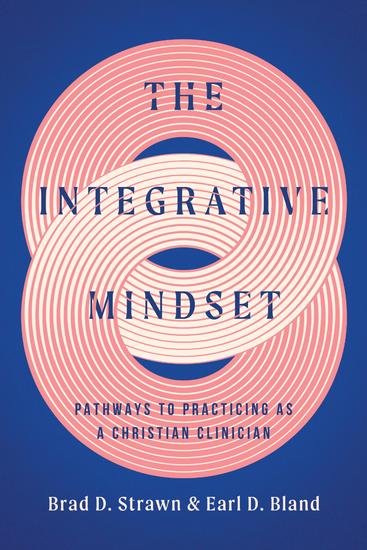
The Integrative Mindset - Pathways to Practicing as a Christian Clinician - cover

The Integrative Mindset - Pathways to Practicing as a Christian Clinician

Brad D. Strawn, Earl D. Bland

Publisher: IVP Academic

  • 0
  • 0
  • 0

Summary

Discover the profound impact of integrating faith and psychology with The Integrative Mindset. Guided by the wisdom of veteran integrative clinicians Brad Strawn and Earl Bland, readers will learn how to cultivate an integrative mindset that harmonizes personal experiences and innate talents with therapeutic practice. Using their combined 60+ years of experience, Strawn and Bland present a compelling emergent model that celebrates the unique and dynamic complexity of each therapist-client relationship. Through the exploration of five key domains—hermeneutics, tradition, ethics, development, and resiliency—The Integrative Mindset offers a rich tapestry of case studies and reflective questions designed to spark introspection and dialogue.
By weaving together the threads of faith and psychology, The Integrative Mindset challenges mental health practitioners to rethink conventional approaches and embrace a more holistic, nuanced practice.
Available since: 08/05/2025.
Print length: 192 pages.

Other books that might interest you

  • The American Operations in WW2: Northern Solomons - cover

    The American Operations in WW2:...

    U.S. Army Center of Military...

    • 0
    • 0
    • 0
    World War II was the largest and most violent armed conflict in the history of mankind. Highly relevant today, World War II has much to teach us, not only about the profession of arms, but also about military preparedness, global strategy, and combined operations in the coalition war against fascism. This book follows military operations of the US Army in the Pacific from 22 February 1943 to 21 November 1944. 
    From the Allied vantage point early in the spring of 1943, progress clearly had been made in the wars against Germany and Italy in Europe and the Mediterranean and Japan in the Pacific. During the winter an entire German army had been killed or captured deep within the Soviet Union at Stalingrad. In Africa, once-invincible Axis forces were in full-scale retreat, eventually to surrender in mid-May. The specter of continued Axis expansion in Europe was no longer the threat it had been a year before.
    Halfway around the world, the Japanese offensive in the Pacific also had crested. The May 1942 Battle of the Coral Sea, followed quickly by the great American victory at Midway, had cost Japan the strategic initiative. By February 1943 American and Australian troops had thwarted a Japanese pincer movement in Papua New Guinea, defeating an overland drive on Port Moresby, evicting the Japanese from Buna, and beating back an attack against Wau. That same month, hundreds of miles to the east in the Solomon Islands, American troops had wrested Guadalcanal from the Japanese. Victory required seven months of torturous fighting, but it secured the Allied line of communications to Australia. The Allied High Command now could take advantage of its improved strategic position...
    Show book
  • The Bravest Scout at Gallipoli - cover

    The Bravest Scout at Gallipoli

    Ryan Butta

    • 0
    • 0
    • 0
    The many lives and tragic death of Harry Freame, the Anzac hero betrayed by his nation. 
     
    Harry Freame was the first Australian to win the Distinguished Conduct Medal at Gallipoli. Raised as a samurai, he risked his life again and again to scout the beaches and hills of the battlefield, reporting invaluable intelligence back to his officers and relieving stranded soldiers who otherwise would surely have died. Some say he should have got the VC but didn't because he was half-Japanese, a fact he tried hard to conceal. 
     
    After the war, Harry (real name Henry Wykeham Koba Freame) became a soldier settler and champion apple grower. But when Japan emerged as a perceived threat to Australia, Harry was recruited into Australian intelligence to spy on the Japanese community in Sydney. Before Japan's entry into World War II, Australia opened a diplomatic legation in Tokyo, and Harry was sent as a translator - but his real role was a spy. Extraordinarily, his cover was leaked by the Australian press, and the Japanese secret police tried to assassinate him not long after his arrival in Tokyo in 1941. Harry died back in Australia a few weeks later, but his sacrifice has never been acknowledged by Australia. 
     
    Until now. Featuring never-before-seen material, The Bravest Scout at Gallipoli is a fascinating and immersive investigation into a grievous historical wrong.
    Show book
  • The Shocking Truth about Modern Education - cover

    The Shocking Truth about Modern...

    Zoey Fraisers

    • 0
    • 0
    • 0
    Education is often considered the most important tool for personal success and societal progress, promising to equip individuals with the knowledge and skills needed to navigate the complexities of life. It is believed to be the key to opportunity, growth, and empowerment. Yet, when we take a closer look at the state of modern education, we find a different reality—a system that is increasingly failing to meet the needs of today’s learners and society as a whole. Behind the promise of a well-rounded, enriching education lies a structure that often stifles creativity, disregards individuality, and fails to prepare students for the rapidly changing world around them. 
      
    At its core, the modern education system is built on an outdated framework that prioritizes uniformity and standardization over adaptability and critical thinking. The methods used to educate students today were designed in the industrial era, when the focus was on producing workers for factories rather than nurturing creative thinkers, innovators, and problem-solvers. While the world has evolved in countless ways since then—especially with the rise of technology and globalization—the classroom has remained largely unchanged. The result is a system that no longer serves the needs of diverse learners and, in many cases, actively hinders their potential. 
      
    This book aims to explore the hidden truths about modern education, shedding light on the deep-rooted issues that have long been overlooked or ignored. From the rise of standardized testing to the growing influence of corporate interests, we will examine how these forces have reshaped education into something that prioritizes compliance and efficiency over genuine learning and personal growth.
    Show book
  • The Self-Compassion Workbook for BPD - Dialectical Behavior Therapy Skills to Find Self-Forgiveness Healing and Self-Love with Borderline Personality Disorder - cover

    The Self-Compassion Workbook for...

    LCSW Amanda L. Smith

    • 0
    • 0
    • 0
    If you have borderline personality disorder (BPD), you likely struggle with unstable relationships, or live with a constant fear that you’ll be abandoned. You may experience unexpected mood swings, explosive anger, or intense emotions. And to make matters worse, you may have feelings of shame, guilt, or low self-esteem as a result of your diagnosis. You aren’t alone, and there are skills you can learn to manage your symptoms and cultivate unwavering self-compassion and self-forgiveness. This workbook can help you get started. 
    Grounded in powerful and proven-effective dialectical behavior therapy (DBT) and self-compassion, this step-by-step workbook offers evidence-based strategies to manage intense emotions and cultivate the self-acceptance needed to thrive. Using the core skills of DBT, you’ll learn to work through difficult thoughts, stay grounded in the present moment, and improve your relationships with others. You’ll also find self-compassion exercises to help you heal the stigma, shame, and feelings of unworthiness associated with BPD. 
    More and more, studies show there is a powerful link between self-compassion and emotional health. This workbook will show you how to forgive and love yourself, and build the skills needed to live a vital, fulfilling life.
    Show book
  • Emotional Justice - A Roadmap for Racial Healing - cover

    Emotional Justice - A Roadmap...

    Esther A. Armah, Brittney...

    • 0
    • 0
    • 0
    It is time for an emotional reckoning on our path to racial healing, sustainable equity, and the future of DEI. Here's the tool to help us navigate it. 


    In this groundbreaking book, Esther Armah argues that the crucial missing piece to racial healing and sustainable equity is emotional justice—a new racial healing language to help us do our emotional work. This work is part of the emotional reckoning we must navigate if racial healing is to be more than a dream. We all—white, Black, Brown—have our emotional work that we need to do. But that work is not the same for all of us. 


    This emotional work means unlearning the language of whiteness, a narrative that centers white people, particularly white men, no matter the deadly cost and consequence to all women and to global Black and Brown people. That's why a new racial healing language is crucial. 


    Emotional Justice grapples with how a legacy of untreated trauma from oppressive systems has created and sustained dual deadly fictions: white superiority and Black inferiority that shape—and wound—all of us. These systems must be dismantled to build a future that serves justice to everyone, not just some of us.
    Show book
  • Mysteries of the Fastest Plane in History - Delving into Aviation's Most Puzzling Enigma - cover

    Mysteries of the Fastest Plane...

    John Harpoon

    • 0
    • 0
    • 0
    The pursuit of speed has always captivated the human imagination, driving innovation and inspiring some of the greatest technological advancements in history. From the Wright brothers’ first powered flight to the jet-propelled marvels of the 20th century, aviation has relentlessly pushed the boundaries of what was once thought possible. Among these achievements, the fastest planes in history hold a special allure, embodying the pinnacle of engineering ingenuity and daring ambition.  
      
    This book delves into the enigmatic world of high-speed aviation, where myths and reality often intertwine. The fastest planes are not merely machines; they are symbols of national pride, strategic power, and the unyielding human desire to conquer the skies. Their stories are riddled with secrecy, as many of these aircraft were developed in the shadows of classified programs. Some remain shrouded in mystery, with questions about their true capabilities and existence lingering decades after their supposed flights.  
      
    Central to this narrative is the SR-71 Blackbird, an engineering masterpiece that redefined what it meant to be fast. Known as the "Habu" to those who flew it, this aircraft’s extraordinary performance—combined with its striking appearance—cemented its legendary status. Yet, the SR-71 is just one chapter in the larger saga of aviation speed. The rumored Aurora project, whispers of hypersonic successors, and the race to develop spaceplanes all contribute to a tapestry of intrigue that continues to evolve today. 
    Show book