Join us on a literary world trip!
Add this book to bookshelf
Grey
Write a new comment Default profile 50px
Grey
Subscribe to read the full book or read the first pages for free!
All characters reduced
His Own People - cover

His Own People

Booth Tarkington

Publisher: DigiCat

  • 0
  • 0
  • 0

Summary

In "His Own People," Booth Tarkington delves into the complexities of American identity and social stratification in the early 20th century. This novel employs a rich, narrative style characterized by keen observational humor and a detailed portrayal of Midwestern society. Tarkington's incisive depictions of familial relationships and societal expectations unfold within a framework that critically examines the American Dream, offering a tapestry of characters that are both relatable and vividly realized. The interplay of personal ambition against an evolving societal backdrop renders the book a crucial commentary on the era's cultural landscape. Booth Tarkington, a two-time Pulitzer Prize winner, hailed from Indianapolis, which greatly influenced his literary settings and themes. Growing up in an era marked by significant social and technological change, Tarkington was keenly aware of the tensions between tradition and modernity, a theme that resonates throughout "His Own People." His background in theater and literature enriched his storytelling, enabling him to create multifaceted characters whose struggles mirror the broader societal dilemmas of his time. Readers seeking a nuanced exploration of social dynamics and American values will find "His Own People" compelling. Tarkington's deft characterization and satirical wit not only illuminate the intricacies of his characters' lives but also evoke deep reflections on our own societal frameworks. This book is essential for anyone interested in the evolution of American literature and the themes that define human experience.
Available since: 09/16/2022.
Print length: 41 pages.

Other books that might interest you

  • Man Farthest Down The - A Record of Observation and Study in Europe (Unabridged) - cover

    Man Farthest Down The - A Record...

    Booker T. Washington

    • 0
    • 0
    • 0
    In View of the rather elaborate plan I have sketched, I am certain that some of my readers Will wonder how I expected to be able, in the eight weeks to which my vacation was limited, to cover all the ground or get any definite or satisfactory notions in regard to the special matters which interested me in the places I pro posed to visit. It seems to me, therefore, that I ought to say something, by way of explana tion and introduction, as to just how this journey was made and in regard to the manner in which the impressions and facts which make up the remainder of this book were obtained.
    Show book
  • Anticipations (Unabridged) - cover

    Anticipations (Unabridged)

    H. G. Wells

    • 0
    • 0
    • 0
    Anticipations of the Reaction of Mechanical and Scientific Progress upon Human Life and Thought, generally known as Anticipations, was written by H.G. Wells at the age of 34. He later called the book, which became a bestseller, "the keystone to the main arch of my work." His most recent biographer, however, calls the volume "both the starting point and the lowest point in Wells's career as a social thinker." Taking the revolution in transport facilitated by the "mechanical revolution" as his point of departure, Wells told readers they were living through a reorganization of human society that would alter every dimension of life. An academic biographer has described the degree of accuracy of Wells's predictions as "certainly phenomenal.
    Show book
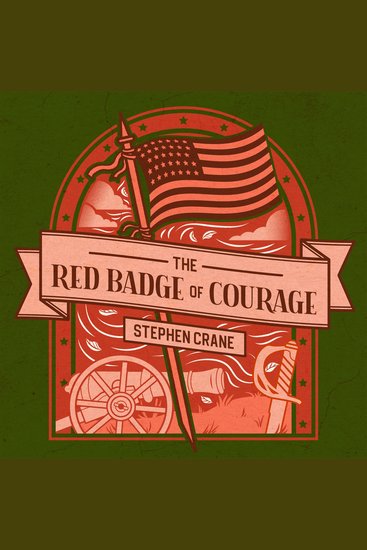
  • The Red Badge of Courage - cover

    The Red Badge of Courage

    Stephen Crane

    • 0
    • 0
    • 0
    The Red Badge of Courage is the story of an eighteen-year-old boy whose romantic ideas about military life move him to join the Civil War, a conflict that is, to this day, the deadliest war in American history. Henry Fleming, the boy, often referred to as “the youth,” is from New York, the state to suffer the most casualties. When “the youth” finds himself in the middle of his first battle against a regiment of Confederate soldiers, he panics and deserts his regiment. From this premise, Stephen Crane explores the boy’s struggle to gain courage and maturity. There is no critical consensus on if and how Henry comes to better understand himself and the world. But readers have long praised the novel’s depiction of the chaos and psychological intensity of war. 
    Cover illustrated by: Sheila Wong 
    Sheila Wong is a graphic designer and illustrator based in the Pacific Northwest. Her work often pulls from a variety of experiences - from growing up as a child of Chinese immigrants in the Midwest, to years working in tech support and then design in the heart of Silicon Valley. When not at work, she is usually looking for new places to go camping, or building mechanical keyboards.
    Show book
  • The Pit and the Pendulum - cover

    The Pit and the Pendulum

    Edgar Allen Poe

    • 0
    • 0
    • 0
    Another horrifying episode from the brilliant mind of Edgar Allen Poe. Imagine that you've been sentenced to death, but you don't know what the punishment is until it happens. The fear breathes life into a scream and BOOM!
    Show book
  • Mac Beth - cover

    Mac Beth

    William Shakespeare

    • 0
    • 0
    • 0
    "Macbeth," a timeless and intricately woven tragedy, unveils the dark, intricate layers of human ambition, fate, power, and morality. Set against the backdrop of medieval Scotland, this play serves as an exploration of the human condition, revealing the devastating consequences of unchecked ambition and the corrupting force of power. 
     
    Historical and political contexts provide a foundation for understanding "Macbeth." The play draws inspiration from Holinshed's Chronicles, which chronicle Scottish history, and it resonates with the political anxieties of the early 17th century. King James I's ascent to the English throne in 1603 adds depth to the themes of regicide and political instability. "Macbeth" can thus be seen as a reflection of the Stuart monarchy, emphasizing the questions of legitimacy and the dangers of seeking power through usurpation. Macbeth's unchecked desire for power drives him to commit heinous acts and lose his sense of self, showcasing the moral decay that ambition can bring. The interplay between "fate and free will" is another central theme. While the witches' prophecies set events in motion, it is Macbeth's choices that lead to his tragic demise. This duality raises profound questions about human agency in the face of external forces. "Power and morality" are intertwined themes in the play. As Macbeth ascends to the throne by committing regicide, the consequences of ruthless ambition become evident. The disruption of the natural order is mirrored in the play's imagery, reflecting the moral chaos of Macbeth's actions. 
    In conclusion, "Macbeth" remains a masterful work of literature, captivating and thought-provoking at the university level and beyond. With its intricate characters, rich themes, and masterful use of language, it offers a profound exploration of human nature, ambition, fate, and morality.
    Show book
  • Loss of Breath - cover

    Loss of Breath

    Edgar Allan Poe

    • 0
    • 0
    • 0
    Loss of Breath is a humorous short story by Edgar Allan Poe that first appeared in a 1832 issue of The Philadelphia Saturday Courier.
    Show book