Join us on a literary world trip!
Add this book to bookshelf
Grey
Write a new comment Default profile 50px
Grey
Subscribe to read the full book or read the first pages for free!
All characters reduced
Workbook on Becoming by Michelle Obama | Discussions Made Easy - cover

Workbook on Becoming by Michelle Obama | Discussions Made Easy

BookMaster

Publisher: BookMaster

  • 0
  • 0
  • 0

Summary

Workbook on Becoming by Michelle Obama | Discussions Made Easy

Michelle LaVaughn Robinson Obama was the first lady of the United States, and she focused her attention on social issues such as poverty, healthy living, and education. She is an American attorney and author who served as First Lady of the United States from 2009 to 2017. She held this position for the first time in the history of the African-American community. She went on to Princeton University, where she earned a B. A. in Sociology, which she received with honors in 1985. Following that, she went on to study law at Harvard Law School, where she participated in demonstrations calling for the enrollment and hiring of a greater number of minority students and faculty members. Her Juris Doctorate was awarded to her in 1988.    
After graduating from law school, Michelle worked as an associate in the Chicago branch of the law firm Sidley Austin, where he specialized in marketing and intellectual property law issues. She joined the University of Chicago in 1996 as associate dean of student services, where she was responsible for establishing the school's first community-service program. The University of Chicago Medical Center hired her as vice president for community and external affairs in May 2005, and she continued to work part-time at the institution until shortly before her husband was officially appointed to the position of president. She advocated on behalf of military families, assisted working women in balancing career and family, encouraged national service, promoted the arts and arts education, among other things, during her time as first lady. 

Gain a deeper understanding, wisdom and insight to transform your understanding with this companion workbook containing the following major sections:
Discussions on the book and its chapter by chapter contents

	Main insights, key themes and takeaways of Becoming


	Arrangement of the chapters, scenes, and content of the book


	Messages and important reflections to consider after reading book
	Personal or group discussions on alternate outcomes or suggestions to spark discussions by readers or groups.


Discussions on the reception of the book by readers and critics


	Discussions on the worldwide acclaim of the book and its reception by the readers 
	What critics say about Becoming and the main ideas of chapters


	Impact of the book and how it can relate to us individually or society as a whole


Discussions on the success and uniqueness of the book


	Awards and/or recognitions received by Michelle Obama for the success and importance of the publication 


	Breakdown to the ingredients of its success and how it can be replicated in different environments and circumstances 
	How readers engage with the content of Becoming and why readers are drawn to its message


	The separating factor from similar or previous titles and its uniqueness in the marketplace for readers


If you’re looking for a concise informative summary and workbook in less than an hour, click the "Buy now with 1-Click" or “Read for Free” for instant download!
Available since: 06/20/2022.


Other books that might interest you

  • EATING DISORDERS FOOD ADDICTION AND ULTRA-PROCESSED FOOD DEPENDENCY: Defining the Problem - Finding the Solution - cover

    EATING DISORDERS FOOD ADDICTION...

    Marty Lerner Ph.D

    • 0
    • 0
    • 0
    Food Addiction and Ulta-Processed Food Dependency are diseases typified by loss of control over the ability to stop eating certain foods. Scientifically, food addiction is a cluster of chemical dependencies on specific foods or food substances. After ingesting highly palatable foods, such as those containing significant amounts of sugar, flour, excess fat, and/or salt, some people’s brains crave these foods. In addition, the more processed a food or substance is, the greater its addictive potential. Over time, the progressive eating of these foods distorts a person’s thinking and leads to negative consequences they do not want but cannot stop. What follows is a description of these phenomena and how they are like and different from eating disorders. Further, the book explores the utilization of a substance abuse treatment model as it applies to recovering from these addictive and compulsive disorders.
    Show book
  • Security Secrets: Transform Your Knowledge for Ultimate Protection - "Unlock your expertise with audio lessons designed to boost your security knowledge for maximum protection!" - cover

    Security Secrets: Transform Your...

    Ronan Ashworthy

    • 0
    • 0
    • 0
    Security Secrets: Transform Your Knowledge for Ultimate Protection 
    ⭐⭐ Simplified Guide & Explanations Included ⭐⭐ 
    Are you eager to elevate your career and enhance your expertise in cybersecurity? 
    Do you need a thorough guide that encompasses everything required to master the essential cybersecurity concepts for a successful career today? 
    Your search ends here! 
    This guide is your ultimate resource for deepening your understanding, applying your skills, and engaging in practical exercises. With this knowledge in hand, you are set for success. 
    Updated for the latest cybersecurity standards and practices. 
    Key features of this enhanced guide: 
    - In-depth insights into pivotal cybersecurity concepts and practices essential for a successful career. 
    - Comprehensive explanations of critical security strategies and measures. 
    - Effective strategies for preparation and real-world application in cybersecurity. 
    Our guide stands out due to its thorough coverage, which is crucial for your career advancement. Key concepts are explored in depth and with clarity. 
    Please remember that this guide is an independent resource and is not affiliated with any official cybersecurity organization. 
    Structured for clarity with straightforward language, our guide to mastering cybersecurity concepts ensures seamless transitions between topics. Say goodbye to convoluted terminology and embrace content that is clear, precise, and technically accurate. 
    So, why hesitate? Click the BUY NOW button, secure your guide, and embark on your journey toward a successful career in cybersecurity!
    Show book
  • Catching Up to FTX - Lessons Learned in My Crusade Against Corruption Fraud and Bad Hair - cover

    Catching Up to FTX - Lessons...

    Ben Armstrong

    • 0
    • 0
    • 0
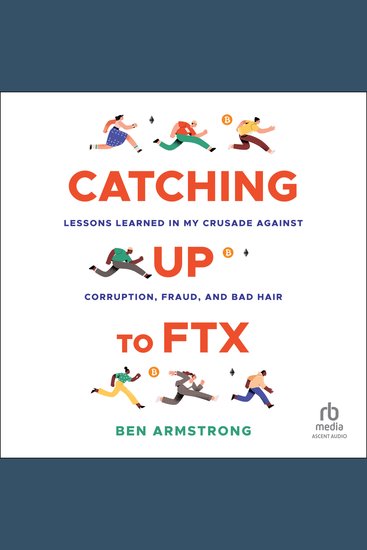
    In Catching Up to FTX: Lessons Learned In My Crusade Against Corruption, Fraud, and Bad Hair, celebrated YouTuber and podcaster Ben Armstrong delivers the extraordinary and compelling story of the rise and fall of FTX and its well-known founder Sam Bankman-Fried. Tracking the history of crypto exchanges from the original Mt. Gox to FTX and Binance, the author describes the history of fraud that has characterized much of the industry. 


    Armstrong outlines the history of Alameda Research, FTX, and Sam Bankman-Fried, including a first-hand account of what he saw in the Bahamas when the indicted crypto titan was extradited from his home to face dozens of criminal and regulatory charges in the United States. He also discusses: 


    ● The weird and contradictory motives that drove Sam Bankman-Fried's brazen actions 


    ● A blow-by-blow account of the downfall of Alameda Research, FTX, and Sam Bankman-Fried 


    ● The red flags that many ignored—and a few didn't—that preceded the collapse of FTX 


    The perfect book for anyone interested in crypto, finance, and corporate scandal, Catching Up to FTX will earn a spot on the bookshelves of everyone looking for an intense rollercoaster of a true story.
    Show book
  • Stop Overthinking - How to Eliminate Negative Thinking Let Go of Anxiety in Relationship Declutter Your Mind and Rewire Your Anxious Brain to Stop Worrying and Be Happy - cover

    Stop Overthinking - How to...

    Peter Greyson

    • 0
    • 0
    • 0
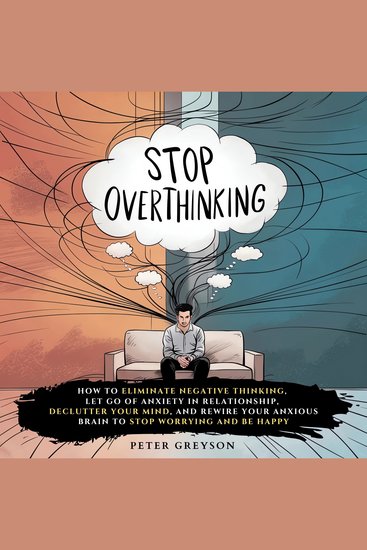
    Are you ready to break free from the chains of overthinking and unleash your inner happiness? Dive into "Stop Overthinking” and picture a life where your mind is a serene sanctuary, far from a chaotic battleground of worries. Imagine waking up each day with a sense of calm, and clarity that propels you forward with unstoppable positivity! In this electrifying audiobook, you'll discover the keys to unlock your mind's potential and banish those pesky overthinking habits for good. Say goodbye to sleepless nights and get ready to experience a transformation like never before: eliminate negative thinking, let go of ankiety and declutter your mind. After listening, you'll emerge as a force to be reckoned with—empowered, inspired, and ready to embrace life's challenges with gusto! Say hello to a future filled with Joy and endless possibilities. Are you ready to embark on the journey to freedom from overthinking? Press play and let the transformation begin! Your future self will thank you.
    Show book
  • Summary - Half Broke Horses - Based On The Book By Jeannette Walls - cover

    Summary - Half Broke Horses -...

    Brief Books Publishing

    • 0
    • 0
    • 0
    SUMMARY 
      
    HALF BROKE HORSES 
    BASED ON THE BOOK BY JEANNETTE WALLS 
      
    SUMMARY WRITTEN BY: BRIEF BOOKS PUBLISHING 
      
    CONTENT 
    Salt Draw 
    The Miraculous Staircase 
    Promises 
    The Red Silk Shirt 
    Lambs 
    Teacher Lady 
    The Garden of Eden 
    Gumshoes 
    The Flyboy 
    General Analysis 
      
    ABOUT THE ORIGINAL BOOK 
    "Half Broke Horses" by Jeannette Walls tells the true-life story of Lily Casey Smith, a fiercely independent woman who lived a remarkable life in the early 20th century. The narrative follows Lily from her childhood on a Texas ranch through her various adventures as a teacher, a wife, and a mother. She faces challenges with resilience and determination, always seeking her purpose in life. The book explores themes of self-reliance, the importance of education, and the complex relationships within a family. It delves into Lily's unconventional approach to life, including her methods of teaching, her unique way of relating to horses, and her ability to adapt to any circumstance. Lily's journey is marked by both triumphs and hardships, but her indomitable spirit remains a constant force throughout the book.
    Show book
  • Why Intelligent People Do Stupid Things - The Paradox of Smart Decision-Making - cover

    Why Intelligent People Do Stupid...

    John Harpoon

    • 0
    • 0
    • 0
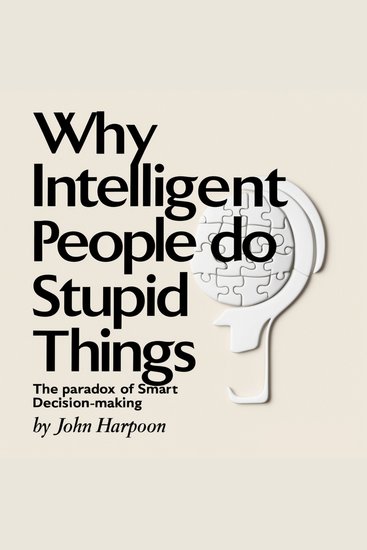
    Intelligence is often seen as the key to making sound decisions, yet many highly intelligent individuals find themselves making choices that defy logic and reason. This paradox is at the heart of why even the smartest people can sometimes act in ways that are seemingly irrational. Despite possessing vast knowledge, sharp problem-solving skills, and an ability to think critically, intelligent people often fall victim to cognitive biases, emotional triggers, and societal pressures that lead them to make poor decisions. Understanding why this happens requires an exploration into the intricate relationship between intelligence and decision-making. 
      
    At the core of this paradox lies the idea that rationality and intelligence do not always go hand in hand. While intelligence may increase the ability to process information and analyze complex scenarios, it does not always shield individuals from the cognitive biases that distort perception and judgement. In fact, many intelligent individuals are even more susceptible to these biases because they rely heavily on their analytical skills, assuming that their logic will always lead them to the right conclusion. However, this overreliance can blind them to the emotional and social factors that influence decision-making, causing them to overlook key details or make choices based on faulty assumptions. 
      
    Furthermore, decision-making is not solely a rational process; emotions play a crucial role in guiding our actions, and they can often override logic. Intelligent individuals are not immune to emotional influences such as stress, fear, or the desire for instant gratification. These emotions can cloud judgement, leading to impulsive decisions or the failure to consider long-term consequences. This is particularly true in high-pressure situations where the stakes are high, and the need to make quick decisions can push even the most intelligent person into making mistakes.
    Show book