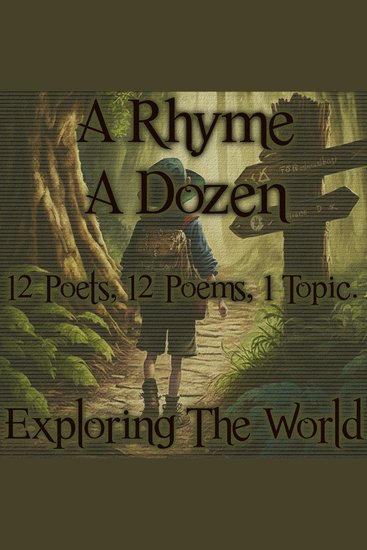
Begleiten Sie uns auf eine literarische Weltreise!
Buch zum Bücherregal hinzufügen
Grey
Einen neuen Kommentar schreiben Default profile 50px
Grey
Jetzt das ganze Buch im Abo oder die ersten Seiten gratis lesen!
All characters reduced
The Iliad - cover

The Iliad

Bookish, Homer Homer

Verlag: Bookish

  • 0
  • 0
  • 0

Beschreibung

One of The New York Times 100 Notable Books of 2023 • A Washington Post Best Book of the Year 2023 • One of Atlantic's Best Books of 2023 • One of Time's 100 Must-Read Books of 2023 • One of New Statesman's 2023 Books of the Year • One of Electric Literature's Best Poetry Collections of 2023

Witness the Clash of Titans in Homer's Timeless Tale of Heroes, Gods, and Fate.

Step back in time to the Bronze Age and immerse yourself in the thrilling world of Homer's Iliad. Witness the legendary clash between Greeks and Trojans as they battle for honor, glory, and the fate of Helen of Troy. Encounter brave heroes like Achilles, Hector, and Odysseus, whose struggles and choices resonate across millennia. Feel the wrath of gods, the sting of betrayal, and the bittersweetness of victory alongside them.

The Iliad is more than just a war story; it's a timeless exploration of human nature, the complexities of war, and the enduring power of love, loss, and hope. Its captivating characters, breathtaking battles, and profound themes have captivated readers for centuries, influencing countless writers and shaping Western culture.

"The Iliad is a cornerstone of Western literature, offering timeless insights into human nature and the power of storytelling." - The New York Times

"Homer's masterpiece continues to resonate with readers today, reminding us of the enduring themes of war, love, and loss." - Goodreads Reviewer

Unleash the epic adventure within! Order your copy of the Iliad today and embark on a journey that will transport you to another world and leave you forever changed.
Verfügbar seit: 12.02.2024.
Drucklänge: 846 Seiten.

Weitere Bücher, die Sie mögen werden

  • Dubliners - cover

    Dubliners

    James Joyce

    • 0
    • 0
    • 0
    "Dubliners" is a collection of 15 short stories by James Joyce, chronicling the lives of various characters in Dublin, Ireland, at the turn of the 20th century. Each story offers a snapshot of life, capturing moments of realization, epiphany, and the struggles of everyday Dubliners. Themes of paralysis, the search for meaning, the constraints of society, and the tensions between the desire for escape and the pull of home are recurrent. The stories culminate with "The Dead," considered one of the greatest short stories in the English language.
    Zum Buch
  • Occurrence at Owl Creek Bridge and Other Stories An - Classic Tales Edition - cover

    Occurrence at Owl Creek Bridge...

    Ambrose Bierce

    • 0
    • 0
    • 0
    There is a bridge at Owl Creek that is surrounded by dry and cracking driftwood. Burning the bridge would be the perfect way for a civilian Southerner to strike a blow against the Union Army. But Peyton Farkuar doesn’t make it that far. And instead, finds a rope around his neck.
    Zum Buch
  • Connective Tissue - cover

    Connective Tissue

    Janey Fraser

    • 0
    • 0
    • 0
    This collection of short fiction aims to define the sometimes indefinable and to give voice to those struggling to make sense of what life throws at them. There are those who travel in a continuous loop on London's underground and those who dance at night with the departed. A woman confronts herself in a bedroom mirror after decades of denial and a widow finds comfort in an osteopath's consulting room. And then there is a strange creature who falls to earth; dreams and portents; crows and folklore, and much more.
    The stories are tragic and comi-tragic, but all reveal the strength and complexity of the human spirit. They bring poignant insights on grief, loss and longing and the depths and strangeness of the human psyche and how we manage to survive and just about cope.
    Zum Buch
  • The Marseillaise - From their pens to your ears genius in every story - cover

    The Marseillaise - From their...

    Leonid Andreyev

    • 0
    • 0
    • 0
    Leonid Nikolaievich Andreyev was born on 21st August in Oryol, Russia to a middle-class family of Polish, Ukranian and Finnish ancestry. 
    He studied law in Moscow before working as a police-court reporter for a daily newspaper.  His literary efforts at this time were confined to poetry and those he did try to get published were all rejected.  
    In 1898 his first short story ‘Bargamot and Garaska’, published in the ‘Kurier’ newspaper caught the attention and friendship of Maxim Gorky.  Andreyev now discarded any other career path apart from that of author. 
    His first collection of short stories appeared in 1901 and sold over a quarter of a million copies.  He was a sensation. Using his interest in psychology and psychiatry gave him an almost unrivalled ability to delve into the human psyche and create astonishing characters. 
    During the first Russian revolution Andreyev was a staunch defender of democratic ideals and many of his stories reflected the heated mood of the times. With the 1905 Revolution’s failure his work became pessimistic and despairing. By the beginning of the following decade he began losing his audience to new literary movements such as the Futurists. 
    He published little after 1914 except political writings, instead working as the literary editor of the ‘Russian Will’ newspaper.  When the Bolsheviks took power he sensed catastrophe was coming and moved to Finland where he spent his last years in poverty distraught at the outcome of the Revolution. 
    Leonid Andreyev died of heart failure on 12th September 1919 at the age of 48 in Mustamäki, Finland. 
    His classic story ‘Lazarus’ brilliantly tells the story of Christ’s disciple, forced to wander the earth for all time is both chilling and heart-breaking in its Russian setting.
    Zum Buch
  • Defeat of Youth and Other Poems - cover

    Defeat of Youth and Other Poems

    Aldous Huxley

    • 0
    • 0
    • 0
    Though later known for his essays and novels, Aldous Huxley started his writing career as a poet. Published in 1918, The Defeat of Youth and Other Poems is his third compilation of poetry. The volume begins with "The Defeat of Youth", a sequence of twenty-two sonnets that explores irreconcilability of the ideal and the disappointing reality. Jerome Meckier called it “the century’s most successful sonnet sequence, better than Auden’s or Edna St. Vincent Millay’s.” In the rest of the volume, Huxley continues to explore themes started in The Burning Wheel, his first volume of poetry, including vision, blindness, and other contrasts. The volume concludes with two English translations by Huxley of two French poems: Stéphane Mallarmé’s 1876 poem “L’Après-midi d’un faune" and Arthur Rimbaud’s (1871) poem “Les Chercheuses de poux,” translated as “The Louse Hunters.”  Summary by Mary Kay.
    Zum Buch
  • If I Were a Man - From their pens to your ears genius in every story - cover

    If I Were a Man - From their...

    Charlotte Perkins Gilman

    • 0
    • 0
    • 0
    Charlotte Perkins Gilman was born on 3rd July 1860 in Hartford, Connecticut, to an unaffectionate mother and a father who abandoned her and her older brother to a life of poverty. 
    Inevitably her schooling was limited and by 15 she had attended seven different schools but received only four years education.  However Charlotte was resourceful and did spend time with her father’s aunts – the suffragist Isabella Beecher Hooker and the ‘Uncle Tom Cabin’s’ author, Harriet Beecher Stowe as well as many hours at the public library studying ancient civilisations. 
    In 1878, she enrolled in classes at the Rhode Island School of Design where she met Martha Luther and they developed a close relationship until Luther married in 1881. Charlotte was devastated and detested romance and love until she met and married the artist Charles Walter Stetson.  
    Their only child, Katharine Beecher Stetson, was born in 1885 but left Charlotte with post-natal depression, then often dismissed as a case of hysteria or nerves.  Unsuited to domestic life she ruptured her life and moved to California with Katherine.  She divorced in 1894 and then sent Katharine east to live with her father and his second wife confirming that his paternal rights be acknowledged and that Katherine establish a relationship with her father. 
    After her mother died in 1893, Charlotte moved back east and became involved with her first cousin, Wall Street attorney, Houghton Gilman who she married in 1900. After his death she moved back to California, where Katherine now lived.   
    Her most popular story is ‘The Yellow Wallpaper’ which touched on her own post-partum depression and underlined the need for women to be responsible for their mental and physical well-being, as the narrator is ordered by her husband/doctor to take compete rest in her room where she is isolated and becomes obsessed with the revolting yellow wallpaper.   
    She wrote other notable short stories the best of which we also include.   
    Charlotte lectured widely for social reform, wrote important non-fiction works that questioned our patriarchal system and left a legacy as a leading and positive spokesperson for feminism.  
    She was diagnosed with incurable breast cancer in 1932 and, as she wrote in her suicide note and autobiography, she ‘chose chloroform over cancer’    
    Charlotte Perkins Gilman took her own life on 17th August 1935, aged 75, in Pasadena, California.
    Zum Buch