Join us on a literary world trip!
Add this book to bookshelf
Grey
Write a new comment Default profile 50px
Grey
Subscribe to read the full book or read the first pages for free!
All characters reduced
Working with the Hands - A Sequel to "Up from Slavery" - cover

Working with the Hands - A Sequel to "Up from Slavery"

Booker T. Washington

Publisher: Diamond Book Publishing

  • 0
  • 0
  • 0

Summary

In this sequel to the landmark work Up from Slavery, Booker T. Washington discusses his time spent at the school which would later become Tuskegee University. Washington was the founder and moral compass of the school, so these reflections on his work offer invaluable insight into his mind, the dreams realized and the real world struggles.
Available since: 12/07/2021.

Other books that might interest you

  • Driving Lessons - A Road Trip through American Travel Literature - cover

    Driving Lessons - A Road Trip...

    Christopher B. Strain

    • 0
    • 0
    • 0
    In Driving Lessons, Christopher B. Strain sets out on a quintessential American road trip, exploring not just the roads and byways of the country but the road trip's place in American culture. Strain dives into the well of American travel writing, illuminating fascinating aspects of the road trip, such as how race, class, and gender shape the experiences of road trippers. 


    In the summer of 1998, amid a professional crisis of confidence, Strain settled on a plan to reconnect with both himself and the country he studies. He purchased a 1972 Volkswagen Westfalia van and set off on his own cross-country odyssey. In the weeks that followed, he ruminated on his own ongoing journey alongside great journeys from the past and how they reveal the heart of the traveler as well as the landscape of the nation. 


    Visiting archives and landmarks across the United States, Strain's journey became a parallel to the stories he studied—an opportunity to see and experience the cities, national parks, and monuments that define United States history. Driving Lessons is a compelling blend of literary analysis and memoir, offering listeners an insightful and heartfelt reflection on the enduring power of the American road trip.
    Show book
  • The Animal in Me - a memoir of a lifetime of being with animals - cover

    The Animal in Me - a memoir of a...

    Bill Thompson

    • 0
    • 0
    • 0
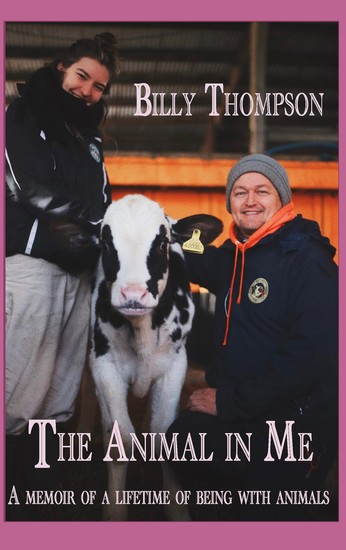
    This remarkable book, ‘The Animal in Me’, is pretty sure to put a smile on your face.
    Few of us end up living our passion in the way that Billy Thompson does, but there is something so pure and single-minded about the way he lives his life, that is so utterly selfless and principled, so relentlessly optimistic, and decent in defiance of appalling cruelty, that you can’t help feeling better about the world because you know there are people like Billy in it. Ultimately this book is about kindness and that is what Billy Thompson is all about. Kindness, compassion and seeing the joy in all life. His tales are captivating and engaging, with Billy’s charm and humour running across every page. The intensity of Billy’s passion has caused him to lead a rich, varied and unorthodox life which is a joy to discover. This book is a collection of often hilarious anecdotes that illustrate just how gratifying rescuing animals can be.
    Show book
  • Ghost Light - A Memoir - cover

    Ghost Light - A Memoir

    Frank Rich

    • 0
    • 0
    • 0
    There is a theater superstition that if the emptied house is ever left completely dark, a ghost will take up residence. To prevent this, a single "ghost light" is left burning at center stage after the audience and all of the actors and musicians have left. In this eloquent and moving memoir, celebrated New York Times drama critic and columnist Frank Rich reveals how theater became a beacon of security for him as a child. As he struggled with his parent's divorce, Rich found his way in a tumultuous world, transformed by the magic of Broadway.
    Show book
  • Nefertiti - The Beautiful Queen of Ancient Egypt - cover

    Nefertiti - The Beautiful Queen...

    Omar Khalil

    • 0
    • 0
    • 0
    Nefertiti, one of ancient Egypt’s most captivating and influential queens, remains a figure shrouded in mystery and intrigue. Her name, meaning “the beautiful one has come,” hints at her exotic origins, though little is known for certain about her early life. Some historians believe she was a member of the Egyptian nobility, possibly the daughter of Ay, a prominent official. Others suggest foreign origins, potentially linking her to Mitanni royalty. Regardless of her birthplace, Nefertiti’s remarkable journey from obscurity to queenhood is a testament to her enduring legacy. 
    Nefertiti’s life took a dramatic turn when she married Amenhotep IV, later known as Akhenaten. Their union marked the beginning of one of ancient Egypt’s most transformative periods. As Akhenaten’s Great Royal Wife, Nefertiti played a central role in the royal family, often depicted alongside her husband in scenes of worship and domestic life. Their partnership appeared to be one of both love and power, as Nefertiti is shown participating actively in religious ceremonies and royal duties, signifying her status as more than just a consort. 
    Upon ascending to the throne, Akhenaten and Nefertiti initiated radical religious changes, abandoning traditional polytheism in favor of the monotheistic worship of Aten, the sun disk. This religious revolution, known as the Amarna Period, saw the couple establish a new capital, Akhetaten, modern-day Amarna. Nefertiti’s involvement in this spiritual shift was profound, as she was frequently depicted alongside Akhenaten, worshiping Aten with equal devotion. She became a symbol of the new religious order, embodying divine femininity and royal authority.
    Show book
  • Making the Rounds - Defying Norms in Love and Medicine - cover

    Making the Rounds - Defying...

    Patricia Grayhall

    • 0
    • 0
    • 0
    What was it like to survive an illegal abortion, come out as a lesbian, and train to become a doctor in the late 1960s and early ’70s—before Roe v. Wade, before Title IX, and in a homophobic nation? 
    In this unflinching and riveting coming-of-age memoir, Patricia Grayhall battles sexism in a male-dominated profession. She plunges into a life that is never boring—and certainly never without passion. 
    Tossed around in the rough seas of medical training, chronically exhausted and emotionally drained, Patricia chafes at the toxic masculinity of the culture of medicine facing many of the same issues women face in male-dominated fields today. 
    Although the sexual revolution and women’s movement in the early 1970s celebrate women’s desire, one barrier after another prevents Patricia from finding the supportive long-term relationship she yearns for. Will she risk her career to find the love she seeks? 
    “Inspiring, heartfelt, and brutally honest . . . this is a book that will give women and those who care about them the strength and motivation to persevere. . ." —Seattle Book Review 
    This book, named one of Kirkus Reviews’ Best 100 Indie Books of 2022, is the inspiring and true story of how one woman navigates these stormy seas without signposts to reach her goals—often battered, but never broken. 
     
    Show book
  • Allen Dulles: The Life of the CIA’s Most Powerful and Notorious Director - cover

    Allen Dulles: The Life of the...

    Editors Charles River

    • 0
    • 0
    • 0
    The 28-year period from 1933-1961, bracketed on one end by Hitler’s rise to power in Germany and on the other by the very height of the Cold War, was marked by a remarkably stable succession of American presidents. In fact, only three men held office in this period, and that predictability led to a general stability among government agencies. Conversely, the CIA had five different directors in its first 15 years, from 1946-1961, and then nine different directors in the next 20, with four of those directors serving less than a year. But of all the CIA’s directors, none wielded the immense influence or power of Allen Dulles, who, together with his brother, Secretary of State John Foster Dulles, became arguably the two most powerful people in the government after the president.  
    	To this day, Dulles’ eight-year tenure in that office is the longest, and as one of the country’s leading experts in international law, intelligence, and spycraft, he became renowned for his unwavering anti-communist ideology and readiness to take decisive measures to counter what he perceived as a menace to American safety. As such, it would be Dulles who sanctioned many of the CIA’s most notorious operations, including the ousting of Iran's democratically elected government in 1953, spying and experimentation on American citizens, and the disastrous Bay of Pigs. That last episode cost him his job, though he continued to play a role in American political life after President John F. Kennedy forced him out of the CIA in 1961.  
    	By then, however, Dulles had already had an outsized influence on the direction of the country, and to this day his legacy can be felt, even as his reputation continues to be a source of much debate. 
    Show book