Join us on a literary world trip!
Add this book to bookshelf
Grey
Write a new comment Default profile 50px
Grey
Subscribe to read the full book or read the first pages for free!
All characters reduced
Mexico's Aztec Roots - cover

Mexico's Aztec Roots

Marcus Blackwell

Publisher: Publifye

  • 0
  • 0
  • 0

Summary

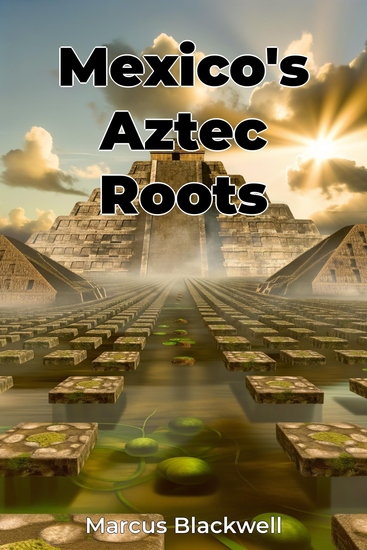
"Mexico's Aztec Roots" explores the fascinating transformation of Mexican society from the height of the Aztec Empire through the colonial period, revealing how the collision of two distinct worlds created modern Mexico's unique cultural identity. The book masterfully weaves together archaeological evidence, colonial documents, and indigenous records to present a comprehensive view of this crucial historical period.

 
Through careful examination of recent discoveries at the Templo Mayor site, readers gain unprecedented insights into daily life in Tenochtitlan, from its sophisticated urban planning to its complex market systems and religious ceremonies. The narrative progresses through three major phases, beginning with a detailed examination of pre-Columbian Aztec civilization, challenging simplified historical accounts with evidence of their advanced diplomatic and educational systems.

 
Moving beyond traditional conquest narratives, the book explores the nuanced role of indigenous allies and political dynamics in the Spanish conquest, before delving into the emergence of mestizo culture. Throughout each section, the author draws upon multidisciplinary sources, including linguistics, anthropology, and archaeology, to provide a well-rounded understanding of Mexico's cultural evolution.

 
What sets this work apart is its balanced approach to examining cultural transformation, using regional case studies to demonstrate how indigenous communities maintained their identity while adapting to new systems. The book's accessible academic style makes complex historical processes understandable for both scholars and general readers, while its integration of recent archaeological findings and revised interpretations of historical documents offers fresh perspectives on Mexico's rich cultural heritage.
Available since: 01/08/2025.
Print length: 96 pages.

Other books that might interest you

  • Brain Addicted and Deep Psychology - cover

    Brain Addicted and Deep Psychology

    Jim Colajuta

    • 0
    • 0
    • 0
    Addiction is a treatable, chronic medical disorder that involves intricate connections between brain circuits, genetics, the environment, and a person's life experiences. Addicts utilize substances or participate in obsessive behaviors, which they frequently continue despite negative consequences. Many, but not all, people begin using drugs or engaging in an activity voluntarily. Addiction, on the other hand, can take over and impair self-control. People suffering from addiction lose control over their activities. They want and pursue drugs, alcohol, or other substances at any cost, even destroying friendships, harming family, or losing employment. A healthy brain encourages healthy behaviors such as exercise, eating, and socializing with loved ones. It accomplishes this by activating brain circuits that make you feel great, urging you to repeat those activities.On the other hand, when you're in danger, a healthy brain prompts your body to react rapidly with dread or alarm, allowing you to escape from harm's path. If you're tempted to do something questionable, such as eat ice cream before dinner or buy the stuff you can't afford, the front regions of your brain can help you evaluate if the consequences are worth it. However, when you become hooked on a substance, the typical hardwiring of beneficial brain functions can start to operate against you. Drugs or alcohol can alter your brain's pleasure/reward pathways and trap you into wanting more and more. Addiction can also activate your emotional danger-sensing circuits, causing you to feel nervous and tense even when you aren't using drugs or alcohol.While standard psychology sees addiction as a brain condition, depth psychology sees addiction as an internal psychic process, a calling that unites the soul and ego. This book delves deeply into addiction as a psychic phenomenon. The study proposes a way for recovery, based on the Bible and the tale of Exodus, by transforming the mentality from servitude to freedom.
    Show book
  • Dagestan: The History and Legacy of Russia’s Most Ethnically Diverse Republic - cover

    Dagestan: The History and Legacy...

    Charles River Editors

    • 0
    • 0
    • 0
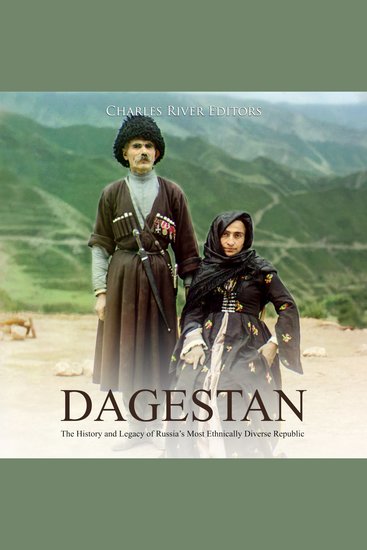
    Wedged in the North Caucasus mountain range and bordering the Caspian Sea, Dagestan is a true meeting point of cultures, religions and geopolitical rivalries. A crossroad between east and west, Dagestan has been vitally important at different times for various powers in Asia, Europe, and the Middle East, and even between different religious and ethnic groups. In spite of all that, and in large measure because of it, Dagestan’s society is a composite of these rivalries over the centuries.  
    	Today, Dagestan is part of the Russian Federation, but its history happens to be both indicative and idiosyncratic of the region’s fascinating and complex development. Dagestan shares many similarities with its smaller neighbor to the west, Chechnya, without receiving as much attention from outside historians and journalists. This is despite the fact Dagestan is home to around three million inhabitants with a range of languages, ethnicities and religions. Islam is the dominant religion at over 80% of the population, with the majority being Sunni Muslims, but the majority ethnic group, the Ayars, only make up about 30% of the population. Dagestan’s capital city is little-known Makhachkala, and the rest of the country contains spectacular mountain ranges of over 12,000 feet in height, as well as lakes and major rivers like the Terek, Sulak and Samur.  
    	This geography has made Dagestan particularly difficult for outsiders to dominate, but the relationships with outside powers nevertheless provided the tensions that runs through the history of Dagestan. Having come into contact with the Persians, Ottomans, Russians, and even Western European states, Dagestan has both been a melting point and at times almost hermetically sealed to intruders for centuries, making it one of the world’s true fault lines in terms of religion, empire, and geography. As a result, Dagestan has never truly been conquered despite its modern position within Russia.
    Show book
  • Living Resistance - An Indigenous Vision for Seeking Wholeness Every Day - cover

    Living Resistance - An...

    Kaitlin B. Curtice

    • 0
    • 0
    • 0
    In an era in which "resistance" has become tokenized, popular Indigenous author Kaitlin B. Curtice reclaims it as a basic human calling. Resistance is for every human who longs to see their neighbors' holistic flourishing. We each have a role to play in the world right where we are, and our everyday acts of resistance hold us all together. 
     
    Curtice shows that we can learn to practice embodied ways of belonging and connection to ourselves and one another through everyday practices, such as getting more in touch with our bodies, resting, and remembering our ancestors. She explores four "realms of resistance"--the personal, the communal, the ancestral, and the integral--and shows how these realms overlap and why all are needed for our liberation. Readers will be empowered to seek wholeness in the various spheres of influence they inhabit. Now in paperback. 
     
    "Readers will find abundant wisdom in this accessible guide."--Publishers Weekly
    Show book
  • Operation Rolling Thunder and Operation Menu: The History of the Vietnam War’s Most Controversial Bombing Campaigns - cover

    Operation Rolling Thunder and...

    Editors Charles River

    • 0
    • 0
    • 0
    Before the Vietnam War, most Americans would have been hard pressed to locate Vietnam on a map. South Vietnamese President Diem’s regime was extremely unpopular, and war broke out between Communist North Vietnam and South Vietnam around the end of the 1950s. Kennedy’s administration tried to prop up the South Vietnamese with training and assistance, but the South Vietnamese military was feeble. A month before his death, Kennedy signed a presidential directive withdrawing 1,000 American personnel, and shortly after Kennedy’s assassination, new President Lyndon B. Johnson reversed course, instead opting to expand American assistance to South Vietnam. 
    Over the next few years, the American military commitment to South Vietnam grew dramatically, and the war effort became both deeper and more complex. The strategy included parallel efforts to strengthen the economic and political foundations of the South Vietnamese regime, to root out the Viet Cong guerrilla insurgency in the south, combat the more conventional North Vietnamese Army (NVA) near the Demilitarized Zone between north and south, and bomb military and industrial targets in North Vietnam itself.  
    	The United States, attempting to maintain its status as leader and defender of the non-communist world, gradually offered more and more support to South Vietnam’s leaders in Saigon, and direct military intervention became inevitable after the famous Gulf of Tonkin Incident, which also greatly influenced Operation Rolling Thunder. The actual incident consisted of a skirmish between three North Vietnamese torpedo boats, which managed to put exactly one machine-gun bullet hole in an American vessel, and a follow-up in which spooked American gunners fired at phantasmal radar image on a night of severe storm. These false images, caused by meteorological conditions, later received the sobriquet “Gulf of Tonkin ghosts.” 
    Show book
  • History of Israel - History of the Jews and Canaanites (3 in 1) - cover

    History of Israel - History of...

    Kelly Mass

    • 0
    • 0
    • 0
    This book consists of three titles: 
    Canaanites - During the late 2nd millennium BC, Canaan was a Semitic-speaking civilization located in the Ancient Near East. The region held significant geopolitical importance, especially during the Late Bronze Age Amarna Period in the 14th century BC, when it became a crossroads for major empires. The Egyptian, Hittite, Mitanni, and Assyrian Empires all had areas of interest that converged or overlapped in Canaan, making it a key territory for trade, warfare, and cultural exchange. Much of our understanding of Canaan comes from archaeological excavations at sites such as Tel Hazor, Tel Megiddo, En Esur, and Gezer, where remnants of ancient Canaanite life have been uncovered. 
    History of Jerusalem - Jerusalem is one of the world’s oldest cities, with a history that stretches back thousands of years. Over the course of its existence, it has been invaded 52 times, seized and regained 44 times, besieged 23 times, and destroyed twice. The oldest portion of the city dates back to the 4th millennium BCE, making it not only a significant historical center but also a symbol of resilience and conflict. Its role in the ancient world has been central to the development of various cultures, religions, and empires that have passed through the region, contributing to its complex and contested history. 
    History of the Jews - Jewish history is a rich tapestry woven over millennia, shaped by the development of a people, their religion, and their culture as they interacted with various civilizations, faiths, and cultures. The earliest reference to Israel can be found on the Merneptah Stele, dated to between 1213–1203 BCE, marking the first historical mention of the ancient Israelite people. However, the religious and cultural narrative of the Jews stretches far earlier.
    Show book
  • The Healing Power of Story - How Reading and Storytelling Boost Mental and Emotional Well-Being - cover

    The Healing Power of Story - How...

    Davis Truman

    • 0
    • 1
    • 0
    This audiobook is narrated by an AI Voice.  
    In an age of noise, anxiety, and endless distractions, The Healing Power of Story offers a refreshing, science-backed path to inner peace and emotional strength through the timeless act of storytelling. 
    Whether it's reading a novel, sharing personal memories, or listening to others' lived experiences, stories shape who we are. But they also heal. 
    In this powerful and inspiring book, Davis Truman explores how storytelling taps into our deepest emotions, rewires our brains, and fosters resilience, empathy, and a sense of meaning. Drawing on the latest psychological research, compelling case studies, and practical exercises, Truman reveals how both reading and telling stories can: 
    •	Reduce stress, anxiety, and depression 
    •	Strengthen memory and emotional regulation 
    •	Build deeper connections and empathy 
    •	Help process grief, trauma, and life transitions 
    •	Reignite creativity and purpose 
    Whether you're a book lover, therapist, teacher, parent, or someone longing for hope and connection, The Healing Power of Story is your guide to transforming how you think, feel, and relate to the world. 
    Open a book. Share your story. Heal your life.
    Show book