Join us on a literary world trip!
Add this book to bookshelf
Grey
Write a new comment Default profile 50px
Grey
Subscribe to read the full book or read the first pages for free!
All characters reduced
The Fable of the Bees - Enriched edition - cover

The Fable of the Bees - Enriched edition

Bernard Mandeville

Publisher: DigiCat

  • 0
  • 0
  • 0

Summary

In "The Fable of the Bees," Bernard Mandeville presents a provocative and satirical critique of society that intertwines moral philosophy with economic theory. Set in the early 18th century, the work unfolds as an allegorical tale where a bee community embodies the complexities of human vice and virtue. Mandeville employs an innovative verse form and a blend of humor and sharp observation, delivering a message that challenges the contemporary moralistic view of individual actions as inherently good or bad. He posits that private vices can lead to public benefits, igniting debates about economic growth and ethical self-interest that resonate through the ages. Bernard Mandeville, a Dutch philosopher and economist, was a pioneer of social thought whose ideas were often at odds with the prevailing moral philosophies of his time. His background as a physician and a scholar exposed him to both the intricacies of human behavior and the emerging economic theories of the Enlightenment. Mandeville's keen awareness of the tensions between personal morality and societal welfare profoundly shaped his work, enabling him to articulate a revolutionary perspective on the interplay of ethics and economics. This seminal text is indispensable for those seeking to understand the foundations of modern economic thought and moral philosophy. Readers will appreciate Mandeville's unapologetic examination of human nature, and the book will inspire critical reflection on the delicate balance between individual desires and societal goods.

In this enriched edition, we have carefully created added value for your reading experience:
- A comprehensive Introduction outlines these selected works' unifying features, themes, or stylistic evolutions.
- A Historical Context section situates the works in their broader era—social currents, cultural trends, and key events that underpin their creation.
- A concise Synopsis (Selection) offers an accessible overview of the included texts, helping readers navigate plotlines and main ideas without revealing critical twists.
- A unified Analysis examines recurring motifs and stylistic hallmarks across the collection, tying the stories together while spotlighting the different work's strengths.
- Reflection questions inspire deeper contemplation of the author's overarching message, inviting readers to draw connections among different texts and relate them to modern contexts.
- Lastly, our hand‐picked Memorable Quotes distill pivotal lines and turning points, serving as touchstones for the collection's central themes.
Available since: 11/13/2022.
Print length: 535 pages.
Other books that might interest you

  • The 19th-Century Famines in Finland - Economic and Environmental Impacts - cover

    The 19th-Century Famines in...

    Sarah Willards

    • 0
    • 0
    • 0
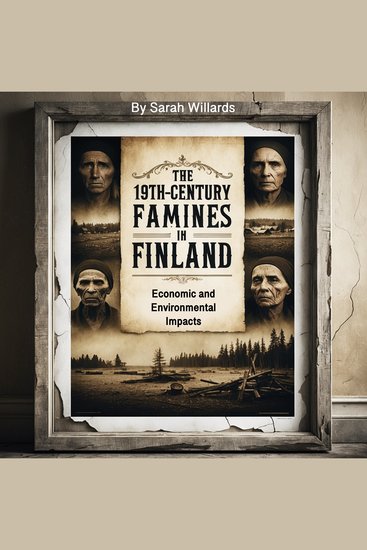
    In the 19th century, Finland was a region undergoing profound political, social, and economic transformation. Following centuries of Swedish rule, Finland was ceded to the Russian Empire in 1809, becoming an autonomous Grand Duchy under the Russian crown. This shift in governance marked a significant turning point in the nation's development, as it introduced new administrative structures and a degree of self-rule, yet still tied Finland’s fate closely to the broader political currents of imperial Russia. Despite this autonomy, many rural communities remained deeply influenced by traditional practices rooted in earlier Swedish governance and local customs. 
    Agriculture formed the backbone of the Finnish economy during this period, with the vast majority of the population engaged in farming or forestry. The rural landscape was dominated by small farms and tenant holdings, where subsistence farming was the norm. Crops such as rye, barley, and oats were staples, but yields were highly susceptible to environmental fluctuations. There was limited access to modern tools, techniques, or fertilizers, and storage methods were often inadequate, leaving communities vulnerable to failed harvests. The lack of agricultural diversity and technological stagnation only exacerbated the risks, particularly during years of poor weather or early frosts. 
    Economically, Finland was still in the early stages of development, with only a few urban centers and a limited industrial base. Trade remained modest, and most commerce was localized. The transportation infrastructure, particularly in the countryside, was underdeveloped, which made the movement of goods—especially food—slow and unreliable. The country’s dependence on its immediate environment for food and income meant that any disruption, whether climatic or political, could have devastating consequences. This fragility was compounded by population growth, which put increasing pressure on available land and resources.
    Show book
  • A Curious Curriculum - Teaching foundation subjects well - cover

    A Curious Curriculum - Teaching...

    Mick Waters, Claire Banks

    • 0
    • 0
    • 0
    Written by Claire Banks and Mick Waters, A Curious Curriculum: Teaching foundation subjects well details the insightful and transformational steps that a school can take towards designing and delivering a rich, rigorous and wide-ranging curriculum.
    Foreword by Mary Myatt.
    Rather than being a model curriculum that can be uprooted and planted in any school, the book is a model schools can use to design their own curriculum, one that not only encourages children to be active participants in their own learning, but also to see the benefits of being part of a bigger, wider family of learners.
    The authors concentrate on the foundation subjects, particularly history, geography and science but also design and technology (DT) and art and design areas that are often challenging for teachers in primary schools. Subjects are brought together and explored under "big ideas" and, crucially, the emphasis is on avoiding the superficial and trivial and rooting teaching in extending and challenging children.
    In A Curious Curriculum, Claire Banks and Mick Waters share the story of one multi-academy trust (MAT) which designed and delivered a shared educational vision, a rationale for excellence in the curriculum, and the resources and support given to help reduce teachers' workload.
    Claire and Mick present a clear model both for supporting a group of schools or leading one school, offering a fresh perspective on working on a MAT-wide curriculum, as well as providing a range of snapshot examples of the curriculum in action in the form of documents, plans, photos and the learners' own work. The book shares transferrable lessons from the trust's journey to success, setting out an educational philosophy that pairs pedagogy with a well-structured curriculum designed with learners' best interests at its heart.
    All children deserve an engaging, exciting curriculum designed to spark their curiosity, feed their imagination and develop their skills and knowledge. With clear timelines and an honest and transparent dialogue about the challenges and benefits of working together collaboratively and the importance of external expertise, A Curious Curriculum is an essential read for all school leaders.
    Suitable for executive leaders, head teachers, curriculum coordinators and subject leaders in primary school settings.
    Show book
  • The Forthcoming End of the Kali Yuga - Unravelling Cyclical Time in Ancient India - cover

    The Forthcoming End of the Kali...

    HENRY ROMANO

    • 0
    • 0
    • 0
    Hinduism has a complex system of world ages and cycles of creation and destruction as its chief characteristics. The remarkable theory of the yugas has always played a prominent role within this elaborate system. The article explains why society is and what people should do if they want to live according to religious principles. 
    India’s yuga system was formed during a crucial period in its history, roughly from the 5th century B.C.E. to the 5th century C.E. The dominant Brahmana Vedic tradition had to adapt and transform to survive. It was a period of profound change in all spheres: social, political, economic, religious, and philosophical. 
    Several challenges that confronted the authoritative religious traditions of the Time also led to revolutionary ideas that would become syncretic new religious traditions. During this period, Buddhism and Jainism emerged, and the reworked Brahmana religion we all know today as Hinduism. It was not precisely the need to confront these profound shifts in Indian religious traditions and social conditions that provided the fertile ground for a theory of world ages.
    Show book
  • Stories on lord Ganesh series - 20 - From various sources of Ganesh purana - cover

    Stories on lord Ganesh series -...

    Anusha HS

    • 0
    • 0
    • 0
    Lord Ganesh is the son of Goddess Parvati and Lord Shiva. He is the first one to get worshipped before worshipping any other god. We can say in short that there is no Hindu who doesn't perform Lord Ganesh’s worship. In Ramayana Lord Rama had worshipped Lord Ganesh. 
    In Mahabharata Lord Krishna had also worshipped Lord Ganesh. They have become the role models to the whole world. Before the beginning of any work it is common to worship Lord Ganesh. There are many Holy hymns on Lord Ganesh. Lord Ganesh’s favorite food is modak. 
    He gets pleased if we offer Durva grass to him. He also loves red Hibiscus flower. He is called the vighnaharta because he wards off all the obstacles in our life. He is also called vighnaraja. There are infinite names to Lord Ganesh which we cannot explain. He ties a snake around his waist. 
    The vehicle of Lord Ganesh is mouse in Hindu culture. Lord Ganesh is worshipped all over India. His miracles have been described in all of the 18 Puranas. There are many forms of Lord Ganesh. 
    He has got two wives one is riddhi and the other is siddhi.Lord Ganesh has got 32 forms of incarnations. The modak which you offer to Lord Ganesh will give you good results. Lord Ganesh does not bias among his devotees. He is specially worshipped on sankashti days. On Ganesh Chaturthi people fast and perform vrath.On this day it is forbidden to see Chandra the moon.
    Show book
  • Musings of a Chinese Mystic - cover

    Musings of a Chinese Mystic

    Chuang Tzu

    • 0
    • 0
    • 0
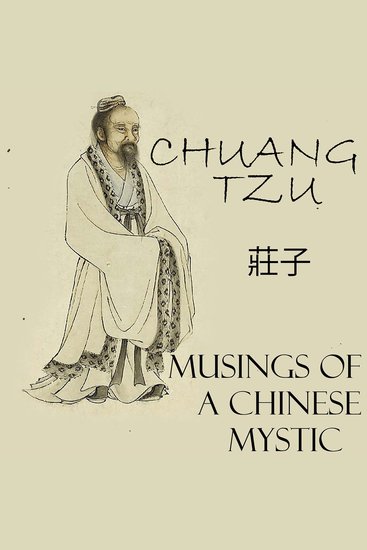
    "Musings of a Chinese Mystic" is a classic selection from the philosophical writings of Chuang Tzu, a disciple of the great Taoist philosopher Lao Tzu. An important figure in Chinese philosophy, Chuang Tzu helped to bring prominence to the philosophy of Taoism in ancient China. Drawn from the translations of Professor H. A. Giles with an introduction by Lionel Giles, "Musings of a Chinese Mystic" is an excellent introduction to the important Taoist philosophical writings of Chuang Tzu.
    Show book
  • The Mastery of Destiny - Keys to Personal Growth and Empowerment - cover

    The Mastery of Destiny - Keys to...

    James Allen, Tim Zengerink

    • 0
    • 0
    • 0
    What if you realized that the power to shape your destiny lies entirely in your own hands? 
    In this empowering treatise, James Allen champions the idea that personal growth and external success emerge from disciplined thought and unwavering resolve. Adapted for modern readers, this edition reveals practical steps for self-improvement, offering inspiring guidance on how to harness your will, elevate your mindset, and become the architect of your future. 
    What You’ll Discover in This Modern Translation: 
    - How to develop mental clarity, confidence, and focused intention 
    - The role of consistent effort and self-discipline in shaping outcomes 
    - Ways to break free from limiting beliefs and toxic habits 
    - Empowering insights that blend spiritual wisdom with personal action 
    Imagine attaining true mastery over your choices and circumstances, fueled by a clear vision and indomitable will. James Allen’s timeless work paves the way for anyone committed to living life on their own terms. 
    Take control of your fate. Get your copy now and embark on a life-changing journey of self-mastery and purposeful creation.
    Show book