Join us on a literary world trip!
Add this book to bookshelf
Grey
Write a new comment Default profile 50px
Grey
Subscribe to read the full book or read the first pages for free!
All characters reduced
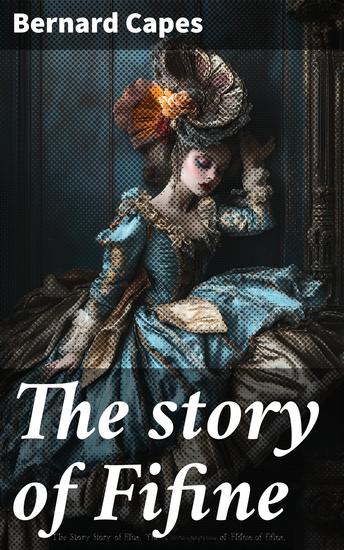
The story of Fifine - cover

The story of Fifine

Bernard Capes

Publisher: Good Press

  • 0
  • 0
  • 0

Summary

In "The Story of Fifine," Bernard Capes deftly weaves a narrative that explores the intricate dance between illusion and reality, a hallmark of his literary style that melds rich, atmospheric prose with psychological depth. Set in a world where the boundaries between dreams and waking life blur, the tale follows Fifine, a captivating yet enigmatic figure whose charm draws others into her orbit. Capes, writing during the late 19th century, reflects the era's fascination with the supernatural and the complexities of human desire, utilizing vivid imagery and detailed character studies to engage and challenge the reader. Bernard Capes, an English author known for his mastery of the weird and supernatural, drew inspiration from his own experiences in the theatrical world and his interest in psychological exploration. Born in 1854, Capes authored several works that delve into the uncanny, often reflecting his belief in the power of the subconscious. "The Story of Fifine" is a notable example of his ability to evoke disquieting emotions while enriching the reader's understanding of the human condition through vivid storytelling. This book is a must-read for those interested in late Victorian literature, as well as fans of psychological fiction and the macabre. Capes's keen insights into human nature, coupled with his innovative narrative techniques, make this tale both timeless and thought-provoking, inviting readers to delve deeper into the enigma of existence.
Available since: 03/02/2025.
Print length: 160 pages.
Other books that might interest you

  • The Pickwick Papers - cover

    The Pickwick Papers

    Charles Dickens

    • 0
    • 0
    • 0
    Nearly two centuries after The Pickwick Papers first appeared in 1837, listeners continue to enjoy the vigorous humor and heartwarming optimism of Dickens' first great literary achievement. Actor Paul Scofield evokes all the warmth and laughter of the unlikely adventures of the immortal Samuel Pickwick, Esq., and the other members of the Pickwick Club. Abetted by Pickwick's faithful manservant, Sam Weller, the Pickwickians bumble through hilarious misadventures, romantic escapades, and other twists of plot, encountering many delightfully Dickensian characters along the way.
    Show book
  • Shoshone Summer (Stonecroft Saga Book 8) - A Historical Western Novel - cover

    Shoshone Summer (Stonecroft Saga...

    B.N. Rundell

    • 0
    • 0
    • 0
    BEST-SELLING AUTHOR B.N. RUNDELL KEEPS YOU COMING BACK FOR MORE IN THE FAST-MOVING STONECROFT SAGA. 
    What started as a joyous reunion of friends, soon became one of the most challenging periods of their lives. Chosen as scouts for the Kuccuntikka village of the Shoshone for their trek to the grand encampment of the Shoshone, their encounter with the scouts from the Tukkutikka band would set them on a different course altogether. When Gabe meets the war leader of the other band, he is challenged at every turn by the woman warrior, his equal on every count. But when they are attacked by Blackfoot, a battle rages… 
    When a raiding party of Hidatsa warriors strikes another band of Shoshone, an old friend, the war leader of the Agaideka Shoshone, asks Gabe and Ezra to join in the vengeance party to rescue the five captive girls, one of whom is his niece known as Sacajawea. But raiding Blackfoot and Hidatsa war parties were not the only challenges for the two explorers. When a jealous Shoshone warrior tries to take the place of the woman warrior war leader and seeks vengeance, the fight rages with both the war leader known as Cougar Woman and her new mate, Spirit Bear – also known as Gabe Stonecroft.
    Show book
  • Anathema - From their pens to your ears genius in every story - cover

    Anathema - From their pens to...

    Alexander Kuprin

    • 0
    • 0
    • 0
    Alexander Kuprin was born in Narovchat, Penza in Russia on 7th September 1870. 
    At 3 his Father died and he and mother moved to Moscow. By 10 he was enrolled at the Second Moscow Military High School and there his interest in literature began. The Alexander Military Academy followed and two years later he was a sub-lieutenant and posted to an Infantry Regiment for a further four years. 
    Despite his duties he was a now a keen writer and published his first short story at this time. His military duties also garnered him experiences for his breakthrough work ‘The Duel’.  Leaving the military he left for Kiev to work for local newspapers.  He continued to publish both stories and novels and by 1901 he was in St Petersburg becoming part of a group that included Chekhov, Ivan Bunin, Maxim Gorky and Leonid Andreyev.  
    In the years that followed further controversial works and acclaim followed.  His comments on the regime meant he was also put under secret police surveillance.   
    As World War I erupted, Kuprin opened a military hospital but was then given command of an infantry company in Finland. He was soon discharged on grounds of ill health.  
    The October Revolution saw him praise Lenin, but he warned that the Bolsheviks threatened Russian culture and might cause further widespread suffering to the peasants.  As Civil War raged he took his family to Helsinki and then on to Paris. 
    Exile saw his talents decline further and his succumbing to alcoholism. He became lonely and withdrawn. The family's poverty increased his malaise.   
    In May 1937, the Kuprin’s returned to Moscow.  He now saw his work published but wrote almost nothing new.  In 1938 his health rapidly deteriorated.  Already suffering from a kidney problems and sclerosis, he had now developed cancer of the oesophagus.  
    Alexander Kuprin died on 25th August 1938.
    Show book
  • Calash The (Unabridged) - cover

    Calash The (Unabridged)

    Nikolai Gogol

    • 0
    • 0
    • 0
    Nikolai Gogol was one of the first to use the technique of the grotesque. According to Viktor Shklovsky, Gogol's strange style of writing resembles the "ostranenie" technique of defamiliarization. His early works, such as Evenings on a Farm Near Dikanka, were influenced by his Ukrainian upbringing, Ukrainian culture and folklore.
    THE CALASH: The town of B had become very lively since a cavalry regiment had taken up its quarters in it. Up to that date it had been mortally wearisome there. When you happened to pass through the town and glanced at its little mud houses with their incredibly gloomy aspect, the pen refuses to express what you felt.
    Show book
  • The Turn of the Screw - cover

    The Turn of the Screw

    Henry James

    • 0
    • 0
    • 0
    "The Turn of the Screw" by Henry James is a gripping and eerie tale of psychological suspense. A young governess is hired to care for two orphaned children, Miles and Flora, at a remote English estate. As she settles into her duties, she begins to see apparitions of the previous governess and a sinister servant, believing they seek to harm the children. As paranoia and fear escalate, James masterfully blurs the lines between reality and imagination, plunging readers into a haunting exploration of innocence, evil, and the human psyche.
    Show book
  • Child's Story The (Unabridged) - cover

    Child's Story The (Unabridged)

    Charles Dickens

    • 0
    • 0
    • 0
    Everyone begins life's journey as a child. From one of the world's most beloved writers comes this memorable parable of life's transitions. Originally published by Charles Dickens in the mid-1800s, The Child's Story is a timeless account of the journey we all take, from carefree childhood and spontaneous youth, through adulthood and marriage, and into our golden years. Now, almost 150 years after its original publication, acclaimed artist Harvey Chan adds his stirring images to Dickens's classic words, creating a unique and powerful reading experience that's ideal for children of all ages.
    Show book