Join us on a literary world trip!
Add this book to bookshelf
Grey
Write a new comment Default profile 50px
Grey
Subscribe to read the full book or read the first pages for free!
All characters reduced
The Distinction between Mind and Its Objects - cover

The Distinction between Mind and Its Objects

Bernard Bosanquet

Publisher: DigiCat

  • 0
  • 0
  • 0

Summary

In "The Distinction between Mind and Its Objects," Bernard Bosanquet presents an intricate philosophical exploration of the relationship between consciousness and the external world. Employing a distinctive style that merges rigorous argumentation with accessible prose, Bosanquet navigates the terrains of idealism and metaphysics, challenging the dichotomy between subjective experience and objective reality. The work contributes significantly to early 20th-century philosophical discourse, positioning itself as a rebuttal to more reductionist views of perception and reality, while advocating for a holistic understanding of knowledge as grounded in both mind and its objects. Bosanquet, a central figure in British idealism, was influenced by Hegelian philosophy and his interests in aesthetics, ethics, and social theory. His academic journey and philosophical development were shaped by the intellectual climate of his time, which grappled with the implications of emerging empirical sciences and the evolving understanding of consciousness. His commitment to integrating logic and metaphysics in addressing complex philosophical issues is reflected throughout this seminal work. This book is recommended for readers seeking a deepened understanding of idealism and those interested in the complexities of mind-object relations. Bosanquet's articulate approach invites readers to reconsider foundational philosophical issues, making it essential for students and scholars alike.
Available since: 08/10/2022.
Print length: 36 pages.


Other books that might interest you

  • AI for Educators - Ethical Practical Fun and Timesaving Strategies to Personalize Learning Foster Critical Thinking and Prepare Your Students for a Rapidly Changing Future - cover

    AI for Educators - Ethical...

    Pascal Claeys

    • 0
    • 0
    • 0
    You're not just a teacher – you're a guide, a mentor, and a beacon of hope in a rapidly changing world. 
    "AI for Educators" will empower you to: 
    1) Navigate the ethical maze of AI with confidence and grace 
    2) Prepare your students for jobs that don't even exist yet 
    3) Become the cool teacher who "gets it" in the eyes of your tech-savvy students
    Show book
  • Unwrapping Myself - A Holiday Journey of Coming Home to Wonder and the Inner Child - cover

    Unwrapping Myself - A Holiday...

    Ho Thao My

    • 0
    • 0
    • 0
    This audiobook is narrated by an AI Voice.   
    This audiobook is narrated by an AI Voice. 
    “Unwrapping Myself: A Holiday Journey of Coming Home to Wonder and the Inner Child” is a gentle, soul-warming guide for anyone who has ever felt lost, exhausted, or emotionally distant during the holidays. While the world celebrates, many of us quietly carry old hurts, unmet needs, and memories we can’t quite name. This book invites you into an emotional homecoming—a soft return to the part of you that has always been longing to be seen, held, and loved. 
    Through tender storytelling, reflective holiday moments, and guided inner work, this book helps you reconnect with your Inner Child, heal emotional patterns rooted in childhood, and rediscover the magic, creativity, and wonder you once felt so naturally. Instead of forcing joy or perfection, you will learn the deeper art of self-compassion, presence, and seasonal self-care allowing the holidays to become a sanctuary instead of a performance. 
    Whether you are facing loneliness, family tension, nostalgia, or simply the heaviness that December tends to bring, this book offers gentle emotional support and meaningful reflection, making it a powerful companion through Christmas, the New Year season, and beyond. 
    What You’ll Discover Inside: 
    - How holiday memories from the past quietly shape your emotional patterns today 
    - Practices for nurturing, listening to, and reconnecting with your Inner Child 
    - Guided reflections for releasing perfectionism, shame, and emotional pressure 
    - Rituals, journal prompts, and grounding exercises for heartfelt holiday self-care 
    - How to welcome the New Year not with forceful resolutions, but with authentic renewal 
    Perfect as a Christmas Gift for yourself or someone you love. 
    A gentle guide for those who desire a New Year, New Me rooted not in pressure, but in healing, softness, presence, and inner wholeness. 
    If you’re ready to return to your heart, your memories, and your quiet magic, this book is your invitation.
    Show book
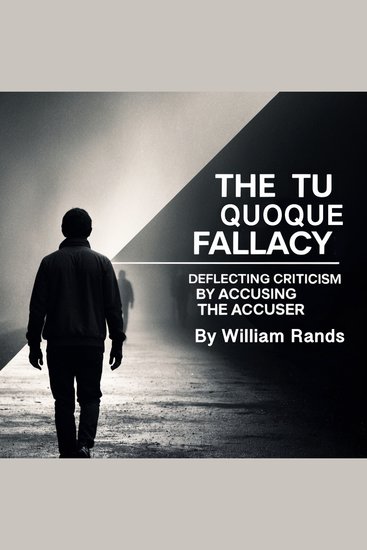
  • The Tu Quoque Fallacy - Deflecting Criticism by Accusing the Accuser - cover

    The Tu Quoque Fallacy -...

    William Rands

    • 0
    • 0
    • 0
    The Tu Quoque fallacy, often referred to as the "appeal to hypocrisy," is a form of argumentation where an individual deflects criticism by accusing the accuser of the same flaw or wrongdoing. Instead of addressing the substance of the criticism, the person making this fallacious argument focuses on the accuser’s behavior, thereby shifting the attention away from the original issue. This technique is often employed to avoid dealing with uncomfortable truths and to undermine the credibility of the person making the accusation. While the Tu Quoque fallacy may seem like a valid rebuttal in certain situations, it is inherently flawed because it does not address the merit of the argument but instead aims to discredit the opponent by pointing out their perceived hypocrisy. 
    The term "Tu Quoque" is derived from Latin, meaning "you too" or "you also." It is a logical misstep in which the argument shifts from the issue at hand to the behavior or actions of the accuser. For example, if person A criticizes person B for smoking, and person B responds by saying, "But you smoke too," this response deflects the criticism without actually addressing the harmful effects of smoking. By focusing on the accuser's actions, the fallacy diverts attention from the original point and diminishes the potential for meaningful discussion. 
    This fallacy is common in many aspects of modern discourse, particularly in political debates, social media discussions, and even in personal relationships. In public debates, individuals or groups may use the Tu Quoque fallacy to avoid engaging with difficult questions, redirecting the conversation toward the alleged hypocrisy of their opponents rather than addressing the real issues. In personal relationships, it may appear as a defensive reaction to avoid taking responsibility for one's actions or mistakes.
    Show book
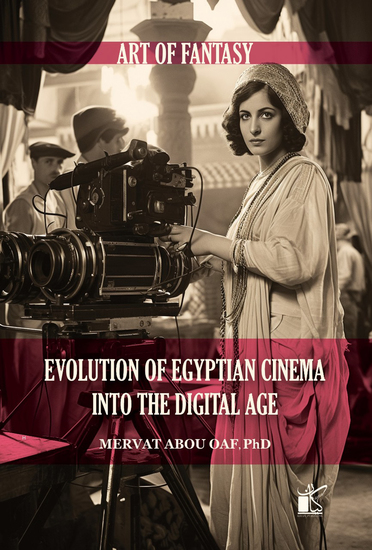
  • Art of Fantacy - cover

    Art of Fantacy

    Mervat Abu Ouf

    • 0
    • 0
    • 0
    Dr. Mervat Abou Oaf chronicles the journey of Egypt's film industry from the days of its commencement to the contemporary era of digitization and streaming platforms, all while painting a better, brighter, and bigger picture of what the future could entail.
    
    The book maneuvers around significant dates and milestones, highlighting Egyptian cinema's cultural, political, and economic importance.
    
    Through the lens of expert interviews, Dr. Abou Oaf examines regulatory frameworks operating backstage and maps out what's required to sustain and develop a thriving industry, proposing a regulatory model that embraces economic prosperity, cultural values, and industry independence.
    Show book
  • Voices of Dissent - An Essay (Unabridged) - cover

    Voices of Dissent - An Essay...

    Romila Thapar

    • 0
    • 0
    • 0
    Written by one of India's best-known public intellectuals, this book is essential reading for anyone interested in India's fascinating history as well as the direction in which the nation is headed.
    
    People have argued since time immemorial. Disagreement is a part of life, of human experience. But we now live in times when any form of protest in India is marked as anti-Indian and met with arguments that the very concept of dissent was imported into India from the West. As Romila Thapar explores in her timely historical essay, however, dissent has a long history in the subcontinent, even if its forms have evolved through the centuries.
     
    In Voices of Dissent: An Essay, Thapar looks at the articulation of nonviolent dissent and relates it to various pivotal moments throughout India's history. Beginning with Vedic times, she takes us from the second to the first millennium BCE, to the emergence of groups that were jointly called the Shramanas-the Jainas, Buddhists, and Ajivikas. Going forward in time, she also explores the views of the Bhakti sants and others of the fifteenth and sixteenth centuries and brings us to a major moment of dissent that helped to establish a free and democratic India: Mahatma Gandhi's satyagraha. Then Thapar places in context the recent peaceful protests against India's new, controversial citizenship law, maintaining that dissent in our time must be opposed to injustice and supportive of democratic rights so that society may change for the better.
    Show book
  • The Artist's Way Toolkit - How to Use the Creative Practices - cover

    The Artist's Way Toolkit - How...

    Julia Cameron

    • 0
    • 0
    • 0
    "Eliza Foss performs this powerful audiobook in a mature-sounding voice she modulates with skill." —AudioFile on The Listening Path (an Earphones Award winner)Experience the essential Artist’s Way philosophy in this practical, accessible collection of tools from “the Queen of Change” (New York Times) author Julia Cameron.Dive into the genius behind The Artist’s Way with exclusive, never-before-published Q&A’s, instruction manuals, and an Artist’s Way glossary. In this streamlined edition, Julia Cameron lays out the essential foundation of her Artist’s Way philosophy for anyone looking to get to the heart of her practice and begin immediately applying it to their own creative processes.Distilling the Artist’s Way philosophy into a precise and accessible collection of ready-to-use tools, The Artist's Way Toolkit is the perfect entry point for aspiring artists looking to hone their craft and reinvigorate their creativity. For those new to the Artist’s Way or for those who have been following it for years, The Artist's Way Toolkit offers refreshed and updated insight into Julia’s creative program that has already inspired more than five million readers.A Macmillan Audio production from St. Martin’s Press Essentials.
    Show book