Join us on a literary world trip!
Add this book to bookshelf
Grey
Write a new comment Default profile 50px
Grey
Subscribe to read the full book or read the first pages for free!
All characters reduced
The Memoirs of the Conquistador Bernal Diaz del Castillo - Enriched edition Complete Edition - cover

The Memoirs of the Conquistador Bernal Diaz del Castillo - Enriched edition Complete Edition

Bernal Díaz del Castillo

Translator John Ingram Lockhart

Publisher: Good Press

  • 0
  • 0
  • 0

Summary

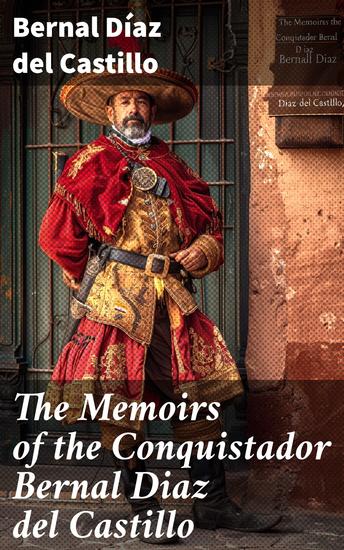
In "The Memoirs of the Conquistador Bernal Díaz del Castillo," the author presents a compelling first-hand account of the Spanish conquest of Mexico, blending vivid narrative with keen observations that reflect both the brutality and wonder of the New World. Written in an accessible yet richly descriptive prose style, Díaz del Castillo's memoirs serve as both a historical document and a literary testament, capturing the complexities of early colonial interactions, indigenous cultures, and the motivations behind the pursuit of wealth and glory. This work is particularly significant within the context of 16th-century Spanish literature, as it diverges from the romanticized tales of conquest, offering a more grounded perspective through the eyes of a participant who sought to document the truth of his experiences. Bernal Díaz del Castillo, a soldier and chronicler, was motivated by his desire to provide a truthful account of the events surrounding the fall of the Aztec Empire, countering the embellished narratives of other conquistadors. His unique position as a participant in the conquest allowed him to gain intimate insights into the lives of both Spaniards and indigenous peoples, influenced by his own experiences as a soldier in the ranks of Hernán Cortés's expedition. His memoirs reflect not only personal integrity but also a broader historical significance as they record voices often silenced in the chronicling of colonization. This seminal work is highly recommended for readers interested in the complexities of history, colonial encounters, and literary expressions of the past. "The Memoirs of the Conquistador Bernal Díaz del Castillo" invites readers to engage with a transformative period in history through an authentic lens, making it essential reading for anyone seeking to understand the intricate dynamics of conquest and culture in the New World.

In this enriched edition, we have carefully created added value for your reading experience:
- A succinct Introduction situates the work's timeless appeal and themes.
- The Synopsis outlines the central plot, highlighting key developments without spoiling critical twists.
- A detailed Historical Context immerses you in the era's events and influences that shaped the writing.
- An Author Biography reveals milestones in the author's life, illuminating the personal insights behind the text.
- A thorough Analysis dissects symbols, motifs, and character arcs to unearth underlying meanings.
- Reflection questions prompt you to engage personally with the work's messages, connecting them to modern life.
- Hand‐picked Memorable Quotes shine a spotlight on moments of literary brilliance.
- Interactive footnotes clarify unusual references, historical allusions, and archaic phrases for an effortless, more informed read.
Available since: 12/28/2023.
Print length: 1101 pages.

Other books that might interest you

  • Old U(VA) and I 1961 The - 1965 - cover

    Old U(VA) and I 1961 The - 1965

    Frank Briggs

    • 0
    • 0
    • 0
    The Old U(VA) and I: 1961-1965 
    By: Frank Briggs 
    The decade of the 1960s saw sweeping changes at UVA as old barriers fell and students of new backgrounds came. Litigation that lasted from the late 1940s through the end of the 1960s eliminated historic barriers to African American and women students. No detailed UVA-specific narrative has existed until former graduates from two ends of the decade, Joel Gardner, BA 1970, Rebel Yell to Revolution, in 2018 and now Frank Briggs, BA 1965, recognized that the University had changed in the most profound ways and used their own experiences to document what happened. This book will attract anyone who lived through that heady period. It will appeal also to others, to women and men who grew up later, and who may have wondered why and how the good old days ended and America stepped beyond them. Some might say grew up. 
    —John T. Casteen III, President Emeritus, University of Virginia, 1990–2010 
    Frank Briggs’s memoir is a highly entertaining trip in time to an era in UVA history that predated the social upheavals of the late 1960s. We accompany the author through his four years in a cloistered culture of tradition that had not changed over many decades. In a series of revealing and amusing anecdotes, we relive the road trips, party weekends, and collegiate shenanigans that dominated the student experience during that period. This is a must read for every Wahoo who lived through that era or anyone who has an interest in the social history of college life prior to the cultural revolution that swept across the country after Briggs’s graduation. 
    —Joel B. Gardner, Author, From Rebel Yell to Revolution: My Four Years at UVA, 1966–1970
    Show book
  • Your Guide To Body Language - Enhance Your Presence Influence and Charisma - cover

    Your Guide To Body Language -...

    Nathaniel Hart

    • 0
    • 0
    • 0
    We communicate constantly, whether we intend to or not. 
    Every glance, every gesture, every shift in posture sends a message – a silent conversation playing out alongside the words we speak. This silent language, the realm of nonverbal communication, often holds more weight than the spoken word, subtly shaping our perceptions and influencing our interactions. “Your Guide to Body Language” is your passport into this fascinating world.  
    Within these pages, we'll explore the powerful impact of nonverbal cues on our relationships, our careers, and our personal lives. This is not simply about learning to “read” others; it’s about understanding the intricate dance between verbal and nonverbal communication, recognizing when these signals align and when they diverge, and how to use that understanding to build stronger, more meaningful connections.  
    We’ll delve into the science behind body language, exploring the research that underpins our understanding of facial expressions, posture, gestures, personal space, and more. Through detailed explanations, practical exercises, and real-world examples, you’ll learn to identify subtle cues like microexpressions, those fleeting facial movements that can reveal hidden emotions.  
    You will also discover how to project confidence, build rapport, and navigate diverse cultural contexts – all through the power of nonverbal communication.  
    This book is designed for anyone seeking to enhance their communication skills, improve their relationships, and achieve greater success in both their professional and personal lives. Whether you’re a seasoned professional, a student exploring human behavior, or simply someone looking to improve their interactions with others, this guide will provide you with the tools and knowledge to master the art of body language and unlock your full communication potential.  
    Let's begin this journey of understanding the unspoken language that shapes our world.
    Show book
  • A Walk Through Ancient Rome - A Tour of the Historical Sites That Shaped the City - cover

    A Walk Through Ancient Rome - A...

    Philip Matyszak

    • 0
    • 0
    • 0
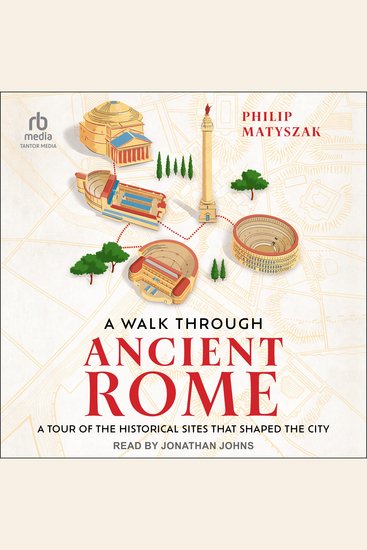
    In this expert guide to the ancient city, Dr Philip Matyszak takes us on a tour of ancient Rome's most fascinating and important sites and locations, revealing the secrets of the beating heart of the Roman Kingdom, the Roman Republic, and the Roman Empire. 


    Rome itself was never grander or more magnificent than just before it fell, so be transported back in time to the Empire's twilight years at the end of the fourth century ad, with almost a thousand years of Roman history to explore. Each chapter focuses on one of Rome's districts, with maps throughout and explanations of how the same routes would look today. 


    Put yourself in the sandals of a Roman pedestrian and take a walk along the Via Appia, through the Capuan Gate and past all the wonders inside the walls of ancient Rome, from tombs and temples to sewers and shrines, the grand gardens and the humble street markets, from Nero's Golden House to the slums where Julius Caesar grew up. Walk alongside the ghosts of Trajan, Nero, and Cicero; stand where they stood and see what they saw.
    Show book
  • The Fate of the Americas - The Cuban Missile Crisis and the Hemispheric Cold War (InterConnections: The Global Twentieth Century) - cover

    The Fate of the Americas - The...

    Renata Keller

    • 0
    • 0
    • 0
    Despite twenty-first-century fears of nuclear conflagrations with North Korea, Russia, and Iran, the Cuban Missile Crisis is the closest the United States has come to nuclear war. That history has largely been a bilateral narrative of the US-USSR struggle for postwar domination, with Cuba as the central staging ground—a standard account that obscures the shock waves that reverberated throughout Latin America. This first hemispheric examination of the Cuban Missile Crisis shows how leaders and ordinary citizens throughout the region experienced it, revealing that, had the missiles been activated, millions of people across Latin America would have been at grave risk.Traversing the region from the Southern Cone to Central America, Renata Keller describes the deadly riots that shook Bolivia when news of the Cuban Missile Crisis broke, the naval quarantine that members of Argentina's armed forces formed around Cuba, the pro-Castro demonstrations organized by Nicaraguan students, and much more. Drawing on a vast array of archival sources from around the hemisphere and world, The Fate of the Americas demonstrates that even at the brink of destruction, Latin Americans played active roles in global politics and inter-American relations.
    Show book
  • Osman I - Biography of the Founder of the Ottoman Dynasty - cover

    Osman I - Biography of the...

    Kelly Mass

    • 0
    • 0
    • 0
    Osman I, also known as Osman Ghazi, was the founder of the Ottoman dynasty and the ruler of the Kayi tribe, a key figure in the creation of one of history's most influential empires. The state he established, originally called the Ottoman Beylik or Emirate, grew from a small Turkmen principality in the late thirteenth century into a global power, dominating much of Southeastern Europe, Western Asia, and North Africa for centuries. While the empire he founded lasted until the end of World War I, the man himself remains shrouded in mystery. 
    Due to the scarcity of historical records from Osman’s lifetime, much of what is known about him is based on oral traditions and legends that developed long after his death. There are no known contemporary written sources from his reign, and the Ottomans themselves did not document his life until the fifteenth century, over a hundred years after he passed away. This gap in documentation has made it difficult for historians to separate fact from fiction, with some scholars even describing the period of Osman's life as a "black hole" of historical knowledge, unable to be reconstructed with certainty. 
    The traditional accounts of Osman’s ancestry trace his lineage to the Oghuz Turks, specifically the Kay tribe. However, many historians believe that the stories surrounding his ancestry were fabricated later to legitimize the Ottoman dynasty’s rule. These narratives were likely developed as the dynasty sought to strengthen its claim to power and emphasize its noble heritage.
    Show book
  • I Heard What You Said - A Black Teacher A White System - cover

    I Heard What You Said - A Black...

    Jeffrey Boakye

    • 0
    • 0
    • 0
    An Amazon Best Non-Fiction Book of 2022'Essential reading' - The Guardian'Sharp and witty with moments of startling candour' - The i'Makes a powerful case' - Rt Hon Lady Hale‘Revealing and beautifully written’ - David Harewood________Before Jeffrey Boakye was a black teacher, he was a black student. Which means he has spent a lifetime navigating places of learning that are white by default. Since training to teach, he has often been the only black teacher at school. At times seen as a role model, at others a source of curiosity, Boakye’s is a journey of exploration – from the outside looking in.In the groundbreaking I Heard What You Said, he recounts how it feels to be on the margins of the British education system. As a black, male teacher – an English teacher who has had to teach problematic texts – his very existence is a provocation to the status quo, giving him a unique perspective on the UK’s classrooms.Through a series of eye-opening encounters based on the often challenging and sometimes outrageous things people have said to him or about him, Boakye reflects on what he has found out about the habits, presumptions, silences and distortions that black students and teachers experience, and which underpin British education.Thought-provoking, witty and completely unafraid, I Heard What You Said is a timely exploration of how we can dismantle racism in the classroom and do better by all our students.________'Hugely important' - Baroness Lawrence'Deeply compelling, intellectually rigorous and essential' - Nels Abbey'Personal and political, profound and playful' - Darren Chetty'Written with passion, fury, knowledge and, in spite of the painful subject, wit' - Patrice Lawrence
    Show book