Join us on a literary world trip!
Add this book to bookshelf
Grey
Write a new comment Default profile 50px
Grey
Subscribe to read the full book or read the first pages for free!
All characters reduced
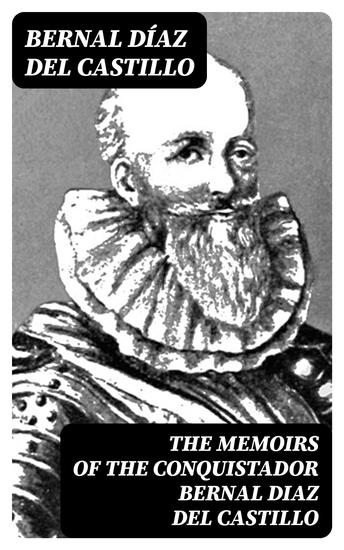
The Memoirs of the Conquistador Bernal Diaz del Castillo - Enriched edition Complete Edition - cover

The Memoirs of the Conquistador Bernal Diaz del Castillo - Enriched edition Complete Edition

Bernal Díaz del Castillo

Translator John Ingram Lockhart

Publisher: DigiCat

  • 0
  • 0
  • 0

Summary

In "The Memoirs of the Conquistador Bernal Díaz del Castillo," the author presents a vivid first-person account of the Spanish conquest of Mexico. Written in a candid, straightforward style, Díaz del Castillo weaves together intricate details, personal anecdotes, and historical narratives, providing readers with an insider's perspective of significant events, including the fall of the Aztec Empire. His memoir is not merely a recounting of military exploits; it serves as both a historical document and a reflection on the ethical dilemmas faced by conquerors, situating it firmly within the genre of early colonial literature. The work is imbued with rich descriptions and offers a nuanced portrayal of indigenous cultures, thus enriching our understanding of the cultural exchanges and conflicts of the era. Bernal Díaz del Castillo was no ordinary soldier; he was a participant in the very events he chronicled. Born in Spain, he journeyed to the New World as a young man, becoming a member of Hernán Cortés's expedition. His experiences as a soldier, chronicler, and eventual advocate for indigenous justice reflect a complex relationship with the colonial enterprise that shaped both his life and his writing. Díaz's firsthand involvement with key figures and events provides crucial context, making his memoir invaluable for scholars and historians alike. This compelling memoir is essential reading for those interested in the Spanish conquest of the Americas and the historical impacts it had on indigenous populations. It appeals not only to history enthusiasts but also to readers curious about narrative forms that blend adventure with ethical reflection. Engage with Díaz del Castillo's rich tapestry of exploration and conquest, and experience the complexities of one of history's most transformative eras.

In this enriched edition, we have carefully created added value for your reading experience:
- A succinct Introduction situates the work's timeless appeal and themes.
- The Synopsis outlines the central plot, highlighting key developments without spoiling critical twists.
- A detailed Historical Context immerses you in the era's events and influences that shaped the writing.
- A thorough Analysis dissects symbols, motifs, and character arcs to unearth underlying meanings.
- Reflection questions prompt you to engage personally with the work's messages, connecting them to modern life.
- Hand‐picked Memorable Quotes shine a spotlight on moments of literary brilliance.
- Interactive footnotes clarify unusual references, historical allusions, and archaic phrases for an effortless, more informed read.
Available since: 05/17/2022.
Print length: 1101 pages.

Other books that might interest you

  • Shankara on the Absolute - Shankara Source Book Volume One - cover

    Shankara on the Absolute -...

    Shri Shankara

    • 0
    • 0
    • 0
    This is volume one of the six-volume Shankara Source Book, which contains writings by Shri Shankara, arranged systematically by subject.Shri Shankara was a great philosopher-sage who expressed the non-dual teachings in such a complete and satisfactory way that his formulation has been followed by authentic teachers of the non-dual tradition ever since.Most of his writings are in the form of commentaries on revealed texts such as the principle Upanishads, the Bhagavad Gita and the Brahma Sutras, so what he said was placed around those texts, which are far from systematic.His aim was to demonstrate that underlying the apparent contradictions and differences on the surface, all the great revealed scriptures in fact point ultimately to one Supreme Truth. He wished to do this in order to overcome the confusion that was causing hardship to the people at large, and creating difficulties for dedicated seekers. Shankara probably lived in the 8th century, and died in his early 30s.Shankara considered other views in great detail, sometimes provisionally accepting elements of their arguments, and then pointing out where those views lead to difficulties. One of the great qualities of the non-dual teachings as formulated by Shankara is that they are able to recognise and incorporate what is valid and useful in other views.All this can make it difficult to find what Shankara said on particular subjects. To meet this difficulty, in the Source Book, the writings have been freshly translated, and brought together under subject headings. These in turn have been arranged in six volumes each covering one broad topic. These are: Volume 1 Shankara on the AbsoluteVolume 2 Shankara on the CreationVolume 3 Shankara on the SoulVolume 4 Shankara on Rival ViewsVolume 5 Shankara on DiscipleshipVolume 6 Shankara on Enlightenment
    Show book
  • Is There in the Brain Anything Untouched By Culture? - Brockwood Park and Gstaad 1975 - Dialogue 9 - cover

    Is There in the Brain Anything...

    Jiddu Krishnamurti

    • 0
    • 0
    • 0
    Is there in the brain anything untouched by culture?" - 6 August 1975Can there be a total perception which completely heals the brain?What benefit has culture?Does speech come before thought?Is it possible to say something without the operation of thought?Is there in the brain anything untouched by culture?Is attention a conscious process?Is love the factor of profound change?You explain all this, and you say that whatever the damaged brain – which is the result of thought and tradition and all the rest of it – whatever it does will produce further damage. So, because you point it out, I realise that. That is the first necessity – I realise it. Then, after I’ve realised it, you talk to me at a depth which thought has not touched. You planted a seed.
    Show book
  • Osman I - Biography of the Founder of the Ottoman Dynasty - cover

    Osman I - Biography of the...

    Kelly Mass

    • 0
    • 0
    • 0
    Osman I, also known as Osman Ghazi, was the founder of the Ottoman dynasty and the ruler of the Kayi tribe, a key figure in the creation of one of history's most influential empires. The state he established, originally called the Ottoman Beylik or Emirate, grew from a small Turkmen principality in the late thirteenth century into a global power, dominating much of Southeastern Europe, Western Asia, and North Africa for centuries. While the empire he founded lasted until the end of World War I, the man himself remains shrouded in mystery. 
    Due to the scarcity of historical records from Osman’s lifetime, much of what is known about him is based on oral traditions and legends that developed long after his death. There are no known contemporary written sources from his reign, and the Ottomans themselves did not document his life until the fifteenth century, over a hundred years after he passed away. This gap in documentation has made it difficult for historians to separate fact from fiction, with some scholars even describing the period of Osman's life as a "black hole" of historical knowledge, unable to be reconstructed with certainty. 
    The traditional accounts of Osman’s ancestry trace his lineage to the Oghuz Turks, specifically the Kay tribe. However, many historians believe that the stories surrounding his ancestry were fabricated later to legitimize the Ottoman dynasty’s rule. These narratives were likely developed as the dynasty sought to strengthen its claim to power and emphasize its noble heritage.
    Show book
  • Untangling Critical Race Theory - What Christians Need to Know and Why It Matters - cover

    Untangling Critical Race Theory...

    Ed Uszynski

    • 0
    • 0
    • 0
    What is Critical Race Theory? 


    It may be one of the most widely referenced issues of the day, but it's also one of the least understood. In its translation from the academic world to the general public, Critical Race Theory (CRT) has inaccurately become a catch-all term for anything related to race. But what does it actually mean, and how should Christians engage it? 


    Ed Uszynski—whose PhD in American culture studies navigated readings in Marxism, Critical Theory, and Critical Race Theory—carefully unpacks what critical race theorists seek to accomplish and what Christians can learn from them. Uszynski generously explores CRT's roots, context, and central tenets, revealing how its insights are used and distorted but also how they might benefit the church. With responsible answers to legitimate concerns, Uszynski goes beyond the surface to provide a reliable path of just discernment and cultural engagement.
    Show book
  • 5 Rare Sexual Disorders You Didn't Know About - A Look at Uncommon Intimacy Challenges - cover

    5 Rare Sexual Disorders You...

    John Harpoon

    • 0
    • 0
    • 0
    Sexual health is an essential yet often overlooked aspect of overall well-being. While common sexual disorders like erectile dysfunction or low libido receive significant attention, there exists a range of rare sexual disorders that many people have never heard of. These conditions can be confusing, distressing, and deeply isolating for those affected. Unlike mainstream sexual dysfunctions that have widely known treatments and medical support, rare sexual disorders often remain misunderstood, misdiagnosed, or even dismissed entirely. This lack of awareness leaves those who suffer from these conditions struggling in silence, unsure of where to turn for help.  
      
    This book aims to shed light on five rare sexual disorders, each presenting unique challenges that go beyond the conventional difficulties associated with intimacy. From physical conditions that cause unrelenting discomfort to psychological disorders that disrupt one’s ability to form healthy sexual relationships, these disorders can have a profound impact on self-esteem, relationships, and overall quality of life. Understanding these conditions is the first step toward breaking the stigma and fostering empathy for those who experience them. 
    Show book
  • Aunty Mae’s Punishment Book - cover

    Aunty Mae’s Punishment Book

    Paul Amann

    • 0
    • 0
    • 0
    Step back in time to 1960, when the quiet town of Upper Middleton was forever changed by the unyielding hand of Aunty Mae. Widowed and grieving, Aunty Mae stumbled upon a young thief in her garden – Emma Dixon. What began as a spontaneous act of discipline blossomed into a peculiar arrangement: Emma, at the tender age of 19, willingly toiled in Aunty Mae's garden, subject to regular bare-bottomed spankings.Aunty Mae  
    The twist in this tale unravels when Aunty Mae and a group of young women unearth an old punishment book in the dusty recesses of the community school. As fate would have it, the book becomes a token of a secret pact, binding these six 19-year-olds to Aunty Mae's disciplinary world. The echoes of their spankings lingered through the years, some returning willingly, others at the insistence of their husbands. 
    Aunty Mae's penchant for punishment took an unexpected turn in 1962 when she found herself offering advice as an agony aunt for the local church paper. Her columns, laden with the wisdom of a disciplinarian, skyrocketed in popularity. Aunty Mae's notoriety spread beyond Upper Middleton, as she fearlessly recommended spankings for the undisciplined, both young and old. 
    Enter the captivating world of "Aunty Mae's Punishment Book" by Paula Mann, where discipline meets nostalgia, secrets are exposed, and Aunty Mae's unorthodox methods leave an indelible mark on the quaint town of Upper Middleton. Spanning decades, this tale is a unique blend of history, humour, and a touch of spice, promising a journey through time that you won't soon forget.
    Show book