Join us on a literary world trip!
Add this book to bookshelf
Grey
Write a new comment Default profile 50px
Grey
Subscribe to read the full book or read the first pages for free!
All characters reduced
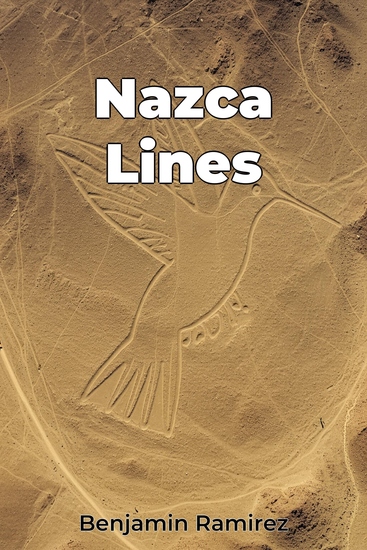
Nazca Lines - cover

Nazca Lines

Benjamin Ramirez

Translator A AI

Publisher: Publifye

  • 0
  • 0
  • 0

Summary

The book "Nazca Lines" explores the awe-inspiring Nazca geoglyphs of ancient Peru, massive figures etched into the desert that offer a glimpse into a sophisticated pre-Columbian society. These geoglyphs, created around 500 BCE, showcase the remarkable architectural and engineering skills of the Nazca civilization. The book examines how these lines may have served as astronomical calendars, aligning with celestial events crucial for agricultural planning, demonstrating a deep understanding of the cosmos.

 
Presented through archaeological evidence, astronomical alignments, and anthropological studies, the book unfolds by first introducing the Nazca civilization and the discovery of the lines. It then systematically examines the creation and function theories. The book carefully considers the environmental context, revealing how the harsh desert landscape shaped the Nazca's beliefs and practices. Understanding the geoglyphs provides insight into the societal organization required to create them. The book synthesizes diverse perspectives, including art history and landscape architecture, to provide a holistic understanding of these enigmatic figures.
Available since: 03/04/2025.
Print length: 61 pages.

Other books that might interest you

  • The Formula for Better Health - How to Save Millions of Lives--Including Your Own - cover

    The Formula for Better Health -...

    Tom Frieden

    • 0
    • 0
    • 0
    In The Formula for Better Health, Tom Frieden—named "the most influential leader in American public health since C. Everett Koop" by former Mayor Michael Bloomberg—reveals how to defeat the world's deadliest diseases.Drawing from decades leading New York City's health department after 9/11, directing the CDC during the Ebola epidemic, and fighting tuberculosis and other lethal threats in India and around the world, Frieden combines compelling stories with insider knowledge to show how to win the battle for health.In this book, you will step into laboratories that solve mysteries and expose deadly deceptions. You'll learn how disease detectives ended America's largest outbreak of drug-resistant tuberculosis, what caused the deadliest mistake during the Covid pandemic, and why we ignore fatal warnings. Most importantly, you'll find out how to stop today's leading killers.The Formula for Better Health bridges the lethal gap between scientific knowledge and life-saving action. Whether you want to protect your own health, safeguard your community, or solve seemingly impossible health challenges—or all three—this book offers hope and a path to a healthier future.
    Show book
  • Primordial American Terrorists - A True History of Events Leading to the End of Slavery in the United States - cover

    Primordial American Terrorists -...

    Robert Riggs

    • 0
    • 0
    • 0
    Primordial American Terrorists is a new interpretation of events leading to the end of legalized slavery in the United States. Along the way, it reveals the duality of the terrorist persona, a profile the author pioneered in his earlier book, Sofia Perovskaya, Terrorist Princess. It tells the story, not only of terrorists who struck savagely out of intense passion for a cause, but also of their direct comparison with equally passionate men and women who dedicated themselves to social justice through advocacy and other non-violent methods.
    Show book
  • Geist und Materie Gott und die Welt – ein verborgener Gesamtzusammenhang Spirit and Matter God and the World – a Hidden Overall Context - Ein kleiner Essay A short Essay - cover

    Geist und Materie Gott und die...

    Luc Ciompi

    • 0
    • 0
    • 0
    … "Wenn ich also das Ergebnis meiner Untersuchung in knappster Form zusammenfassen müsste, so ergäbe sich etwa Folgendes: Energie ist eine Urkraft unbekannter Herkunft mit einem ungeheuren Differenzierungspotenzial. 'Tote' wie lebende Materie ist zunehmend raffiniert organisierte Energie. Das organisierende Prinzip ist der Weltgeist, ein grenzenloses abstraktes Potenzial von Kombinationsmöglichkeiten, welche im Lauf der Evolution vom Big Bang bis heute immer differenzierter realisiert und materialisiert worden sind. Aspekte des Weltgeists werden von lebendigen Organismen sukzessive entdeckt und genutzt. Sowohl der Weltgeist wie auch die Energie können wahlweise als göttlichen oder natürlichen Ursprungs aufgefasst werden."
    
    … "So if I had to summarize the result of my investigation in the briefest form, it would be something like the following: energy is a primal force of unknown origin with a tremendous potential for differentiation. 'Dead' and living matter is increasingly sophisticatedly organized energy. The organizing principle is the world spirit, a limitless abstract potential of possible combinations, which has been realized and materialized in an increasingly differentiated way in the course of evolution from the Big Bang to the present day. Aspects of the world spirit are successively discovered and utilized by living organisms. Both the world spirit and the energy can be understood to be either of divine or natural origin."
    Der Autor:
    Luc Ciompi, Prof. em.; Studium der Medizin, Facharzt für Psychiatrie und Psychotherapie; psychoanalytische und systemisch-familientherapeutische Ausbildung; 1977–1994 Ordentlicher Professor an der medizinischen Fakultät der Universität Bern, Mit-Vorsteher des Departements der Universität Bern und ärztlicher Direktor der Sozialpsychiatrischen Universitätsklinik Bern; 1984–1998 Begründer und erster ärztlicher Leiter der therapeutischen Wohngemeinschaft "Soteria Bern"; seit 1995 freier wissenschaftlicher Buchautor und Publizist; psychotherapeutische Beratungs- und Supervisionstätigkeit, Computerforschung zum Konzept der Affektlogik.
    Show book
  • Where You'll Find Me - Risk Decisions and the Last Climb of Kate Matrosova - cover

    Where You'll Find Me - Risk...

    Ty Gagne

    • 0
    • 0
    • 0
    On February 15, 2015, Kate Matrosova, an avid mountaineer, set off before sunrise for a traverse of the Northern Presidential Range in New Hampshire's White Mountains. Late the following day, rescuers carried her frozen body out of the mountains amid some of the worst weather ever recorded on these deceptively rugged slopes. 


    At thirty-two, Matrosova was ultra-fit and healthy and had already summited much larger mountains on several continents. Her gear included a rescue beacon and a satellite phone. Yet, despite their best efforts, more than forty expert search and rescue personnel, a New Hampshire Army National Guard Blackhawk helicopter, and a Civil Air Patrol Cessna airplane could not reach her in time to save her. 


    What went wrong? 


    Where You'll Find Me offers possible answers to that question, demonstrating why Matrosova's story—what we know and what we will never know—represents such an intriguing and informative case study in risk analysis and decision-making.
    Show book
  • Marked by the Hockey Team (Gay Cheating Erotica) - cover

    Marked by the Hockey Team (Gay...

    Archer Vale

    • 0
    • 0
    • 0
    24 hours in the airport. 24 hours to betray my husband. 
    An avalanche blocked the roads. Our ski trip has taken a bizarre, nasty turn. 
    It started on the plane. I sat in the middle of a college hockey team traveling for a photoshoot. The air was thick with their deep, vibrating voices. A musky scent flowed into my lungs… 
    I did something disgusting. I hope nobody noticed. 
    Now we’ve arrived, and we’re trapped at the airport. The hockey guys keep looking at me. One of them wants me to buy them dinner. 
    We have to spend the night here with them. I’m all jittery. My mind is filled with strange, uncomfortable thoughts. 
    I shouldn’t do this. I need to stay strong. I need to resist. 
    --- 
    CONTAINS EXPLICIT GAY SEXUAL CONTENT. 
    For exclusive stories, visit www.ArcherVale.com.
    Show book
  • First Guns The: The History and Legacy of the Invention of Firearms - cover

    First Guns The: The History and...

    Editors Charles River

    • 0
    • 0
    • 0
    The Chinese developed what were later dubbed the “Four Great Inventions of China,” and one of those was none other than gunpowder, which was developed no later than the 9th century and was being used for military purposes by the 11th century. Its use slowly spread through South Asia and the Middle East before making it to Europe in the late 13th century.  
    For a time it was a mere curiosity, but its destructive power and military potential would be realized quickly. The first record of a cannon in Europe comes from a manuscript written in 1326, which has an illustration showing an armored man with what looks like a slow match lighting a vase-shaped object. This crude cannon was called a pot de fer in French and vasi in Italian.  
    While medieval engineers developed new types of cannons and explosives capable of destroying walls and castles, others were making the first handguns possible. European sources first mentioned the widespread use of handgonnes, as they were often called, in the late 14th century, precisely the time when gunpowder became cheaper. These were short metal barrels stuck on the end of wooden hafts that could be tucked under the arm, the powder being lit through a touchhole with the free hand. While they were not terribly accurate and had a shorter range and slower rate of fire than longbows or crossbows, they had the advantage of being better able to punch through armor than longbows and crossbows, and they were simple to make and use.  
    By the late 15th century, handgonners had become a major part of the leading armies, and weapons that relied on gunpowder would remain a staple of warfare throughout the 19th century, paying deadly homage to one of history’s most important inventions. Of course, that would also bring about innovative new military strategies, and some of the first people to think outside of the box would be credited with putting together the makings of the first modern armies. 
    Show book