

¡Acompáñanos a viajar por el mundo de los libros!
Añadir este libro a la estantería
Grey
Escribe un nuevo comentario Default profile 50px
Grey
Suscríbete para leer el libro completo o lee las primeras páginas gratis.
All characters reduced
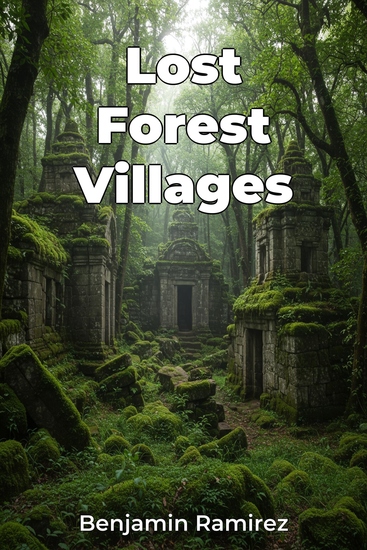
Lost Forest Villages - cover

Lost Forest Villages

Benjamin Ramirez

Traductor A AI

Editorial: Publifye

  • 0
  • 0
  • 0

Sinopsis

Lost Forest Villages explores the hidden world of isolated communities that deliberately retreated into forested areas. It uncovers their unique architectural adaptations and survival strategies developed over generations. These settlements, often driven by a desire for cultural autonomy or escaping persecution, offer a fascinating look into how societies can thrive outside the mainstream. The book examines how locally sourced materials became essential building blocks and how ingenious defensive designs protected these communities.

 
The study progresses by first defining "lost forest villages" and setting the scope. It then delves into architectural adaptations, investigating building materials, construction techniques, and spatial organization. Finally, it analyzes survival strategies such as agriculture, resource management, and trade. What sets this book apart is its deep dive into the intersection of architecture, history, and anthropology, revealing how isolation shaped not only their buildings but also their entire way of life.

 
By analyzing surviving structures, archaeological findings, and oral histories, the book argues that these villages represent a profound case study in human resilience. They optimized their built environments and social systems to thrive in challenging conditions. This offers valuable insights into sustainable living and community resilience that remain relevant today.
Disponible desde: 29/03/2025.
Longitud de impresión: 56 páginas.

Otros libros que te pueden interesar

  • Anger Management for Parents: A Workbook Guide on How to Manage Your Emotions - cover

    Anger Management for Parents: A...

    Christopher Rothchester

    • 0
    • 0
    • 0
    In Anger Management for Parents, a workbook guide on how to manage your emotions, we will dive into how to first process and overcome your anger, with steps that will help you calm yourself and begin to turn away from angry outbursts. 
    Once you have mastered that, we will begin to teach you how to mend the relationship you have with your child; an angry parent can divide a household and ruin bridges that were meant to last a lifetime. We will begin to build them back for you and your family. Once you have managed your anger and your child’s anger, we will turn our attention toward the future, where we will teach you how to make sure your child does not follow in your footsteps. 
    Though the process will take well over a year to complete, this book will guide you through the most difficult times of it. Each chapter brings with it detailed lists and lessons that will aid you. 
    Though I will never claim that the lessons will be easy or quick, they will be worth i
    Ver libro
  • From Whispers to Shouts - The Ways We Talk About Cancer - cover

    From Whispers to Shouts - The...

    Elaine Schattner

    • 0
    • 0
    • 0
    It’s hard today to remember how recently cancer was a silent killer, a dreaded disease about which people rarely spoke in public. In hospitals and doctors’ offices, conversations about malignancy were hushed and hope was limited. In this deeply researched book, Elaine Schattner reveals a sea change—from before 1900 to the present day—in how ordinary people talk about cancer. From Whispers to Shouts examines public perception of cancer through stories in newspapers and magazines, social media, and popular culture. It probes the evolving relationship between journalists and medical specialists and illuminates the role of women and charities that distributed medical information. Schattner traces the origins of patient advocacy and activism from the 1920s onward, highlighting how, while doctors have lost control of messages about cancer, survivors have gained visibility and voice. The book’s final section lays out provocative questions facing the cancer community today—including distrust of oncologists, concerns over financial burdens, and disparities in cancer treatments and care. Schattner considers how patients and their loved ones struggle to make decisions amid conflicting information and opinions. She explores the ramifications of so much openness, good and bad, and asks an important question: Has awareness backfired? Instead, Schattner contends, we need greater understanding of cancer’s treatability.
    Ver libro
  • The Byzantine Empire - Eastern Legacy - cover

    The Byzantine Empire - Eastern...

    Harris Ropes

    • 0
    • 0
    • 0
    The origins of the Byzantine Empire are deeply rooted in the legacy of the Roman Empire. As the Roman Empire grew increasingly difficult to manage due to its vast size, Emperor Diocletian initiated a division in the late 3rd century CE, separating the empire into Eastern and Western regions. This decision, though initially administrative, laid the groundwork for what would become two distinct political and cultural entities. While the Western Roman Empire succumbed to barbarian invasions and internal instability, the Eastern Roman Empire endured, evolving into what we now recognize as the Byzantine Empire. 
    One of the most pivotal moments in the birth of Byzantium came in 330 CE, when Emperor Constantine the Great established a new capital on the site of the ancient city of Byzantium. Renamed Constantinople, meaning "City of Constantine," it was strategically located on the Bosporus Strait, bridging Europe and Asia. This location was not only advantageous for trade but also easier to defend from invasions. Constantinople quickly rose to prominence as a center of politics, culture, and commerce, outshining Rome itself in influence and prestige. The city’s grandeur, with its towering walls and monumental architecture, symbolized the strength and ambition of the new Eastern Empire. 
    The early years of the Byzantine Empire were marked by both challenges and triumphs. While the Western Roman Empire fell in 476 CE, the Eastern Empire continued to thrive, preserving Roman laws, administrative systems, and military traditions. However, the Byzantines were not merely Roman in continuation—they adapted and transformed their identity over time. Greek became the dominant language, replacing Latin in most official and cultural contexts, and Orthodox Christianity emerged as a defining feature of Byzantine life.
    Ver libro
  • Russian History Through the Ages - Early History and the Creation of Russia - cover

    Russian History Through the Ages...

    History Retold

    • 0
    • 0
    • 0
    Finally! Your Gateway into Russia's Extraordinary Past. 
    Prepare to embark on a captivating journey through the pages of "Russian History Through the Ages: Early History and the Creation of Russia". This is the first book in our Captivating Russian History series. It invites you to explore the remarkable origins of a nation that would go on to play a defining role in world history. 
    Delve into the mysterious world of ancient Rus, a land where Slavic tribes, Varangian traders, and fierce Khazars clashed, ultimately giving birth to the first foundations of Russian statehood. You'll learn how the legendary Rurik, a Varangian chieftain, established a dynasty that would endure for centuries. 
    You'll see how the adoption of Christianity under Prince Vladimir the Great transformed Russian society, shaping its art, architecture, and identity. 
    This book tells the story of Russia's birth, a tale of struggle, conquest, and ingenuity. This comprehensive account brings the distant past to life, painting a vivid picture of a time when heroes and legends walked the earth. 
    Whether you're a history buff or simply curious about Russia's rich cultural heritage, this book is the perfect introduction to a captivating historical tapestry. Don't miss your chance to embark on an unforgettable adventure through Russia's fascinating early history. 
    Order your copy today, and let your journey into the heart of Russia's past begin.
    Ver libro
  • War Orphans - An emotional historical family saga from Lizzie Lane - cover

    War Orphans - An emotional...

    Lizzie Lane

    • 0
    • 0
    • 0
    “If at all possible, send or take your household animals into the country in advance of an emergency. If you cannot place them in the care of neighbours, it really is kindest to have them destroyed."Joanna Ryan’s father has gone off to war, leaving her in the care of her step-mother, a woman more concerned with having a good time than being any sort of parent to her.But then she finds a puppy, left for dead, and Joanna becomes determined to save him, sharing her meagre rations with him. But, in a time of war, pets are only seen as an unnecessary burden and she is forced to hide her new friend, Harry, from her step-mother and the authorities. With bombs falling over Bristol and with the prospect of evacuation on the horizon, can they stay together and keep each other safe?A gripping, heartwarming historical saga from bestselling author Lizzie Lane.Praise for Lizzie Lane:'A gripping saga and a storyline that will keep you hooked' Rosie Goodwin'The Tobacco Girls is another heartwarming tale of love and friendship and a must-read for all saga fans.' Jean Fullerton'Lizzie Lane opens the door to a past of factory girls, redolent with life-affirming friendship, drama, and choices that are as relevant today as they were then.' Catrin Collier'If you want an exciting, authentic historical saga then look no further than Lizzie Lane.' Fenella J Miller
    Ver libro
  • Black Slaves Indian Masters - Slavery Emancipation and Citizenship in the Native American South - cover

    Black Slaves Indian Masters -...

    Barbara Krauthamer

    • 0
    • 0
    • 0
    From the late eighteenth century through the end of the Civil War, Choctaw and Chickasaw Indians bought, sold, and owned Africans and African Americans as slaves, a fact that persisted after the tribes' removal from the Deep South to Indian Territory. The tribes formulated racial and gender ideologies that justified this practice and marginalized free black people in the Indian nations well after the Civil War and slavery had ended. Through the end of the nineteenth century, ongoing conflicts among Choctaw, Chickasaw, and U.S. lawmakers left untold numbers of former slaves and their descendants in the two Indian nations without citizenship in either the Indian nations or the United States. In this groundbreaking study, Barbara Krauthamer rewrites the history of southern slavery, emancipation, race, and citizenship to reveal the centrality of Native American slaveholders and the black people they enslaved. 


    Krauthamer's examination of slavery and emancipation highlights the ways Indian women's gender roles changed with the arrival of slavery and changed again after emancipation and reveals complex dynamics of race that shaped the lives of black people and Indians both before and after removal.
    Ver libro
