

¡Acompáñanos a viajar por el mundo de los libros!
Añadir este libro a la estantería
Grey
Escribe un nuevo comentario Default profile 50px
Grey
Suscríbete para leer el libro completo o lee las primeras páginas gratis.
All characters reduced
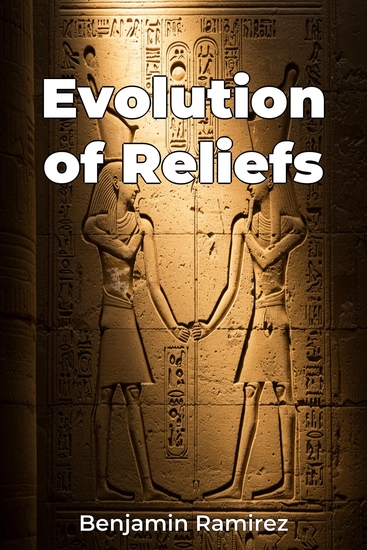
Evolution of Reliefs - cover

Evolution of Reliefs

Benjamin Ramirez

Traductor A AI

Editorial: Publifye

  • 0
  • 0
  • 0

Sinopsis

Evolution of Reliefs explores the captivating history of relief sculpture, from ancient civilizations to contemporary art. Reliefs, unlike portable art, were crucial for visual communication, conveying religious, political, and historical narratives directly within architectural structures. The book highlights how evolving techniques and materials, from hand-carving to modern technologies, have shaped its aesthetics.

 
The book examines relief sculpture's development across historical periods and regions, starting with fundamental principles and moving through ancient Egyptian, Greek, and Roman examples. It further delves into the Renaissance revival and modern transformations, culminating in the digital age. This approach showcases relief sculpture's enduring adaptability and relevance in the contemporary art world, making it a valuable resource for anyone interested in art history and architectural sculpture.
Disponible desde: 26/02/2025.
Longitud de impresión: 62 páginas.

Otros libros que te pueden interesar

  • Man Bites Dog - Hot Dog Culture in America - cover

    Man Bites Dog - Hot Dog Culture...

    Bruce Kraig, Patty Carroll

    • 0
    • 0
    • 0
    Whether you call them franks, wieners, or red hots, hot dogs are as American as apple pie, but how did these little links become icons of American culture? Man Bites Dog explores the transformation of hot dogs from unassuming street fare to paradigms of regional expression, social mobility, and democracy. World-renowned hot dog scholar Bruce Kraig investigates the history, people, décor, and venues that make up hot dog culture and what it says about our country.  These humble sausages cross ethnic and regional boundaries and have provided the means for plucky entrepreneurs to pull themselves up by their bootstraps. Hot dogs, and the ways we enjoy them, are part of the American dream. Man Bites Dog celebrates the power of the hot dog through a historical survey and profiles of notable hot dog purveyors. Loaded with stunning color photos by Patty Carroll, descriptions of neighborhood venues and flashy pushcarts from New York to Los Angeles, and recipes for cooking up hot dog heaven at home, this book is the u
    Ver libro
  • Anna Pavlova - cover

    Anna Pavlova

    Vera Krasovskaya

    • 0
    • 0
    • 0
    Episodes from life and work of the great ballerina Anna Pavlova.
    Ver libro
  • Oasis: What's The Story?: Life on tour with Liam and Noel Gallagher - cover

    Oasis: What's The Story?: Life...

    Iain Robertson

    • 0
    • 0
    • 0
    *THE MUST-LISTEN BOOK FOR THE OASIS REUNION TOUR*'Deserves to stay on the bestseller lists for a long time to come' - Caitlin Moran'Brilliant' - NMEOasis were a band like bands used to be. Hard-drinking and substance abusing. If they liked you, they loved you. If they didn't, you had to be prepared for confrontation. Iain Robertson is used to tough jobs - after retiring from the Parachute Regiment, he took on jobs guarding George Harrison, Gary Moore and Johnny Rotten. But keeping Oasis on the rails after debut album Definitely Maybe ignited their rise toward global superstardom would be the toughest gig of them all. Oasis would explode into public consciousness and have the world at their feet in the wake of their epic first album and a huge world tour. Iain was side-by-side as their road manager and minder, twenty-four hours a day, eight days a week, as they took on the world and won. No one was closer. Now updated with new unpublished material to celebrate the thirty year anniversary of Definitely Maybe and ahead of their upcoming reunion tour, this story is the defining chronicle of life on tour with Oasis.
    Ver libro
  • Ghost Rider - Travels on the Healing Road - cover

    Ghost Rider - Travels on the...

    Neil Peart

    • 0
    • 3
    • 0
    Within a ten-month period, Neil Peart lost both his 19-year-old daughter, Selena, and his wife, Jackie. Faced with overwhelming sadness and isolated from the world in his home on the lake, Peart was left without direction. This memoir tells of the sense of personal devastation that led him on a 55,000-mile journey by motorcycle across much of North America, down through Mexico to Belize, and back again. 
    Peart’s journey of self-exile and exploration chronicle his personal odyssey and include stories of reuniting with friends and family, grieving, and reminiscing. He recorded with dazzling artistry, the enormous range of his travel adventures, from the mountains to the seas, from the deserts to the Arctic ice, and the memorable people who contributed to his healing. 
    Ghost Rider is a brilliantly written, and ultimately triumphant narrative memoir from a gifted writer and the drummer and lyricist of the legendary rock band Rush.
    Ver libro
  • 50 Masterpieces you have to read before you die vol: 1 - cover

    50 Masterpieces you have to read...

    George Eliot, Charles Dickens,...

    • 0
    • 0
    • 0
    This book contains now several HTML tables of contents that will make reading a real pleasure!
    Novels
    Alcott, Louisa May: Little Women
    Austen, Jane: Pride and Prejudice
    Austen, Jane: Emma
    Balzac, Honoré de: Father Goriot
    Barbusse, Henri: The Inferno
    Brontë, Anne: The Tenant of Wildfell Hall
    Brontë, Charlotte: Jane Eyre
    Brontë, Emily: Wuthering Heights
    Burroughs, Edgar Rice: Tarzan of the Apes
    Butler, Samuel: The Way of All Flesh
    Carroll, Lewis: Alice's Adventures in Wonderland
    Cather, Willa: My Ántonia
    Cervantes, Miguel de: Don Quixote
    Chopin, Kate: The Awakening
    Cleland, John: Fanny Hill
    Collins, Wilkie: The Moonstone
    Conrad, Joseph: Heart of Darkness
    Conrad, Joseph: Nostromo
    Cooper, James Fenimore: The Last of the Mohicans
    Crane, Stephen: The Red Badge of Courage
    Cummings, E. E.: The Enormous Room
    Defoe, Daniel: Robinson Crusoe
    Defoe, Daniel: Moll Flanders
    Dickens, Charles: Bleak House
    Dickens, Charles: Great Expectations
    Dostoyevsky, Fyodor: Crime and Punishment
    Dostoyevsky, Fyodor: The Idiot
    Doyle, Arthur Conan: The Hound of the Baskervilles
    Dreiser, Theodore: Sister Carrie
    Dumas, Alexandre: The Three Musketeers
    Dumas, Alexandre: The Count of Monte Cristo
    Eliot, George: Middlemarch
    Fielding, Henry: Tom Jones
    Flaubert, Gustave: Madame Bovary
    Flaubert, Gustave: Sentimental Education
    Ford, Ford Madox: The Good Soldier
    Forster, E. M.: A Room With a View
    Forster, E. M.: Howards End
    Gaskell, Elizabeth: North and South
    Goethe, Johann Wolfgang von: The Sorrows of Young Werther
    Gogol, Nikolai: Dead Souls
    Gorky, Maxim: The Mother
    Haggard, H. Rider: King Solomon's Mines
    Hardy, Thomas: Tess of the D'Urbervilles
    Hawthorne, Nathaniel: The Scarlet Letter
    Homer: The Odyssey
    Hugo, Victor: The Hunchback of Notre Dame
    Hugo, Victor: Les Misérables
    Huxley, Aldous: Crome Yellow
    James, Henry: The Portrait of a Lady
    Ver libro
  • Passion for Compasses - Medieval Master Builders and their Cathedral Building Plans - cover

    Passion for Compasses - Medieval...

    Klug Sonja Ulrike

    • 0
    • 0
    • 0
    How medieval architects drew cathedral building plans
    The architectural history of the Middle Ages is full of surprises. It is difficult for us to imagine today that relatively few construction plans have been found for the impressive churches and cathedrals of the Romanesque and Gothic periods. Where did most of the drawings go? Have the plans been destroyed in Europe or lost over time? Or were they not made at all? 
    Although hardly any architectural drawings exist, there were numerous compasses. What were they used for and how? Was it possible to design complex buildings such as churches and cathedrals without blueprints? 
    The author takes her readers on an exciting cultural and historical journey through time. 
    She looks at the spread of papyrus, parchment and paper and traces the ability to write and calculate in Europe. She also looks at the construction process in historical illustrations and draws comparisons with Arabic architecture. Last but not least, she shows what types of compasses existed and how the drawing skills of master builders developed up to the Renaissance. 
    The insights into the history of architecture lead to surprising findings: The architects of the Middle Ages thought and planned very differently than we imagine today.
    Ver libro
