Join us on a literary world trip!
Add this book to bookshelf
Grey
Write a new comment Default profile 50px
Grey
Subscribe to read the full book or read the first pages for free!
All characters reduced
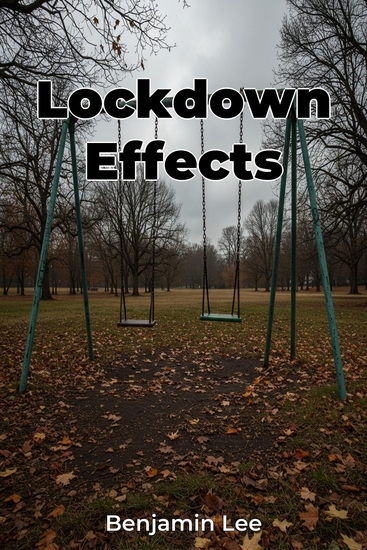
Lockdown Effects - cover

Lockdown Effects

Benjamin Lee

Translator A AI

Publisher: Publifye

  • 0
  • 0
  • 0

Summary

Lockdown Effects examines the global socio-economic impact and social consequences of stay-at-home orders during the recent pandemic. This book provides a regional analysis of diverse pandemic response strategies, highlighting how factors like healthcare infrastructure and cultural norms shaped policy outcomes. For example, some regions experienced disproportionate economic repercussions in sectors like tourism, while others faced significant challenges related to mental health and education due to societal disruption. The book uniquely compares regional experiences to assess policy effectiveness and emphasizes tailoring responses to specific contexts.

 
It explores varying lockdown strategies and their economic repercussions, focusing on sectors like retail and manufacturing. Social impacts on families and vulnerable populations are also examined. Ultimately, the book synthesizes lessons learned and offers policy recommendations for mitigating the negative consequences of future global crisis events.

 
The book progresses by first introducing pandemic response concepts, followed by case studies illustrating different lockdown strategies. It uses statistical data and qualitative interviews to support its analysis, offering a balanced perspective on economic costs versus public health benefits, and the infringement of civil liberties. This makes it a valuable resource for policymakers, researchers, and anyone seeking to understand the complexities of pandemic management.
Available since: 03/19/2025.
Print length: 64 pages.
Other books that might interest you

  • Call It Evil - Understanding the Trump Era - cover

    Call It Evil - Understanding the...

    Susan Neiman

    • 0
    • 0
    • 0
    Moral philosopher Susan Neiman makes the argument for naming and confronting evil as essential to preserving democracy in an age of demagogues. 
    Call It Evil is a bold reckoning with one of the most fraught words in our moral vocabulary. Philosopher Susan Neiman argues that "evil" is not a relic of the past or a term to be avoided, but a vital lens through which to understand the threats facing democracy today. 
    From the rise of Donald Trump to the erosion of shared values, Neiman examines how our reluctance to name evil has left public life vulnerable to demagogues who twist morality to their own ends. Drawing on history―from fascism to the moral failures of recent US leaders―she shows how the normalization of wrongdoing corrodes trust, distorts justice, and endangers our future. This is a book for listeners who refuse to accept moral confusion as the price of political life, and who believe that confronting evil is the first step toward renewal.
    Show book
  • The Art of War - A New Translation - cover

    The Art of War - A New Translation

    Sun Tzu, Filibooks

    • 0
    • 0
    • 0
    The Art of War dates to the fifth century B.C and is arguably the most famous military treatise ever written. 
    Throughout its history, The Art of War has been highly influential. Figures as diverse as Japanese daimyō Takeda Shingen, Chinese communist Mao Tse-Tung, and Finnish field marshal Carl Gustaf Emil Mannerheim have cited the book as inspirational. 
    During the Vietnam War the book served as an inspiration and guide for the Vietcong, which brought the book to the attention of the American military. 
    The focus of this reworking is to preserve the original intent of Sun Tzu as closely as possible.
    Show book
  • Next American Revolution - Sustainable Activism for the Twenty-First Century - cover

    Next American Revolution -...

    Scott Kurashige, Grace Lee Boggs

    • 0
    • 0
    • 0
    The Strategist's Best Books About Asian American Identity, New York Magazine 
     
    The pioneering Asian American labor organizer and writer’s vision for intersectional and anti-racist activism. 
     
    In this powerful, deeply humanistic book, Grace Lee Boggs, a legendary figure in the struggle for justice in America, shrewdly assesses the current crisis—political, economical, and environmental—and shows how to create the radical social change we need to confront new realities. A vibrant, inspirational force, Boggs has participated in all of the twentieth century’s major social movements—for civil rights, women’s rights, workers’ rights, and more. She draws from seven decades of activist experience, and a rigorous commitment to critical thinking, to redefine “revolution” for our times. 
     
    From her home in Detroit, she reveals how hope and creativity are overcoming despair and decay within the most devastated urban communities. Her book is a manifesto for creating alternative modes of work, politics, and human interaction that will collectively constitute the next American Revolution—which is unraveling before our eyes. 
     
    This audiobook is expertly read by Catherine Ho, with audio engineering by Blake Rook. It was produced and published by Echo Point Books & Media, an independent bookseller in Brattleboro, Vermont.
    Show book
  • ELECTORAL COLLEGE THE - A Biography of America's Peculiar Creation Through the Eyes of the People Who Shaped It - cover

    ELECTORAL COLLEGE THE - A...

    Thomas E. Weaver

    • 0
    • 0
    • 0
    A timely look at how the Electoral College has changed US history and why it endures—told through the lenses of specific people who both influenced the process and were impacted by the results. 


    "Over the years, no feature of the Constitution has attracted more criticism than that strange creature called the Electoral College. Thomas E. Weaver has made that history into a story with an intriguing cast of characters, some familiar, several new to me. If you want to know why it is so hard to do away with this long-standing anachronism, Weaver's story will help you understand." —JOSEPH J. ELLIS, Professor Emeritus of History, Mount Holyoke College, author of Pulitzer Prize–winning Founding Brothers: The Revolutionary Generation 


    "Those who think that throwing stones at political institutions is the same as reasoned debate should take some lessons from this carefully researched book. With a cast of colorful characters in tow, Weaver examines the long-standing controversies surrounding the EC and sets out numerous proposals for reform, which range from outright abolition to removing the "plus two" clause. Weaver brings a wealth of historical research to the task, writing with authority and clarity." —Kirkus
    Show book
  • How Not to Be a Political Wife: INSTANT SUNDAY TIMES BESTSELLER - cover

    How Not to Be a Political Wife:...

    Sarah Vine

    • 0
    • 0
    • 0
    ‘You think you’ve married a journalist, then, horrors, he becomes a politician.' 
    How Not to Be a Political Wife is an unflinching account of life at the heart of politics, and what it's like to have politics rip the heart out of your life. It’s a story of high hopes and dirty tricks, broken friendships and divided loyalties, laughter and glamour. 
    Recollections, as a great woman once said, may of course vary, but this is my story, the way I remember it, written with no fear, no favour – and no fucks left to give. 
    Buckle up. 
    I thought long and hard about writing this memoir. I’ve done so not to settle old scores or plead my case, but more because I hope it’s a tale worth telling, not just for those who are interested in the political events of the past few years, but also because it’s about the people and characters behind those events, and why things ended up the way they did. 
    For nearly 20 years I was inside the rooms of government, a sanctioned eavesdropper on the rise – and fall – of the Cameroon style of Conservatism. At the same time I was building a career in journalism, raising two children and doing my best to support my own husband, Michael Gove, on his political journey. I was both an insider and an outsider; an observer – via my journalism – as well as a participant in the cut and thrust (mainly cut, if I’m honest) of frontline politics. 
    After my divorce from Michael and the demise of the Conservatives’ Old Guard, that all came to an end. I’m no longer officially a Westminster WAG, but you won’t find me mourning. Politics trampled my health, my happiness, my marriage, my sanity; it placed intolerable pressure on my loved ones, especially my children; it twisted my sense of self, and others’ sense of me; it tainted everything I did or said. I can’t say I miss it. I do, however, miss the life and the relationships I had before it all. These are the recollections of a survivor, but they are also a love letter to all that was lost in the wreck. 
    'Sarah Vine is the Bridget Jones of politics.' Plum Sykes 
    'Everyone in Westminster is talking about it.' The London Standard 
    'I take it all back; she's fabulous. Nobody in Westminster can afford not to buy this book.' Rachel Johnson 
    Part autobiography, part memoirs, it’s a non-fiction account of elections and campaigns seen up close, where the social process of power shapes every relationship. A bestseller in the making, it turns those stories into a sharp piece of sociology about what Westminster does to the people caught in its wake. 
    nan 
    HarperCollins 2025
    Show book
  • Proximity Politics - How Distance Shapes Public Opinion and Political Behaviors - cover

    Proximity Politics - How...

    Jeronimo Cortina

    • 0
    • 0
    • 0
    Republicans who live closer to the U.S.-Mexico border are less likely to support constructing a wall than those who live farther away. After a mass shooting, gun sales and permit applications skyrocket in nearby communities. Experiencing an extreme weather event like a hurricane or flood can encourage someone to attribute climate change to human activity. Why do we react so differently to faraway events and ones that take place on our doorsteps, and what does this reveal about our political landscape? 
     
    Proximity Politics is an examination of the role of distance in shaping attitudes, behaviors, and understandings of the world. Jeronimo Cortina documents the crucial ways space and place influence public opinion. He demonstrates that the closer someone is to an event, social group, or policy, the likelier they are to have first-hand, specific, grounded knowledge of the subject. Conversely, distance leads to detachment, making it more likely that decontextualized or unreliable information and individual or group biases will prevail. Considering a range of case studies, Cortina unravels how spatial, emotional, temporal, social, and cultural distances affect public opinion. Bringing together quantitative and qualitative data, Proximity Politics shows that even in today's interconnected world, we are still profoundly influenced by what happens next door.
    Show book