Join us on a literary world trip!
Add this book to bookshelf
Grey
Write a new comment Default profile 50px
Grey
Subscribe to read the full book or read the first pages for free!
All characters reduced
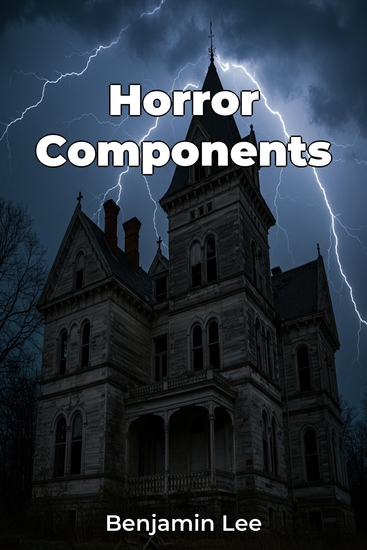
Horror Components - cover

Horror Components

Benjamin Lee

Translator A AI

Publisher: Publifye

  • 0
  • 0
  • 0

Summary

Horror Components explores the captivating yet terrifying nature of horror narratives by dissecting the psychological mechanisms and structural elements that make them effective. It investigates how horror films trigger primal responses, exploiting vulnerabilities through suspense, surprise, and even disgust. The book also analyzes narrative components, such as plot development and character design, as crucial elements for creating lasting horror experiences. This book uniquely emphasizes the interplay between psychological principles and narrative strategies. It moves beyond cataloging horror tropes to explain why they are effective, providing valuable insights for writers. For example, the book looks at the uncanny valley and fear conditioning. The book progresses by first introducing the psychological foundations of horror, including the role of empathy. Then it delves into the structural elements of horror narratives, such as plot archetypes. Finally, it synthesizes these concepts, offering practical guidelines for crafting effective horror narratives and analyzing specific examples from film and television.
Available since: 05/05/2025.
Print length: 68 pages.
Other books that might interest you

  • Tour Wars - cover

    Tour Wars

    Carla Luna

    • 0
    • 0
    • 0
    Ten days, two rivals, and a busload of tourists. How bad could it be? 
    For archaeologist Emilia Flores, landing a fellowship to work at the ancient ruins of Pompeii in Italy is a dream come true. The only catch? She’ll be digging alongside her infuriating nemesis, TJ Mayer, who’s been a constant thorn in her side. 
    TJ isn’t about to pass up the Pompeii project. Sure, he’ll be stuck working with Emilia, but he thrives on challenging her. And he hasn’t forgotten that secret kiss they shared at an archaeology conference last winter. 
    Though unearthing Pompeii’s treasures might be a dream, student debt is a nightmare that never takes a vacation. So, when TJ and Emilia are offered a lucrative side job to lead a ten-day tour through southern Italy, they grudgingly agree to tackle it together. 
    Forced to set aside their animosity and work as a team, they forge an unexpected camaraderie. As the sparks between them ignite, their rivalry gives way to passion, making it easy to forget their years of fierce competition. But what happens when the tour ends and the real world steps in? 
    Tour Wars is a rivals-to-lovers, grumpy/sunshine romance featuring a nerdy cinnamon roll hero, a strong-willed Latina heroine, and plenty of hotel hijinks. It can be read as a standalone.
    Show book
  • In Their Own Words - Testimony from the Students of Canada’s Indigenous Residential School Program - cover

    In Their Own Words - Testimony...

    Darren Grimes

    • 0
    • 0
    • 0
    What is the cost of an education? 
    Is education an additive process or a reductive one? 
    How does one weigh the benefits of tradition against the threat of being at odds with the future? 
    How does one refuse the offer of a better life for their children? 
    What if the offer is compulsory? 
    What happens when the tree of knowledge bares rotten fruit? 
    While the history of Canada's Residential School program is only just beginning 
    to be unearthed, there are already enough first hand accounts to begin asking 
    some of these questions. The words of the individuals included in this book 
    offer just a glimpse of the results of the effort of one group of people to 
    educate people who were in many cases not seeking the knowledge being 
    offered. These are tales of lessons learned, languages lost, traditions 
    replaced, & charity corrupted.
    Show book
  • Baltic Mythology and Folklore - cover

    Baltic Mythology and Folklore

    Niina Niskanen

    • 0
    • 0
    • 0
    Embark on a journey into the mystical realm of Baltic mythology with this captivating audio book. Immerse yourself in the enchanting tales of gods and goddesses, where ancient legends come to life. From the powerful deities who shape the cosmos to the magical creatures that roam the lands, these stories will transport you to a world filled with wonder and intrigue. Let your imagination run wild as you listen to these mesmerizing narratives, perfect for both mythology enthusiasts and those seeking a fantastical escape from reality. 
    Baltic mythology covers a lot of gods, goddesses and magical beings. These stories from Lithuania and Latvia are filled with mythical creatures, mighty heroes, and heartbreaking tales and they show us glimpses into the past, the old way of life in the Baltic lands. What was life like in the farming communities, sacrificing to the gods and following the pagan wheel of the year. 
    In this book, you will learn about the history of Baltic gods and goddesses. The sun goddess Saule who, after riding in the sky landed in the sea with her beautiful stallions. The mighty sky god Dievas, who dressed up like an ancient Baltic lord, and Perkunas the Thunder god, were worshipped as the bringer of rain and the fertility of the land. People swore oaths in his name. Zemyna the mother earth, which Lithuanians and Latvians worshipped, kissed her and bid her good night.  
    Discover the captivating allure of Baltic mythology today.
    Show book
  • Ottomans and Christians The: The History and Legacy of the Ottomans’ Conflicts with Catholic and Orthodox Nations - cover

    Ottomans and Christians The: The...

    Editors Charles River

    • 0
    • 0
    • 0
    In terms of geopolitics, perhaps the most seminal event of the Middle Ages was the successful Ottoman siege of Constantinople in 1453. The city had been an imperial capital as far back as the 4th century, when Constantine the Great shifted the power center of the Roman Empire there, effectively establishing two almost equally powerful halves of antiquity’s greatest empire. Constantinople would continue to serve as the capital of the Byzantine Empire even after the Western half of the Roman Empire collapsed in the late 5th century. Naturally, the Ottoman Empire would also use Constantinople as the capital of its empire after their conquest effectively ended the Byzantine Empire, and thanks to its strategic location, it has been a trading center for years and remains one today under the Turkish name of Istanbul.  
    	The end of the Byzantine Empire had a profound effect not only on the Middle East but Europe as well. Constantinople had played a crucial part in the Crusades, and the fall of the Byzantines meant that the Ottomans now shared a border with Europe. In the wake of taking Constantinople, the Ottoman Empire would spend the next few centuries expanding its size, power, and influence, bumping up against Eastern Europe and becoming one of the world’s most important geopolitical players. It was a rise that would not truly start to wane until the 19th century. Naturally, the Islamic empire was viewed as a threat by the predominantly Christian continent to their west, and it took little time for different European nations to start clashing with the powerful Turks. In fact, the Ottomans would clash with Russians, Austrians, Venetians, Polish, and more before collapsing as a result of World War I, when they were part of the Central Powers. 
    Show book
  • Meaning - A Very Short Introduction - cover

    Meaning - A Very Short Introduction

    Emma Borg, Sarah A. Fisher

    • 0
    • 0
    • 0
    Our ability to find meaning in things is one of the most important aspects of human life. But it is also one of the most mysterious. Where does meaning come from? What sorts of things have meaning? And how do we grasp the meaning others want to convey? Meaning: A Very Short Introduction is shaped by exploring possible answers to these questions. 


    Human societies have one particularly important device for expressing and sharing meaning: language. Since our words are paradigm examples of things which have meaning, in this book, Emma Borg and Sarah Fisher use meaning in language as a case study for exploring meaning more generally. They focus on three possible sources for word meaning: things in the world, things in the mind, and social practices, exploring the key approaches thinkers have put forward in each of these arenas. Finally, they end by looking at some concrete applications of the ideas and approaches introduced in the book.
    Show book
  • Wonderstruck - How Wonder and Awe Shape the Way We Think - cover

    Wonderstruck - How Wonder and...

    Helen De Cruz

    • 0
    • 0
    • 0
    Wonder and awe lie at the heart of life's most profound questions. Wonderstruck shows how these emotions respond to our fundamental need to make sense of ourselves and everything around us, and how they enable us to engage with the world as if we are experiencing it for the first time. 


    Drawing on the latest psychological insights on emotions, Helen De Cruz argues that wonder and awe are emotional drives that motivate us to inquire and discover new things, and that humanity has deliberately nurtured these emotions in cultural domains such as religion, science, and magic. Tracing how wonder and awe unify philosophy, the humanities, and the sciences, De Cruz provides new perspectives on figures such as Plato, Aristotle, Adam Smith, William James, Rachel Carson, Maurice Merleau-Ponty, Jean-Paul Sartre, and Abraham Heschel. Along the way, she explains how these singular emotions empower us to be open-minded, to experience joy and hope, and to be resilient in the face of personal troubles and global challenges. 


    Taking inspiration from Descartes's portrayal of wonder as "that sudden surprise of the soul," this illuminating book reveals how wonder and awe are catalysts that can help us reclaim what makes life worth living and preserve the things we find wonderful and valuable in our lives.
    Show book