Join us on a literary world trip!
Add this book to bookshelf
Grey
Write a new comment Default profile 50px
Grey
Subscribe to read the full book or read the first pages for free!
All characters reduced
Fortunata and Jacinta - cover

Fortunata and Jacinta

Benito Pérez Galdós

Publisher: CLXBX

  • 0
  • 0
  • 0

Summary

Widely regarded as one of the greatest novels of Spanish literature, Fortunata and Jacinta is Benito Pérez Galdós's sweeping and masterful portrait of love, class, and society in nineteenth-century Madrid. First published in 1887, this monumental work weaves together the lives of two women from vastly different social worlds, bound by their connection to the same man and shaped by the rigid structures of their time.

At the heart of the novel are Fortunata, a passionate and impulsive woman from the lower classes, and Jacinta, the refined and compassionate wife of a wealthy merchant. Both women are linked to Juanito Santa Cruz, whose charm and irresponsibility set into motion a complex web of desire, betrayal, longing, and rivalry. Through their intertwined destinies, Galdós explores the tensions between social convention and personal freedom, appearance and reality, morality and survival.

Set against the vivid backdrop of Madrid, the novel captures the rhythms of urban life with extraordinary realism. From bustling marketplaces and modest tenements to elegant salons and family businesses, Galdós presents a richly detailed panorama of Spanish society during a time of political and cultural transformation. His portrayal of daily life is both intimate and expansive, revealing the ambitions, prejudices, and contradictions of a rapidly changing world.

More than a story of romantic entanglement, Fortunata and Jacinta is a profound psychological study. Galdós delves deeply into the inner lives of his characters, illuminating their vulnerabilities, aspirations, and moral dilemmas. Fortunata's fierce determination and emotional intensity contrast sharply with Jacinta's quiet dignity and longing for fulfillment, creating a powerful exploration of womanhood within the constraints of patriarchal society.

Through sharp social observation and nuanced characterization, Galdós critiques class divisions, gender inequality, and the hypocrisies of the bourgeoisie. Yet he approaches his characters with compassion rather than judgment, allowing readers to witness their struggles with empathy and understanding. The novel's complexity lies not in simple moral lessons but in its honest depiction of human frailty and resilience.

Celebrated for its narrative depth and realism, Fortunata and Jacinta stands alongside the great European novels of the nineteenth century. It is both an intimate drama and a sweeping social epic—an enduring examination of passion, identity, and the forces that shape our lives. Through its unforgettable characters and richly textured world, Galdós offers a timeless reflection on love, society, and the search for meaning.
Available since: 03/01/2026.
Print length: 1419 pages.
Other books that might interest you

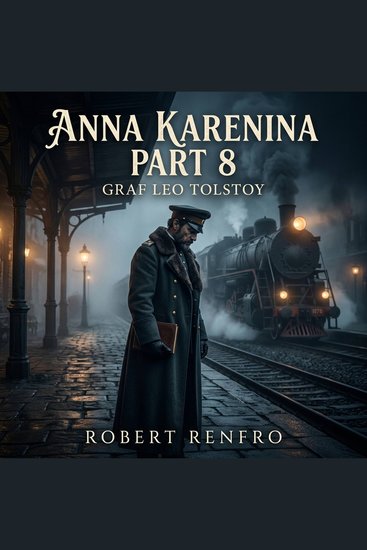
  • Anna Karenina part 8 - The epic conclusion to a masterpiece of Classic Literature Witness Vronsky's devastating grief a nation marching to war and Levin's profound spiritual awakening in this haunting finale - cover

    Anna Karenina part 8 - The epic...

    graf Leo Tolstoy

    • 0
    • 0
    • 0
    In the aftermath of unimaginable tragedy, the quest for meaning becomes a matter of life and death. 
    The eighth and final part of Tolstoy's monumental epic opens under the shadow of loss and the looming drums of the Serbo-Turkish War. Moscow society is swept up in patriotic fervor, but for the shattered Count Vronsky, the military campaign offers merely a dignified way to face death. Haunted by the horrifying memory of a love that ended in ultimate despair, he boards a train headed toward the battlefield, desperate to silence the agonizing guilt that pursues him. Meanwhile, in the quiet solitude of the Russian countryside, Konstantin Levin wrestles with his own existential crisis. Surrounded by his loving wife, Kitty, and their newborn child, Levin finds himself tortured by the terrifying question of life's purpose—until a chance conversation with a peasant sparks a spiritual awakening that will change him forever. 
    Listeners seeking the profound depths of Classic Literature will be utterly captivated by this majestic conclusion. Balancing philosophical inquiries, political tension, and sweeping character arcs, this audio edition immerses you in a rich tapestry of 19th-century Russian society, existential themes, and the breathtaking realism that continues to define the historical fiction genre. 
    About the Author: Graf Leo Tolstoy was a towering Russian novelist and philosopher whose works transcend their era. Renowned for his complex characters and sweeping portrayals of societal shifts, his masterpieces remain foundational pillars of global literature.
    Show book
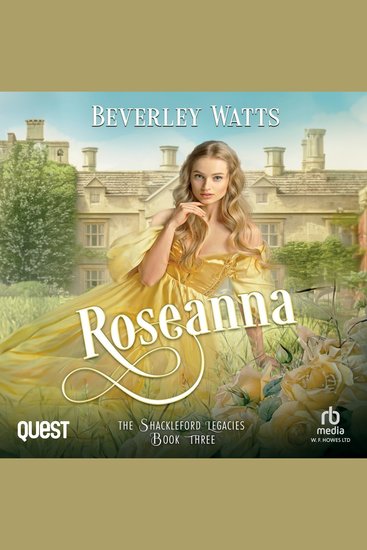
  • Roseanna - cover

    Roseanna

    Beverley Watts

    • 0
    • 0
    • 0
    From the highly acclaimed author of The Shackleford Sisters, Beverley Watts, comes an exciting new series featuring the next generation. 
    The Shackleford Legacies are a delightful dance of romance, humour, mystery and fun... 
     
    Lady Roseanna Atwood was not looking forward to the annual weekend garden party at Blackmore. Oh, she was looking forward to seeing her extended family, but the thought of spending four whole days making polite conversation with a group of condescending, arrogant coxcombs was not in the least appealing. 
    Of course, she hadn’t anticipated being caught in the middle of a political disaster, not to mention a long-standing conspiracy. Neither had she bargained on being called upon to help her grandfather keep a secret Jacobite supporter from potentially causing another Culloden. 
     
    Rescued from Napoleon’s Bastille of the Seas at the tender age of eight, Tristan Bernart had grown to adulthood trusting no one but the one man who taught him how to survive and eventually prosper beyond his wildest dreams. 
    But when a chance encounter over twenty years later forced him to relive the nightmare months during which he nearly starved to death in a filthy prison cell, Tristan recognised that only by extending his trust would he finally get retribution. 
    However, working under cover with the Duke of Blackmore and his unorthodox family, was not for the fainthearted, and the last thing Tristan expected was to end up trying to protect a chit barely out of the school room, whose habit of being in the wrong place at the wrong time had put her in the path of men for whom murder was simply a daily distraction. 
     
    But no one ever said the path of true love ran smoothly…
    Show book
  • Misérables Vol 3 - cover

    Misérables Vol 3

    Victor Hugo

    • 0
    • 0
    • 0
    This is book 3 of 5. -- An ex-convict breaks parole and starts a new life as a righteous man, but is pursued by a police inspector. Along the way, the ex-convict joins a revolution, adopts a daughter, and beats people up. Hooray. (Summary by smileyman457)
    Show book
  • The Caves of Fear - cover

    The Caves of Fear

    Harold Goodwin

    • 0
    • 0
    • 0
    Entry in the Rick Brant series by Goodwin under the name John Blaine, which began in 1947.  'Rick and Scotty travel to the Himalayas again, this time to stop nuclear materials from falling into the wrong hands.' says Wikipedia. - Summary by BellonaTimes
    Show book
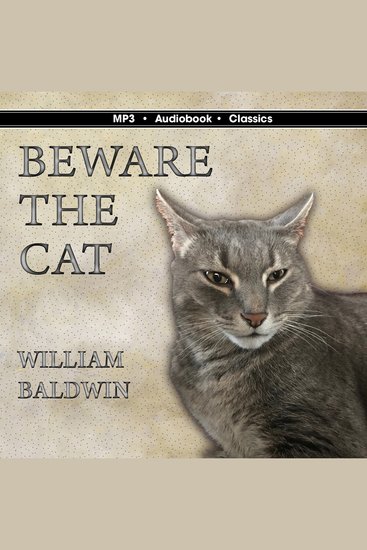
  • Beware the Cat - cover

    Beware the Cat

    William Baldwin

    • 0
    • 0
    • 0
    "Beware the Cat" is an English novel written by William Baldwin in 1553, making it one of the earliest examples of English fiction. The novel is a satirical and fantastical work that blends elements of folklore, social commentary, and the supernatural. 
    The story is framed as a narrative within a narrative, with the protagonist, Mr. Streamer, recounting his experiences to a group of friends. Streamer, a curious and skeptical man, stumbles upon a hidden chamber where he witnesses a group of cats engaging in a secret assembly. To his surprise, the cats are not only intelligent but also capable of speech. 
    As Streamer eavesdrops on the feline conversations, he discovers that the cats possess a complex society with its own set of rules and beliefs. The novel takes a satirical approach to criticize human behavior, using the cat society as a mirror to reflect societal issues of the time. 
    One of the notable aspects of "Beware the Cat" is its exploration of the supernatural, blending folklore and superstition with a fictional narrative. The novel incorporates elements of witchcraft, shape-shifting, and other mystical occurrences, adding a layer of intrigue and fantasy to the story. 
    Overall, "Beware the Cat" is a unique and innovative work that offers a blend of social satire, fantasy, and early English fiction, making it a significant contribution to the literary landscape of its time.
    Show book
  • The Short Stories of Leo Tolstoy - Epic collection of stories from the grandmaster of literature - cover

    The Short Stories of Leo Tolstoy...

    Leo Tolstoy

    • 0
    • 0
    • 0
    Leo Tolstoy was born in 1828 in the Russian province of Tula to a wealthy noble family. As a child, he had private tutors but he showed little interest in any formal education. When he went to the University of Kazan in 1843 to study oriental languages and law, he left without completing his courses.  Life now was relaxed and idle but with some writing also taking place.  Gambling debts forced an abrupt change of path and he joined the army to fight in the Crimean War.  He was commended for his bravery and promoted but was appalled at the brutality and loss of life.  He recorded these and other earlier experiences in his diaries which formed the basis of several of his works. 
     
    In 1852 ‘Childhood’ was published to immediate success and was followed by ‘Boyhood’ and ‘Youth’. 
     
    His experience in the army and the horrors he witnessed resulted in ‘The Cossacks’ in 1862 and the trilogy ‘Sevastopol Tales’. After the war he travelled around Europe, visiting London and Paris and meeting such luminaries as Victor Hugo and Charles Darwin.  
     
    It was now that Tolstoy began his masterpiece, ‘War and Peace’. Published in 1869 it was an epic work that changed literature. He quickly followed this with ‘Anna Karenina’.  
     
    These successes made Tolstoy rich and helped him accomplish many of his dreams but also brought problems as he grappled with his faith and the lot of the oppressed poor. These revolutionary views became so popular that the authorities now kept him under surveillance.  
     
    He led a life of asceticism and vegetarianism and put his socialist ideals into practice by establishing numerous schools for the poor and food programmes. He also believed in giving away his wealth, which caused much discord with his wife.  
     
    His writing continued to bring forth classics such as ‘The Death of Ivan Ilyich’ and many brilliant and incisive short stories such as ‘How Much Land Does A Man Need’.  
     
    In 1901 Tolstoy was excommunicated from the Church and controversially deselected for the Nobel Prize for Literature. 
     
    Whilst undertaking a pilgrimage by train in October 1910 with his daughter Aleksandra he caught pneumonia in the nearby town of Astapovo.  Leo Tolstoy died on November 9th, 1910, he was 82. 
    01 - Leo Tolstoy - A Short Story Collection - An Introduction 
    02 - Diary of a Lunatic by Leo Tolstoy 
    03 - A Dialogue Among Clever People by Leo Tolstoy 
    04 - Aloysha The Pot by Leo Tolstoy 
    05 - God Sees The Truth But Waits by Leo Tolstoy 
    06 - How Much Land Does A Man Need by Leo Tolstoy
    Show book