Join us on a literary world trip!
Add this book to bookshelf
Grey
Write a new comment Default profile 50px
Grey
Subscribe to read the full book or read the first pages for free!
All characters reduced
Cynthia's Revels - The Fountain of Self-Love - cover

Cynthia's Revels - The Fountain of Self-Love

Ben Jonson

Publisher: Interactive Media

  • 0
  • 0
  • 0

Summary

"Cynthia's Revels: The Fountain of Self-Love" by Ben Jonson is a satirical play that delves into the world of courtly flattery, vanity, and self-indulgence. The court of Queen Cynthia (a representation of Queen Elizabeth I) is populated by characters representing various vices and follies. The central character, Crites, is a young courtier who seeks self-improvement through the Fountain of Self-Love. Through witty dialogues and sharp humor, Jonson critiques the artificiality of courtly life, the pursuit of personal gain, and the consequences of excessive self-love. The play serves as a mirror to society's vanities and excesses, offering a comedic yet incisive commentary on human nature.
Available since: 08/20/2023.
Print length: 280 pages.
Other books that might interest you

  • Wonderful - cover

    Wonderful

    Harry Baker

    • 0
    • 0
    • 0
    World Poetry Slam Champion Harry Baker's latest collection is his most ambitious yet. Following on from the success of Unashamed (Burning Eye, 2022), Harry Baker combines the insight of a mathematician and the vulnerability of the poet to find wonder in the little things that make life so precious. From a poem about wellies becoming an exploration of masculinity, a poem planning his own funeral inspiring thousands around the world to do the same, or a poem about his favourite German wheat-beer literally just being a poem about his favourite German wheat-beer, The combination of grief and joy in recent poems has led to Harry being described as the Barbenheimer of the poetry world (by himself, but he is hoping it catches on).
    Show book
  • A Cemetery for Holes - cover

    A Cemetery for Holes

    Tom Prime, Gary Barwin

    • 0
    • 0
    • 0
    In A Cemetery for Holes, poetic language bends and breaks, resists and reforms under the stress of family trauma. Consensual reality shifts with nonconsensual harm. It is this history of violence which is ultimately, confronted, fought against, and overcome. While engaged in this struggle, the poems also strive to rebuild, to console and to rediscover the world, its beauty, tenderness, humour, and joy.
    Show book
  • The Night Before - Beautiful poem from a Pulitzer prize winner - cover

    The Night Before - Beautiful...

    Edward Arlington Robinson

    • 0
    • 0
    • 0
    Edwin Arlington Robinson was born on the 22nd December 1869 in Tide in Lincoln County, Maine.  
    His childhood was described by him as ‘stark and unhappy’.  His name was drawn out of a hat from a fellow vacationer from Arlington Massachusetts when fellow holiday makers decided that his parents had waited long enough at 6 months to name him.  It was a name he despised and reflects the station to which his parents had placed him; their great hope at his birth were that he was a girl to complement their two sons. 
    His pessimistic mood carried him to adulthood and a doomed encounter with Emma Loehen Shepherd who constantly encouraged his poetry.  Edwin was thought too young to be her companion and so his elder, middle brother, Herman was assigned to her.  It was a great blow to Edwin and during their marriage on February 12th, 1890, he stayed home and wrote ‘Cortege’ 
    In the fall of 1891 Edwin entered Harvard, taking classes in English, French and Shakespeare.  He felt at ease with the Ivy League and made great efforts to be published in one of the Harvard literary journals.  Indeed, the Harvard Advocate published ‘Ballade of a Ship’ but then his career appeared to stall.  His father died and although he returned to Harvard for a second year it was to be his last but also the start of some life-long friendships. 
    In 1893 he returned to Gardiner Maine as the man of the household.  Herman by this time had become an alcoholic, having suffered business failures, and was now to become estranged from Emma. 
    Edwin began farming whilst he wrote and quickly developed a close relationship with Emma who had now moved back to Gardiner after Herman’s death with her children. 
    Although he proposed twice, he was rejected and in consequence moved to New York to start afresh. 
    But it was a salutary experience. Although surrounded by artists he had little money and life was difficult. 
    In 1896 he published his own book, ‘The Torrent and the Night Before’, paying 100 dollars for 500 copies.  Edwin wanted it to be a surprise for his Mother, but days before its arrival she died of diphtheria. 
    His second volume, ‘The Children of the Night’, had a wider circulation.  At the behest of President Roosevelt, whose son was an avid admirer, he was given a job in 1905 at the New York Customs Office although it appears his real job was “to help American letters”. 
    Either way his success began to widen and his influence proper.  During the 1920s he won the Pulitzer Prize for Poetry on three separate occasions. In 1922 for ‘Collected Poems’ again in 1925 for ‘The Man Who Died Twice’ and finally in 1928 for ‘Tristram’. 
    During the last twenty years of his life he became a regular summer resident at the MacDowell Colony in New Hampshire, where he became the object of fascination by several women.  But he never married. 
    Edwin Arlington Robinson died of cancer on the 6th April 1935 in the New York Hospital in New York. He was 65.
    Show book
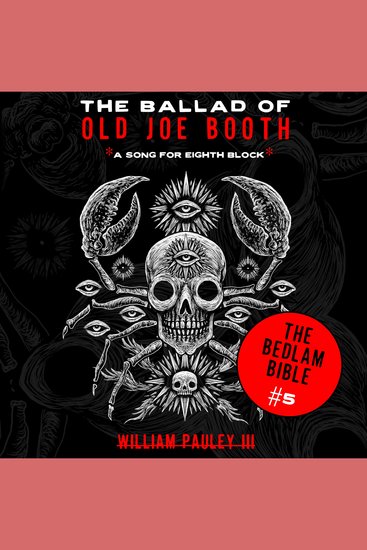
  • Ballad of Old Joe Booth The (A Song For Eighth Block) - cover

    Ballad of Old Joe Booth The (A...

    William Pauley III

    • 0
    • 0
    • 0
    Some monsters are impossible to see.This is The Ballad of Old Joe Booth.An epic poem in four parts.A song for Eighth Block.
    Show book
  • Cold War - (stage version) - cover

    Cold War - (stage version)

    Paweł Pawlikowski

    • 0
    • 0
    • 0
    Poland, 1949. Zula is bold and brilliant, a singer who ignites the stage. Wiktor is withdrawn and damaged, a composer longing to write. Irresistibly drawn to each other, they dream of escape. But in Communist-controlled Poland, the desire for freedom can be a dangerous thing.
    Based on the film by Academy Award winner Paweł Pawlikowski, Cold War is an epic love story spanning the decades and breadth of Europe at its most divided, and a compelling story of passion, redemption, and the journey to be free.
    This stage adaptation by Conor McPherson was first performed at the Almeida Theatre, London, in November 2023, directed by Rupert Goold, and featuring traditional Polish songs alongside music by Elvis Costello.
    Show book
  • Poems From The Chinese - A Selection of Waley's Best Translations - cover

    Poems From The Chinese - A...

    Arthur Waley

    • 0
    • 0
    • 0
    These are called ''' Poems from the Chinese"" and we have Mr. Waley's assurance that there are in existence Oriental originals. But if it be so (and, of course it is) then we have here a literary miracle. It is a platitude that translation of poetry is either bad verse or bad translation. But Mr. Waley, translating not merely from one language into another, but almost from one planet into another, has produced a body of living poetry, in which there is every reason to believe he re-creates, without distorting, the Chinese poets. This is an unparalleled feat. But as we are, with about six exceptions in the whole of Great Britain, incapable of comparing the English and the Chinese, we must address ourselves to these poems as though they had been written by an Englishman of the twentieth century, and judge them on that basis. It is a severe test to apply to translations, but Mr. Waley emerges from it serenely victorious. Indeed, serenity is the keynote of all this work—the serenity of assured mastery in a difficult medium but still more of outlook. The beauty with which these poems are. inlaid is fundamentally a wise beauty and the wisdom is as much in the shape of Mr. Waley's mind as in that of China. There is no need to hurry here. Wisdom goes at an even pace, and has time between her penetrations of the stars to observe the smallest things of life. Her leisurely glance sweeps over them with patient gold, and they settle, almost without a sigh, into decoration and into pattern. We have lost {and the Chinese have lost) the secret of their enamels of the great periods. But Mr. Waley has private access to them, and his poems, varnished with just that cool and even certainty of paint and texture, achieve one filial translation— the translation of colour into speech. -- Humbert Wolfe.
    Show book