Join us on a literary world trip!
Add this book to bookshelf
Grey
Write a new comment Default profile 50px
Grey
Subscribe to read the full book or read the first pages for free!
All characters reduced
A Brief Account of the Destruction of the Indies - Enriched edition - cover

A Brief Account of the Destruction of the Indies - Enriched edition

Bartolomé las de Casas

Publisher: DigiCat

  • 0
  • 0
  • 0

Summary

In "A Brief Account of the Destruction of the Indies," Bartolomé de las Casas delivers a poignant and vehement denunciation of the atrocities committed against the indigenous peoples of the Americas by Spanish colonizers during the early 16th century. Written in a straightforward yet impassioned literary style, this foundational text in post-colonial literature not only documents the harrowing experiences of natives subjected to violence, enslavement, and cultural eradication, but it also critiques the moral bankruptcy of colonial enterprises. Las Casas employs vivid imagery and emotional appeals, aimed at evoking a sense of moral urgency, as he seeks to raise awareness among European audiences about the dire consequences of imperialism. As a former conquistador turned Dominican friar, Bartolomé de las Casas witnessed firsthand the brutal treatment of Indigenous populations, which catalyzed his transformation into a passionate advocate for their rights and welfare. His unique position in colonial society, coupled with his deepening commitment to evangelical Christianity, informed his subsequent writings, framing him as one of the earliest defenders of human rights in the New World. Las Casas's experiences and convictions compelled him to serve as a fierce critic of Spanish colonial policy, making his insights particularly valuable in understanding the moral complexities surrounding colonialism. This essential read is highly recommended for scholars, historians, and any reader interested in the ethical implications of colonialism. Las Casas's powerful account not only serves as historical documentation but also incites vital discussions about justice, morality, and the consequences of imperial expansion. In engaging with this text, readers will gain a profound understanding of the early colonial period and its lasting impacts on Indigenous populations.

In this enriched edition, we have carefully created added value for your reading experience:
- A succinct Introduction situates the work's timeless appeal and themes.
- The Synopsis outlines the central plot, highlighting key developments without spoiling critical twists.
- A detailed Historical Context immerses you in the era's events and influences that shaped the writing.
- An Author Biography reveals milestones in the author's life, illuminating the personal insights behind the text.
- A thorough Analysis dissects symbols, motifs, and character arcs to unearth underlying meanings.
- Reflection questions prompt you to engage personally with the work's messages, connecting them to modern life.
- Hand‐picked Memorable Quotes shine a spotlight on moments of literary brilliance.
- Interactive footnotes clarify unusual references, historical allusions, and archaic phrases for an effortless, more informed read.
Available since: 08/15/2022.
Print length: 81 pages.
Other books that might interest you

  • The Mythology of Atlantis - Searching for the Lost Civilization - cover

    The Mythology of Atlantis -...

    Odessa Nightshade

    • 0
    • 0
    • 0
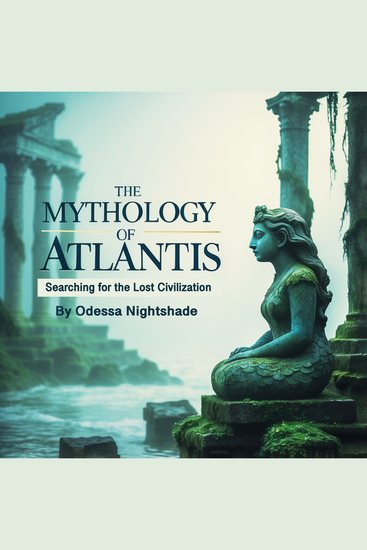
    The legend of Atlantis has fascinated historians, philosophers, and adventurers for centuries. First described by the ancient Greek philosopher Plato, Atlantis was said to be a powerful and advanced civilization that mysteriously vanished beneath the sea. Despite being written over 2,000 years ago, Plato’s account continues to inspire countless theories, books, and even modern expeditions in search of this lost world. But was Atlantis ever real, or was it simply a metaphor for human folly? Understanding the origins of this myth is crucial to separating historical possibility from pure fantasy.  
      
    Plato’s dialogues, Timaeus* and *Critias, provide the earliest known description of Atlantis. According to him, the island was a technologically superior and wealthy society that existed around 9,000 years before his time. It was said to be located beyond the "Pillars of Hercules," now known as the Strait of Gibraltar. However, due to the moral corruption of its people, the gods allegedly punished Atlantis by submerging it beneath the waves. This dramatic tale has led to endless speculation about whether Plato based it on real events or simply crafted it as an allegory about the dangers of hubris and imperial overreach.  
      
    Interestingly, Atlantis is not the only story of a lost civilization. Cultures around the world have myths of great lands that disappeared under the ocean. In Hindu mythology, the ancient city of Dwarka was said to have been swallowed by the sea. The biblical tale of the Great Flood and even the legends of Lemuria and Mu suggest a shared human fascination with lost worlds. Some researchers argue that these stories could be echoes of real historical disasters, such as the sudden sinking of landmasses due to earthquakes, tsunamis, or rising sea levels. Could Atlantis be another version of these global flood myths? 
    Show book
  • Advent of Early Modern Warfare The: The History of the Transition from Medieval Military Tactics to the Age of Gunpowder - cover

    Advent of Early Modern Warfare...

    Editors Charles River

    • 0
    • 0
    • 0
    In the time period between the fall of Rome and the spread of the Renaissance across the European continent, many of today’s European nations were formed, the Catholic Church rose to great prominence, some of history’s most famous wars occurred, and a social class system was instituted that lasted over 1,000 years. A lot of activity took place during a period frequently labeled derogatively as the “Dark Ages,” and while that period of time is mostly referred to as the “Middle Ages” instead of the Dark Ages today, it has still retained the stigma of being a sort of lost period of time in which Western civilization made no worthwhile progress.  
    	If anything, the one aspect of the Middle Ages that has been romanticized is medieval warfare. Indeed, the Middle Ages have long sparked people’s imaginations thanks to imagery of armored knights battling on horseback and armies of men trying to breach the walls of formidable castles. What is generally forgotten is that medieval warfare was constantly adapting to the times as leaders adopted new techniques and technology, and common infantry became increasingly important throughout the period. Starting around 1000 CE, there was a gradual consolidation of power in the region after the fragmentation of the Early Middle Ages, and it brought about the rise of more centralized states that could field large armies. The Normans, one of the first groups to do this, were notable for their discipline and organization, and it’s little surprise that they were the last foreigners to successfully invade Britain under William the Conqueror in the mid 11th century.  
    	Meanwhile, political and technological progress led to continuous change of tactics and equipment. Cavalry became ascendant, only to be later replaced by infantry as their weapons improved. By the end of the period, warfare was radically changing thanks to the rise of gunpowder weapons such as the handgun and the bombard. 
    Show book
  • The Fall Of Homo Digitalis - Impersonal Intimacy And New Relationships in The Digital Era - cover

    The Fall Of Homo Digitalis -...

    Brian Gibson

    • 0
    • 0
    • 0
    This audiobook is narrated by an AI Voice.   
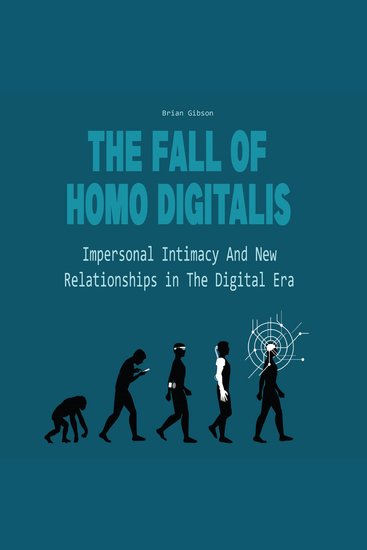
    With unparalleled insight and a keen understanding of the digital revolution's impact on our lives, this book explores the rise of Homo Digitalis, a new era of human existence where screens, algorithms, and data have reshaped how we interact. 
    From the exhilarating thrill of swiping right to the troubling reality of social media-driven envy, this book delves into the paradox of our time: the paradox of impersonal intimacy. We've become experts at connecting with others across the globe, yet sometimes struggle to communicate with those closest to us. "The Fall of Homo Digitalis" explores how these unprecedented technological advancements have reshaped our understanding of love, friendship, and human connection. 
    Whether you're a digital native, a concerned parent, or anyone curious about the transformative power of technology on our relationships, this book is a must-read for all those seeking to comprehend the ever-shifting dynamics of love, intimacy, and human connection in the digital age. "The Fall of Homo Digitalis" mirrors our digital selves and guides us toward a more connected and authentic future.
    Show book
  • Useless Life Facts That Will Put You to Sleep Fast - cover

    Useless Life Facts That Will Put...

    Smart Sleep

    • 0
    • 0
    • 0
    "**Useless Life Facts That Will Put You to Sleep Fast**" is the perfect audiobook for anyone who struggles with falling asleep. This quirky and calming collection of utterly trivial facts is designed to lull your mind into a peaceful state, free from the day’s worries. From the obscure history of everyday objects to the strange habits of animals, each fact is more unimportant than the last, providing just enough mental engagement to keep your thoughts from wandering but not enough to keep you awake. 
    Narrated in a soothing, monotone voice, this audiobook is a gentle, non-intrusive companion for bedtime. Whether you're curious about the origin of the toothbrush or interested in learning why certain fish can blink, you’ll find these tidbits amusingly irrelevant yet oddly comforting. Perfect for those who want to drift off without focusing on anything too stimulating, “Useless Life Facts That Will Put You to Sleep Fast” is your ticket to a good night’s rest. Simply press play, close your eyes, and let the stream of inconsequential information carry you into the world of dreams.
    Show book
  • The History of England Volume 2 - King Henry III to King Richard III - cover

    The History of England Volume 2...

    David Hume

    • 0
    • 0
    • 0
    The second volume of David Hume’s classic survey of English history covers nearly 300 years (1200-1485) from the long reign of Henry III to the dramatic end of Richard III on Bosworth Field – he was the last Plantagenet, and the last king of England to die in battle. 
    In these last centuries of the medieval period, which culminated in the 30 years of the Wars of the Roses, England was ruled by 11 monarchs of varying personalities and abilities. These included the powerful figures of Edward I (reigning 1272-1307) whose authority stabilised the monarchy after his conflicted father; and Edward III (reigning 1327-1377) who similarly asserted his authority on the land following the weak rule of his father, Edward II.  
    After the disastrous reign of Richard II came the steady hand of Henry IV, (reigning 1399-1413), and the short but charismatic time of Henry V (reigning 1413-1422) with the highlight of Agincourt. This was followed by the 40-year reign of Henry VI (1422-1461/1470-71), a very different figure (characterised by Hume as ‘a weak prince, how gentle soever and innocent’). It led the way inexorably to the Wars of the Roses. 
    In telling this all-action tale, Hume delves deeply into contemporary records and presents a considered, even sympathetic view, showing that many factors, not just personalities, resulted in dramatic consequences for the nation. 
    In concluding each reign, he gives a character assessment of each individual who sat on the throne – at a time when strong rule was expected but not always delivered. Throughout, dissension was continually driven by conflicting pressures of political, familial, and commercial rivalries coloured and shaped by uncontrollable ambition.   
    Harnessing a wealth of detail, yet strong on judgement and opinion, Hume tells the story of this period with pace and the rich literary style, features which make The History of England in its entirety admired by historians even in the 21st century.
    Show book
  • CNA Secrets for Easy Success - Maximize your CNA exam potential for seamless success - cover

    CNA Secrets for Easy Success -...

    Jasper Elmsworth

    • 0
    • 0
    • 0
    CNA Secrets for Easy Success: Your Ultimate Guide to Progressing in Your Career 
    Are you eager to advance in your career and enhance your knowledge to successfully pass your exam? 
    Are you searching for a thorough guide that includes everything you need to pass your exam confidently with proven strategies today? 
    Look no further! 
    This guide is your essential resource for deepening your understanding, applying your skills, and engaging in practical exercises. With our support, you're on the path to success. 
    Updated to reflect the latest exam structure, this guide features in-depth insights about exam certification, comprehensive explanation of the exam material, effective strategies for preparation and tackling the exam. 
    What sets our guide apart is its extensive coverage, which is vital for your success. We don't just skim the surface; we explore concepts in detail and with clarity. Please remember that this guide is an independent resource and has no affiliation with any official exam entity. 
    Crafted with a straightforward structure and accessible language, our exam guide ensures smooth transitions between topics. Say goodbye to complicated jargon and embrace clear, precise, and accurate content. So, why delay? Click the BUY NOW button, secure your guide, and embark on your journey toward exam success! 
    Dive into your future with confidence and knowledge!
    Show book