Join us on a literary world trip!
Add this book to bookshelf
Grey
Write a new comment Default profile 50px
Grey
Subscribe to read the full book or read the first pages for free!
All characters reduced
The Elusive Pimpernel - cover

The Elusive Pimpernel

Baroness Orczy

Publisher: WordFire Press

  • 1
  • 0
  • 0

Summary

A novel of swashbuckling action in the series featuring the classic hero who saves innocents from the guillotine in Revolutionary France . . .“We seek him here! we seek him there!Those Frenchies seek him everywhere!Is he in heaven? Is he in hell?That demmed elusive Pimpernel?” Sir Percy thought he left his enemy vanquished, humiliated, and debased in Calais. Oh, how foolish he was. Now Chauvelin is bent on revenge . . .  As punishment for letting the Scarlet Pimpernel escape the clutches of the French Republic, Chauvelin was demoted from the ranks of Robespierre’s trusted few. But he will have his day. Laying a trap for the wife of Sir Percy, Lady Marguerite, is only the first step.  Can Sir Percy elude the blade of Madame Guillotine a second time, defend his honor as the Scarlet Pimpernel, and save his wife from a fate worse than death?  Baroness Emma Orczy brings us the third thrilling installment in her iconic adventures of the Scarlet Pimpernel, pitting Sir Percy against the wily Chauvelin once again in a battle of wit and cunning that stands between thousands of innocent lives and the ignominious bite of Madame Guillotine. Credited with the introduction of the “hero with a secret identity” trope, the Scarlet Pimpernel and his exploits have captured the imaginations of readers for over a century. The series housing the most historical accuracies of French Revolution-centric fiction of its time, it also inspired a stage play garnering over 2,000 performances in four years. Join the League of the Scarlet Pimpernel and dive into the rollicking adventures of the masked hero of the French Revolution!
Available since: 06/19/2022.
Print length: 314 pages.

Other books that might interest you

  • The Time Machine [Classic Literature Edition] - An Unabridged Science Fiction Masterpiece of Time Travel and Human Evolution - cover

    The Time Machine [Classic...

    H. G. Wells

    • 0
    • 0
    • 0
    WARNING: This audiobook will catapult you across the very fabric of TIME! H. G. Wells’ legendary classic, The Time Machine, isn’t just a story—it’s your personal ticket to a mind-expanding adventure that will ignite your imagination and leave you breathless! Step into the shoes of the daring Time Traveller and hurtle forward into the distant future, where dazzling wonders and chilling dangers await at every turn. Feel your heart thunder as you witness the rise and fall of civilizations, gasp in awe at the strange beauty of alien worlds, and shudder as humanity’s fate is laid bare before your ears. This isn’t just literature—it’s a front-row seat to one of the most groundbreaking tales ever told, a masterpiece that will challenge how you think about progress, destiny, and the very nature of existence itself! Prepare for a journey that will expand your mind, thrill your senses, and forever change how you see the ticking of the clock. Your adventure through eternity begins NOW!
    Show book
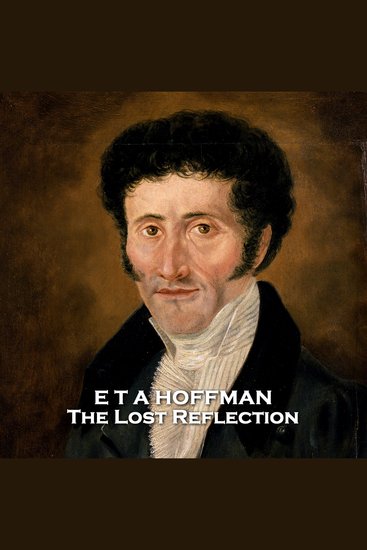
  • The Lost Reflection - From their pens to your ears genius in every story - cover

    The Lost Reflection - From their...

    E T A Hoffman

    • 0
    • 0
    • 0
    Ernst Theodor Wilhelm Hoffman was born on the 24th January 1776, the youngest of three children, in Königsberg, then in Prussia but now part of the Kaliningrad Russian enclave. 
    His parents separated when he was two and for many years life was to be provincial and, despite his talents for the creative arts and the classics, much was passing him by. 
    At 20 Hoffman obtained employment as a clerk and to the art that now surrounded him.  Two years later he was in Berlin attempting a career as a composer with an operetta called ‘Die Maske’.  His gift for drawing caricatures and sharing them often got him into trouble that was easier to avoid. 
    The years of Napoleon ravaging Europe were bad for Hoffman; he moved often and took on works as varied as theatre management and music critic.  In this his talents were now more evident.  His works on Beethoven where highly regarded by the master himself. 
    His literary breakthrough came in 1809, with ‘Ritter Gluck’, about a man who believes he has met the composer 20 years after his death.  However the various jobs and the wars continued and plagued any career advancement despite his constant travel for opportunities, often through dangerous territories. 
    In the wake of Napoleon’s defeat in 1814, Hoffmann returned to Berlin where his opera ‘Undine’ was performed by the Berlin Theatre.  Life was now more settled and many of his most famous works were written at his time. 
    From 1819, Hoffmann was struggling with both legal disputes and ill health.  Alcohol abuse and syphilis were physically weakening him and from 1822 paralysis set in.  His last works were dictated to his wife or to a secretary as all around him society descended into an anti-liberal agenda, stifling dissent with threats of legal action and even treason.  The ailing Hoffman was among them. 
    E T A Hoffmann died on the 25th June 1822 in Berlin of syphilis.  He was 46.
    Show book
  • Greek and Roman Ghost Stories - cover

    Greek and Roman Ghost Stories

    Lacy Collison Morley

    • 0
    • 0
    • 0
    A non-fiction work, comparing and collecting ghost stories by Classical Greek and Republican or Imperial Roman authors. (Summary by Timothy Ferguson)
    Show book
  • Eben Holden - A Tale of the North Country - cover

    Eben Holden - A Tale of the...

    Irving Bacheller

    • 0
    • 0
    • 0
    Eben Holden - A Tale of the North Country. Having lost both parents and his home in northern Vermont, orphan Willie Brower is taken in by Eben Holden, "Uncle Eb" who transports him westward to save him from being sent to an orphanage. Through the Adirondacks and into the St. Lawrence valley they travel. Eben is kind, happy, and loves to tell stories to the youngster, many of which were to shape the life and ideals of Willie during his life.This story follows Willie as a young orphan, later as a journalist, and finally as a soldier who enlists in the army at the outset of the American Civil War. The book was immensely popular when it was published in 1900 and the years to follow, as the characters were all drawn from people who the author had known himself. (Summary by Roger Melin)
    Show book
  • Life as it Happens - cover

    Life as it Happens

    Anton Chekhov

    • 0
    • 0
    • 0
    Anton Pavlovich Chekhov (1860 – 1904) was a Russian playwright, writer, and doctor. Known best for his plays, he had also written a great multitude of short stories for and about people of all ages and all walks of life. Life as it happens is a selection of just such stories and novellas. From sad to ridiculous, to dramatic, to funny, by way of tragic or bitter-sweet - there is something here for everyone. 
      
    This collection includes the following works:The Order of AnnaFeminine HappinessThe Lady with the Little DogChameleonBirthdayTwo ScandalsSweetheartThe DuelLiving MerchandizePrincessBeautiesMaria IvanovnaThe BetThe KissThe StudentForgot!The MaskProposalA JokeA Man in a CaseBoys
    Show book
  • Our Mutual Friend - cover

    Our Mutual Friend

    Charles Dickens

    • 0
    • 0
    • 0
    Our Mutual Friend, written in 1864-1865, is the last novel completed by Charles Dickens and is one of his most sophisticated works, combining savage satire with social analysis. It centres on, in the words of critic J. Hillis Miller, quoting the book's character Bella Wilfer, "money, money, money, and what money can make of life".
    Most reviewers in the 1860s continued to praise Dickens's skill as a writer in general, but did not review this novel in detail. Some found the plot both too complex and not well laid out. The Times of London found the first few chapters did not draw the reader into the characters. In the 20th century, however, reviewers began to find much to approve in the later novels of Dickens, including Our Mutual Friend. In the late 20th and early 21st centuries, some reviewers suggested that Dickens was, in fact, experimenting with structure, and that the characters considered somewhat flat and not recognized by the contemporary reviewers were meant rather to be true representations of the Victorian working class and the key to understanding the structure of the society depicted by Dickens in the novel.
    Show book