Join us on a literary world trip!
Add this book to bookshelf
Grey
Write a new comment Default profile 50px
Grey
Subscribe to read the full book or read the first pages for free!
All characters reduced
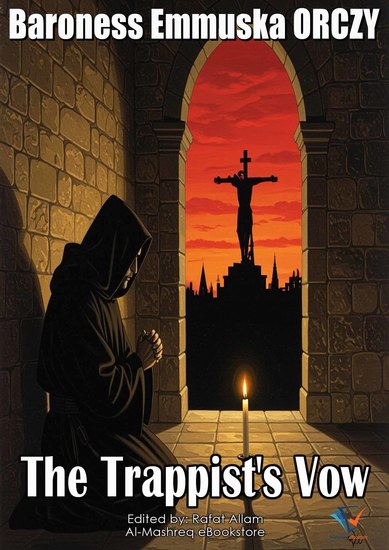
The Trappists Vow - A Short Story - cover

The Trappists Vow - A Short Story

Baroness Emmuska Orczy

Publisher: Al-Mashreq eBookstore

  • 0
  • 0
  • 0

Summary

The Trappist's Vow is a haunting short story where Baroness Orczy blends faith, silence, and sacrifice with her signature sense of drama. Set against the turbulent backdrop of the French Revolution, it follows a Trappist monk bound by a solemn vow of silence who becomes a witness to betrayal, cruelty, and hidden truths. Powerless to speak yet compelled to act, the monk's vow becomes both a spiritual trial and a source of suspense as life and death hang in the balance. This atmospheric tale captures Orczy's ability to craft stories that are as morally charged as they are gripping, reminding readers that sometimes the greatest courage is found in restraint.
Available since: 09/01/2025.
Print length: 32 pages.
Other books that might interest you

  • A Society - From their pens to your ears genius in every story - cover

    A Society - From their pens to...

    Virginia Woolf

    • 0
    • 0
    • 0
    Adeline Virginia Woolf was born on the 25th January 1882 in South Kensington in London. 
    Although lauded as a founder of modernist writing with such classics as ‘Orlando’, ‘Mrs Dalloway’ and ‘To the Lighthouse’ and, of course, many classic short stories, her background is filled with elements of tragedy that she somehow overcame to become such a revered writer.   Her mother died when she was 13, her half-sister Stella two years later and with it her first of several nervous breakdowns.  Appallingly it was later found that three of her half-brothers had sexually abused her so darkness must have seemed ever present.   
    She began writing professionally at age 20 but her father’s death two years later brought a complete mental collapse and she was briefly institutionalised.  Somehow she found within herself a literary career and with it great innovations in writing; she was a pioneer of “stream of consciousness”.    
    Her tight circle of friends were the founders of the Bloomsbury Group, a movement whose legacy still influences across the arts and society in many way to this day.   
    Whilst the dark periods continued to interrupt her emotional state her rate of work never ceased.  Until, on 28th March 1941, Woolf put on her overcoat, filled up its pockets with stones, and walked into the River Ouse, in Lewes, East Sussex and drowned herself.  Her body was not recovered until the 18th April.  She was 59. 
    She left behind a note which read in part “Dearest, I feel certain that I am going mad again.  I feel we can't go through another of those terrible times.  And I shan't recover this time.  I begin to hear voices, and I can't concentrate.  So I am doing what seems the best thing to do”.
    Show book
  • Top 10 Short Stories The - The 1890s - The Americans - The top ten Short Stories of the 1890's written by American authors - cover

    Top 10 Short Stories The - The...

    Mark Twain, Kate Chopin, Ambrose...

    • 0
    • 0
    • 0
    Short stories have always been a sort of instant access into an author’s brain, their soul and heart.  A few pages can lift our lives into locations, people and experiences with a sweep of landscape, narration, feelings and emotions that is difficult to achieve elsewhere. 
     
    In this series we try to offer up tried and trusted ‘Top Tens’ across many different themes and authors. But any anthology will immediately throw up the questions – Why that story? Why that author?  
     
    The theme itself will form the boundaries for our stories which range from well-known classics, newly told, to stories that modern times have overlooked but perfectly exemplify the theme.  Throughout the volume our authors whether of instant recognition or new to you are all leviathans of literature. 
     
    Some you may disagree with but they will get you thinking; about our choices and about those you would have made.  If this volume takes you on a path to discover more of these miniature masterpieces then we have all gained something. 
     
    For America, as the century closes, she is becoming less isolated.  Her industrial might, her rising military power are pulling her ever closer into the entangled globe of nations.  Her authors flex ideas and lexicons with riveting tales of this astonishing society. 
     
    1 - The Top 10 - The 1890's - The Americans - An Introduction 
    2 - The Million Pound Bank Note by Mark Twain 
    3 - Desiree's Baby by Kate Chopin 
    4 - The Death of the Lion - Part 1 by Henry James 
    5 - The Death of the Lion - Part 2  by Henry James 
    6 - The Yellow Wallpaper by Charlotte Perkins Gilman 
    7 - The Open Boat by Stephen Crane 
    8 - An Occurrence At Owl Creek Bridge by Ambrose Bierce 
    9 - A New England Nun by Mary E Wilkins Freeman 
    10 - The Mysterious Card by Cleveland Moffet 
    11 - The Wife of His Youth by Charles W Chesnutt 
    12 - The Repairer of Reputations Part 1 by Robert W Chambers 
    13 - The Repairer of Reputations - Part 2 by Robert W Chambers
    Show book
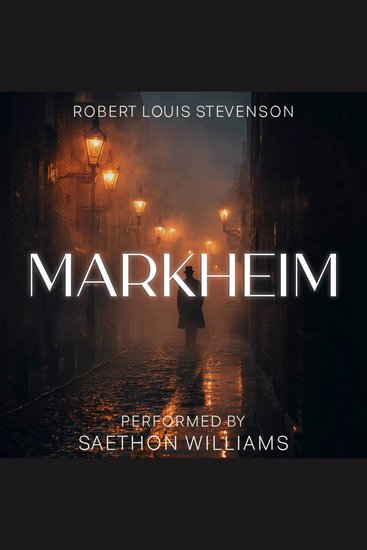
  • Markheim - cover

    Markheim

    Robert Stevenson

    • 0
    • 0
    • 0
    In Robert Louis Stevenson’s haunting and introspective short story “Markheim,” a chance encounter on Christmas Day leads to a chilling exploration of morality, free will, and the struggle between good and evil. With gothic atmosphere and philosophical depth, Stevenson crafts a psychological tale that lingers long after the final page. A masterwork of Victorian horror and spiritual suspense, "Markheim" invites readers into the dark recesses of the human soul.
    Show book
  • Disappearing Act - A Host of Other Characters - cover

    Disappearing Act - A Host of...

    Robert Sheehan

    • 0
    • 0
    • 0
    Robert Sheehan is one of Ireland’s brightest stars of the screen, both at home and abroad. Best known for his roles in Love/Hate and The Umbrella Academy, Sheehan has received widespread critical acclaim for his acting talent 
     
    In his debut collection of short stories, Robert Sheehan disappears into characters, challenging the complacencies of everyday experience, often from entirely unexpected angles. 
     
    Informed by the author’s peripatetic life, Disappearing Act reflects on the absurdity of human behaviour. Sheehan delves deep into his characters’ streams of self-talk and self-imposed delusions, exploring the dark impulses that lurk below the shiny surfaces of many outwardly normal lives. 
     
    Dark, provocative and often humorous, the collection will stay with the listener long after the book is finished. 
     
    “A whacked-out kaleidoscopic miasma of delightful abandon and fun … you’ve seen Sheehan act – now watch him dazzle.” PATRICK MCCABE 
     
    “A dazzlingly eclectic collection of short stories” BEN ELTON 
     
    “Lots of great stories and voices. Reminded me of Irvine Welsh’s short stories” FRANKIE BOYLE
    Show book
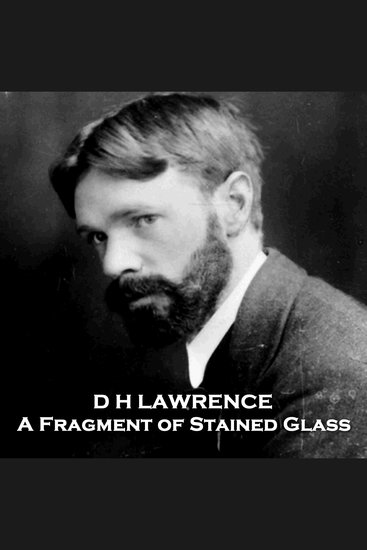
  • A Fragment of Stained Glass - From their pens to your ears genius in every story - cover

    A Fragment of Stained Glass -...

    D H Lawrence

    • 0
    • 0
    • 0
    David Herbert Lawrence was born on the 11th September 1885 in Eastwood, Nottinghamshire, a coal mining town where the reality of a harsh life was only useful as experiences for future literary works. 
    He was educated at Beauvale Board School and became the first local boy to receive a scholarship to attend Nottingham High School. After 3 years he became a junior clerk in Haywood’s surgical appliances factory. He was also attempting a literary career which, in the short term, led to a teacher training position in Eastwood and later a teaching qualification from University College, Nottingham.  
    Lawrence’s first efforts were poems, short stories and a draft of ‘The White Peacock’. Moving to London and a teaching position in Croydon his writing attracted the attention of Ford Madox Ford, editor of The English Review, and he commissioned him to write ‘Odour of Chrysanthemums’.  
    Wanting to write full-time he now began work on what would become ‘Sons and Lovers.   
    In 1912 he met the older and married mother-of-three Frieda Weekley. They eloped to Germany and here Lawrence could see for himself the growing tensions with France.  So keen was his interest that he was arrested and accused of being a British spy.  
    In early 1914 Frieda obtained her divorce and they returned to Britain to be married just days before the outbreak of war. Owing to her German parentage, and his own public dislike of militarism and violence, the couple were treated with contempt and suspicion throughout the war years.  
    Despite this he continued to write but his reputation in England was so tarnished and, mirrored by his own disdain for the country, he and Frieda left England in November 1919, first for Europe and then America via Ceylon and Australia. 
    They bought a ranch in Taos, New Mexico and visited Mexico several times. The third visit in March 1925 caused a near fatal attack of malaria. To convalesce they moved to Florence. Here he continued work on ‘Lady Chatterley’s Lover’ which for many years would cause controversy. A renewed interest in oil painting resulted in an exhibition in 1929 which was raided by the police and several works were confiscated.  
    D H Lawrence died of complications arising from a bout of tuberculosis on the 2nd of March 1930 in Vence, France.  He was 44.
    Show book
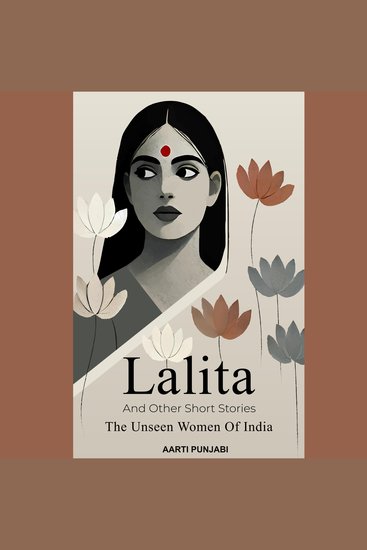
  • Lalita And Other Short Stories - The Unseen Women Of India - cover

    Lalita And Other Short Stories -...

    Aarti Punjabi

    • 0
    • 0
    • 0
    Lalita and Other Stories is a poignant collection of ten short stories that explore the unseen struggles and quiet resilience of women from different walks of life. Each story mirrors the realities women face every day—stories that deserve to be told, remembered, and felt. From a teenage girl navigating societal expectations to a wealthy woman confronting hidden wounds, these stories offer a raw, unfiltered glimpse into lives shaped by a patriarchal society. 
    Lalita, a young widow, is denied the simple pleasures of life, while Bhavna is told to change her name after marriage. Mrs. Saxena and her distant husband live a lonely life, and she craves company, while Geeta Bua, a widow, relies on her extended family for financial support. These characters are familiar, and their struggles are real, yet they often go unnoticed by the world around them. They face discrimination and adapt, but a fire simmers beneath their calm exterior. You will find some of these women in your part of the world too. This collection is thought-provoking and will stay with you long after the last page.
    Show book