Junte-se a nós em uma viagem ao mundo dos livros!
Adicionar este livro à prateleira
Grey
Deixe um novo comentário Default profile 50px
Grey
Assine para ler o livro completo ou leia as primeiras páginas de graça!
All characters reduced
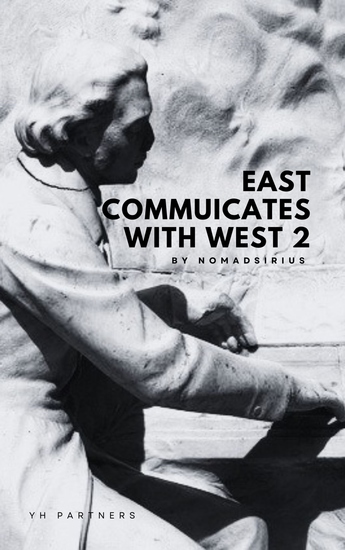
East communicates with West 2 - cover
LER

East communicates with West 2

박 Nomadsirius

Editora: YH Partners

  • 0
  • 0
  • 0

Sinopse

Prologue.Dutch historian Johan Huizinga (1872-1945) released \"The Autumn of the Middle Ages\" in 1919, offering profound insights into the medieval era and shedding light on its dark times. With a deep understanding of language, Huizinga becomes captivated by play and devotes himself to the study of games within the course of history. The medieval period is a beautiful sunset that occurs as darkness descends, symbolized by sunsets and moonlight. Culture emerges from play as a bud of the Renaissance.  The ideal life rooted in the era of the red dusk consists of three paths. Firstly, it involves escaping from the mundane world, denying worldly pleasures absolutely.Secondly, it involves striving to change the world, ardently desiring a transformed society.Thirdly, it involves filling life with fantasy, living life as a game. 
Disponível desde: 30/11/2023.
Comprimento de impressão: 80 páginas.

Outros livros que poderiam interessá-lo

  • On the Legal Democratic Mass Movement - cover

    On the Legal Democratic Mass...

    José Maria Sison

    • 0
    • 0
    • 0
    The crisis of the world capitalist system and that of the Philippine ruling system have become worse than in any period after World War II. The US-instigated policies of neoliberal globalization, state terrorism and aggressive war have wrought havoc on the lives of the people and continue to escalate oppression and exploitation. The Filipino people cannot tolerate their suffering and they are fighting back against imperialism and all reaction. 
      
    The loss or erosion of livelihoods is the most concrete and widespread impact of the current crisis of the world capitalist system on people's lives, both in the advanced capitalist countries as well as in the underdeveloped countries. Despite recent pronouncements from state officials and the business press that economic recovery is in sight, the global economy continues to tumble with the gross domestic product of the leading capitalist countries still contracting, consumer spending still in decline and unemployment still rising.
    Ver livro
  • Resilience And Emotions - How to Face a Crisis And Turn It Into Positive Change - cover

    Resilience And Emotions - How to...

    Brian Gibson

    • 0
    • 0
    • 0
    "Resilience and Emotions: How to Face a Crisis and Turn It Into Positive Change" is a transformative exploration of the human experience in times of adversity. It offers profound insights and actionable strategies rooted in coping, appraisal, nonverbal communication, and emotional management. 
    The concept of appraisal is illuminated as a pivotal lens through which we interpret and respond to crises. Readers gain a renewed sense of agency and purpose by reframing setbacks as opportunities for growth and learning. The book encourages adaptive thinking and cognitive flexibility, enabling individuals to transform adversity into a springboard for positive change. 
    "Resilience and Emotions" underscores the profound impact of nonverbal communication in building resilience. From subtle gestures to empathic expressions, nonverbal cues play a vital role in fostering social connections and conveying emotions authentically. Readers discover how these silent forms of communication can enhance emotional intelligence and strengthen interpersonal relationships during challenging times.
    Ver livro
  • The Energy Wars – The Future of Renewable Energy & Sustainability - How Solar Wind and Nuclear Are Shaping the Battle for a Greener Future - cover

    The Energy Wars – The Future of...

    James Nemeth

    • 0
    • 0
    • 0
    The world is running out of time to solve its energy crisis. But will the future be powered by solar, wind, and nuclear—or will fossil fuels continue to dominate? 
    This audiobook takes you deep into the ongoing energy wars, uncovering the challenges, innovations, and conflicts shaping the future of sustainability. Discover: 
    ✅ The rise of renewable energy and why it’s disrupting global markets 
    ✅ The power struggle between oil giants and clean energy pioneers 
    ✅ How nuclear fusion and advanced battery technology could transform energy storage 
    ✅ The role of AI and smart grids in optimizing power consumption 
    ✅ The truth about climate change, energy policy, and what it means for our future 
    The Energy Wars – The Future of Renewable Energy & Sustainability is a must-listen for *environmentalists, business leaders, engineers, and anyone concerned about the future of our planet.
    Ver livro
  • The Birth of Anarchism - 1849-1887 - cover

    The Birth of Anarchism - 1849-1887

    Pierre-Joseph Proudhon, Mikhail...

    • 0
    • 0
    • 0
    Mankind can rule itself without the force of top-down authority, and freedom is more than just choosing how to meet the needs and demands of capital. Inequality is structural and intentional, not inevitable and necessary.  
    It does not have to be this way. In solidarity, we are better. 
    Think for yourself, and question authority. 
    This is the essence of anarchism, which has a bad name and reputation because it attacks the necessity of centralised power and authority. The media archetype is Tyler Durden, filled with violence and nihilism – yet anarchism is the most positive of political philosophies, one that Jesus and Buddha both preached, stating that empathy and a rejection of authority were key to human flourishing. Neither would disagree with most early anarchists. 
    Proudhon, whose “property is robbery” is perhaps the most well-known anarchist slogan, lays out the conceptual foundation for key anarchist ideas. He argues that usury (charging interest) is a fundamental harm to society, that there is enough for everyone if we simply take other values to be higher than capital gain, that mutualism is inevitable, and that all governments and ideologies make the same mistake, in trying to change society from the top. Positive change must arise from the great masses of humanity, not from their rulers. 
    Bakunin's speeches are about solidarity arising from the masses, and the ground for a global reconfiguration. 
    Louis Lingg was convicted to death with six others, for being one of the ‘Chicago Anarchists’. They were executed to make a political point, based on corrupted evidence and perjury. His statement is one of contempt for the powers that be, and his belief that mankind should be free and should fight until it is. 
    We end with Kropotkin, who firmly believed in decentralized society. He believed that the greatest strength of mankind lies in the masses, not their rulers, and exhorts us to “Act for Yourselves”.
    Ver livro
  • Beyond Good and Evil - cover

    Beyond Good and Evil

    Friedrich Nietzsche

    • 0
    • 0
    • 0
    Discover the Depths of Human Philosophy with Beyond Good and Evil 
    Dive into the revolutionary ideas of Friedrich Nietzsche in Beyond Good and Evil, a masterpiece that challenges conventional thought and delves into the profound complexities of morality, truth, and individuality. Through 296 thought-provoking aphorisms, Nietzsche explores the dogmatic tendencies of philosophers, the power of free spirits, the evolution of moral systems, and the nature of human psychology. 
    Unapologetically bold, this work confronts the "herd mentality" that stifles creativity and champions the philosopher as a creator of meaning and values. Nietzsche’s vision of the "noble soul" invites listeners to rise above mediocrity, confront their own prejudices, and embrace a life of intellectual and spiritual courage. 
    Each chapter builds on the last, weaving a narrative that critiques religion, nationalism, and societal norms while inspiring a vision of the "good European" — an individual unbound by cultural or national constraints. 
    Whether you're new to Nietzsche or revisiting this philosophical tour de force, this audiobook offers an unparalleled journey into the mind of one of history’s most provocative thinkers. 
    📚 Narrated by an advanced AI voice, this production ensures clarity and accessibility while preserving the power of Nietzsche’s timeless prose. Start listening now to uncover a perspective that will forever challenge the way you see the world.
    Ver livro
  • The Chicago Canon on Free Inquiry and Expression - cover

    The Chicago Canon on Free...

    Tony Banout, Tom Ginsburg

    • 0
    • 0
    • 0
    A collection of texts that provide the foundation for the University of Chicago’s longstanding tradition of free expression, principles that are at the center of current debates within higher education and society more broadly. Free inquiry and expression are hotly contested, both on campus and in social and political life. Since its founding in the late nineteenth century, the University of Chicago has been at the forefront of conversations around free speech and academic freedom in higher education. The University’s approach to free expression grew from a sterling reputation as a research university as well as a commitment to American pragmatism and democratic progress, all of which depended on what its first president referred to as the “complete freedom of speech on all subjects.” In 2015, more than 100 years later, then University provost and president J. D. Isaacs and Robert Zimmer echoed this commitment, releasing a statement by a faculty committee led by law professor Geoffrey R. Stone that has come to be known as the Chicago Principles, now adopted or endorsed by one hundred US colleges and universities. These principles are just a part of the long-standing dialogue at the University of Chicago around freedom of expression—its meaning and limits. The Chicago Canon on Free Inquiry and Expression brings together exemplary documents – some published for the first time here – that explain and situate this ongoing conversation with an introductory essay that brings the tradition to light.
    
    At a time of nationwide campus speech debates, engaging with these texts and the questions they raise is essential to sustaining an environment of broad intellectual and ideological diversity. This book offers a blueprint for the future of higher education’s vital work and points to the civic value of free expression. 
    Ver livro