Join us on a literary world trip!
Add this book to bookshelf
Grey
Write a new comment Default profile 50px
Grey
Subscribe to read the full book or read the first pages for free!
All characters reduced
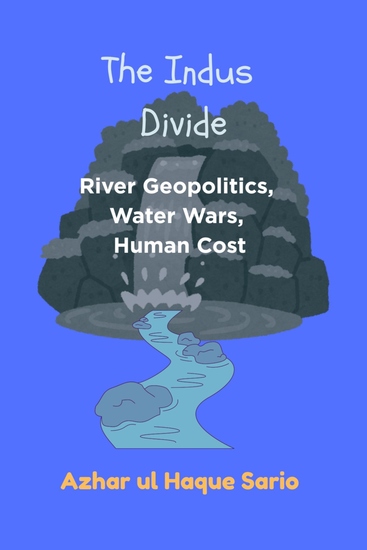
The Indus Divide - River Geopolitics Water Wars Human Cost - cover

The Indus Divide - River Geopolitics Water Wars Human Cost

Azhar ul Haque Sario

Publisher: Royal Co.

  • 0
  • 0
  • 0

Summary

Picture a river that feeds millions but fuels a fight between two nations. The Indus Divide pulls you into the wild story of the Indus River. It starts with the Indus Waters Treaty from 1960. This deal split the rivers between India and Pakistan after their split. Pakistan got most of the water—about 70%. The World Bank helped make it happen. For years, it kept the peace. But trouble brewed over dams like Kishanganga and Baglihar. Then, in 2025, a terror attack in Pahalgam changed everything. India suspended the treaty. Tensions shot up fast. Military moves followed. The book digs into India’s water control plans. Can they really stop the flow? Not easily—most dams can’t store much. In Pakistan, farms and power rely on this water. Over 90% of crops need it. Jobs for 40% of people depend on it. A crisis looms—food shortages, blackouts, even famine. Climate change adds more chaos with wild floods and dry spells. The book ends with ideas to fix this mess—new talks, better water use, and teamwork.


This book isn’t like others on India-Pakistan clashes. It doesn’t just replay old politics. It mixes history with hard facts—how water works, what it costs, and who suffers. You’ll get a close look at the 2025 crisis, fresh from the latest info. Other books skip the tech stuff—we don’t. We show why India’s threats are tough to pull off. Plus, it’s not all doom. We offer real steps forward—like updating the treaty or sharing water smarter. It’s balanced too, seeing both sides. If you’re into policy, study, or just care about people, this book gives you the whole story. No fluff, just truth and ideas to make things better.


Copyright Disclaimer: This book is independently produced under nominative fair use. The author has no affiliation with any board or organization mentioned in the text.
Available since: 05/25/2025.
Print length: 166 pages.

Other books that might interest you

  • Utopia - cover

    Utopia

    Thomas More

    • 0
    • 0
    • 0
    Discover the Vision of a Perfect Society
     
    Step into the thought-provoking world of Thomas More's Utopia, a groundbreaking work of political philosophy and social critique that continues to inspire and challenge readers centuries after its publication. This audiobook invites you to explore More's vision of an ideal society, where harmony, justice, and equality reign supreme—a bold contrast to the flaws and inequities of his own time.
     
    What to Expect:
    
      A detailed journey through the fictional island of Utopia, where communal living replaces greed, and reason governs human behavior.
      Insightful commentary on the political and social structures that define More's utopian vision, including systems of governance, education, and religion.
      A timeless exploration of human nature, ambition, and the pursuit of perfection.
    
     
    Presented in an engaging and accessible format, this audiobook bridges the gap between historical context and contemporary relevance. Whether you are a student, a philosopher, or simply a curious listener, Utopia offers a powerful lens through which to reflect on the ideals and challenges of building a better world.
     
    Embark on a journey to a society that dares to ask, What if we could be better? Download now and start exploring the possibilities of Utopia.
    Show book
  • The Shifting Twenty-First Century Presidency - Assessing the Implications for America and the World - cover

    The Shifting Twenty-First...

    Tevi Troy

    • 0
    • 0
    • 0
    The role and range of the American presidency has undergone significant changes in the twenty-first century, with George W. Bush, Barack Obama, Donald Trump, and Joe Biden transforming the office in distinct ways. Many but not all of these changes stem from the numerous crises of this young century: 9/11 and the resulting war on terror, Hurricane Katrina, the Great Recession, the COVID-19 pandemic, and the social unrest of 2020. 


    While crisis brings rapid change, there are other factors at work as well. Increased polarization has led presidents of both parties to press existing rules and norms to their limits in an attempt to accomplish more during their brief tenures. The result is a lot of policy and structural change in a short period, including new cabinet departments, new election rules, and significantly increased spending and debt, among other things. For the most part, these changes have occurred with little thought to what it all means for the functionality and stability of our democratic institutions and, consequently, our nation's capacity to address the needs as well as the aspirations of the American people. The Bipartisan Policy Center's Tevi Troy has brought together a group of presidential scholars and political experts to address these important issues and to reflect on how the presidency has changed and what it might mean for the future.
    Show book
  • Summary of Confronting Evil - Assessing the Worst of the Worst - cover

    Summary of Confronting Evil -...

    Fortune Press

    • 0
    • 0
    • 0
    Book Summary: Confronting Evil by Bill O’Reilly and Josh Hammer 
     Assessing the Worst of the Worst 
    What drives human beings to commit acts of unspeakable cruelty—and what separates those who resist evil from those who enable it? In Confronting Evil, Bill O’Reilly and Josh Hammer examine history’s darkest figures to reveal the moral choices that define humanity’s ongoing battle between good and evil. 
    This summary explores the key ideas and insights behind O’Reilly and Hammer’s chilling yet thought-provoking analysis of tyrants, conquerors, and criminals—from Genghis Khan and Caligula to Hitler, Stalin, and modern-day despots. Through their stories, the book sheds light on the psychology of power, corruption, and the devastating cost of moral indifference. 
    With clarity and depth, this companion guide distills the authors’ central message: evil persists not only because of those who commit it, but because too many good people look away. 
    Disclaimer: This is an unofficial summary and analysis of Confronting Evil by Bill O’Reilly and Josh Hammer. It is intended to provide educational value and enhance understanding of the original work.
    Show book
  • Statecraft - The New Rules of Power in a Divided World - cover

    Statecraft - The New Rules of...

    Jack Watling

    • 0
    • 0
    • 0
    'Indispensable – brilliantly grounded in first-hand experience and telling detail. Compelling' - Rory StewartFrom top defence analyst Jack Watling, Statecraft reveals how states collaborate, compete and fight in this era of global turmoil.Why did Russia struggle in the early months of its full-scale invasion of Ukraine?Why does Israel ignore international pressure on Gaza?Why does the UK spend billions on aircraft carriers that it struggles to support at sea?How do smaller states shape world events when dwarfed by superpowers?The world today is gripped by conflict. Whether in Ukraine, the Middle East or Taiwan, we are in a period of intense power competition. In Statecraft, Dr Jack Watling takes you behind the scenes to meet the world’s powerbrokers in their wood-panelled offices, and the bunkers from which battles are coordinated.With a career spent on the ground in conflict zones, and advising generals and political leaders, Watling examines the dilemmas that states face to get ahead, no matter their size. From economic alliances and global trade to sea power and military technology, Statecraft provides a powerful new lens to understand geopolitics in a divided world.
    Show book
  • Children of the Storm - The True Story of the Pleasant Hill School Bus Tragedy - cover

    Children of the Storm - The True...

    Clark Secrest, Ariana Harner

    • 0
    • 0
    • 0
    The story of twenty schoolchildren on the southeastern plains of Colorado, fighting for lives that had just begun . . . Imagine being one of twenty children, ages seven to fourteen, stranded in a makeshift school bus for thirty-three hours, during the worst blizzard to hit Colorado in over fifty years. The gripping narrative of Children of the Storm leads you through this haunting experience. The morning of March 26, 1931, began with sixty-degree weather and students excitedly running to board Carl Miller's bus for their routine ride to the Pleasant Hill School. By the time they arrived at the pair of forlorn one-room schoolhouses, it was dark, windy, and cold—obvious signs of a spring snowstorm. Soon after, following the teachers' orders to drive the children to a nearby home for safety, Miller lost his sense of direction in the ensuing whiteout and lodged the bus in a ditch. When rescuers found the survivors a day and a half later, the blizzard had taken its deadly toll.
    Show book
  • Political Philosophy - Ideas and Foundations of Governance - cover

    Political Philosophy - Ideas and...

    Hector Davidson

    • 0
    • 0
    • 0
    Political philosophy plays a central role in the development of societies, offering profound insights into the principles and ideas that shape governance and human relations. At its core, political philosophy seeks to understand the fundamental questions of power, authority, justice, and the rights of individuals within a collective. By examining these issues, political philosophy provides a framework for interpreting and evaluating the structures that govern our lives, from the most intimate social arrangements to the global political order. It is through political philosophy that we come to grips with the nature of justice, equality, freedom, and the role of the state in promoting the common good. 
    In every society, political philosophy serves as a critical lens for understanding the legitimacy of authority and the relationship between the individual and the state. Whether through the ideas of ancient philosophers like Plato and Aristotle or the modern theorists such as Hobbes, Locke, and Rousseau, the study of political philosophy allows us to explore the moral and practical foundations of governance. These thinkers sought answers to questions that remain relevant today: What is the rightful role of the government? What are the limits of state power? How can societies balance the competing interests of freedom, equality, and social order? 
    Moreover, political philosophy is essential for the functioning of a healthy democracy. By engaging with political ideas and questioning the established norms, political philosophers encourage critical thinking and the evaluation of political systems. They provide the intellectual tools for assessing the values that underlie our laws, policies, and political institutions. Political philosophy also serves as a guide for navigating complex moral dilemmas in governance, offering insights into how we can create a just society where the rights of individuals are respected while promoting the collective well-being.
    Show book