Join us on a literary world trip!
Add this book to bookshelf
Grey
Write a new comment Default profile 50px
Grey
Subscribe to read the full book or read the first pages for free!
All characters reduced
Human Metapneumovirus (HMPV) in 2025 - cover

Human Metapneumovirus (HMPV) in 2025

Azhar ul Haque Sario

Publisher: Royal Co.

  • 0
  • 0
  • 0

Summary

This book tells you the full story of HMPV right now. It starts when scientists first found it back in 2001. Find out how they discovered this virus that had been around for years without anyone knowing. We explain how it fits in with other viruses, and how it's different from bugs like RSV or measles. You'll learn about the virus's structure and its important parts, like the F and G proteins. We explain its genes and how different types of HMPV spread around the world. Then, the book looks at how the virus lives and grows. Find out the smart ways HMPV gets inside our body's cells. Learn how it makes 'factories' inside our cells to copy itself. See how it puts together new virus particles. Find out how HMPV deals with our body's defenses. We show you where HMPV is found all over the world in 2025. Learn how often people get it and how it affects hospitals and clinics. We explain exactly how it passes from one person to another. Read about how its timing changes, especially after the COVID-19 pandemic. Find out how scientists track different HMPV types to watch the virus. We tell you who is most likely to get very sick. Babies and young kids can get very ill. Older people, especially those in nursing homes, are also at high risk. People whose bodies have trouble fighting infections face special risks. Having other health problems like asthma or heart disease makes it riskier too. The book explains why HMPV causes illness. See how it attacks the cells in our airways. Learn how our body's defense system fights the virus but can also cause swelling and irritation. We show the link between the infection, damage to airways, and symptoms like coughs and wheezing. You'll learn about all the ways HMPV can affect people, from just a cold to serious pneumonia needing hospital care. We list the common signs of HMPV. We also talk about other problems it can cause besides lung issues. Finding out if you have HMPV is important. Learn why special lab tests like PCR are the best way to diagnose it. Understand why older tests aren't used as much. See how doctors use test results, X-rays, and how you feel to understand the illness. Because there's no specific medicine yet, doctors focus on helping your body fight it. Learn about simple care like drinking fluids and managing fever. Understand ways to help with breathing, like oxygen masks or breathing machines. We talk about other treatments like steroids that doctors might sometimes use. People at high risk need special care plans. We look ahead at the search for medicines that fight HMPV directly. Learn about possible drug targets and treatments using antibodies. We explain why making these drugs is difficult. Stopping the spread is very important. Learn the best ways to wash hands and cover coughs. Learn about cleaning things people touch and staying away from sick people. We explain special steps for places like hospitals, nursing homes, and schools. Keeping those most at risk safe is key. The search for an HMPV vaccine is moving forward. Understand why we really need a vaccine. Learn about the vaccines being tested in 2025, including shots that protect against both HMPV and RSV. Find out about the challenges in making a good vaccine. Lastly, real-life examples show how HMPV affects different people, like babies with breathing trouble or patients after a transplant, and how outbreaks are handled.


So, why is this book important? Other books might talk about HMPV, but they often only cover the science or the sickness, and information gets old fast. This book gives you a complete and up-to-date picture for 2025. It connects the science lab, the doctor's office, and what's happening in our communities right now. Very importantly, it includes how HMPV has changed after the COVID-19 pandemic – info you need to know today.
Available since: 04/21/2025.
Print length: 188 pages.


Other books that might interest you

  • Heal Your Inner Child Sleep Story Meditation - cover

    Heal Your Inner Child Sleep...

    Healing Tales

    • 0
    • 0
    • 0
    This audiobook features a single, heartfelt story narrated by a calming male voice, set against a backdrop of gentle, tranquil music. Designed to guide you into a deep, restorative sleep, this meditation helps nurture and heal your inner child. Through a serene narrative, you'll experience feelings of safety, love, and acceptance, releasing past traumas and fostering inner peace. Perfect for bedtime, this soothing tale creates a peaceful environment for emotional healing and profound relaxation. Let go and sleep deeply.
    Show book
  • Supremacy: Book Summary & Analysis - cover

    Supremacy: Book Summary & Analysis

    Briefly Summaries

    • 0
    • 0
    • 0
    This is a concise summary and analysis of Supremacy, by Parmy Olson.
     
    It is not the original book and is not affiliated with or endorsed by Parmy Olson.
     
    Ideal those seeking a quick and insightful overview.
     
    Supremacy dives into the clandestine world of hacker groups and digital activists, offering a gripping exploration of cyber warfare, power struggles, and the blurred lines between chaos and control in the digital age. With unparalleled access to key players and real-life stories, this book reveals how anonymous online figures challenge governments, corporations, and societal norms—often with profound consequences. It's a timely, thrilling account of the internet's most enigmatic rebels and their impact on the world stage.
    Show book
  • The Top 100 List of Lies on Social Media - cover

    The Top 100 List of Lies on...

    Daniel Hall, Mic Adam, Shari Berg

    • 0
    • 0
    • 0
    The Only Guide that tells the ugly truth behind how many of Social Media's "Top" influencers built their thrones. With social media creators reaching nearly half of humanity, many metrics are misleading and superficial. They hide the true value and impact of online content and tempt people to cheat or overestimate their success. It's time to put the HUMAN back into HUMANity. Our mission is to help you see socials with eyes wide open and how to spot the fakery. You're just being muted and left to feel less than you really are by those cheating on socials. Your ideas may be the change we need to see in the world! In order to get your message out, you must first see the world of socials with blinders off. Our book will help you filter out the fake noise.
    Show book
  • Mastering Data Science and Analytics - The Power of Data: From Analysis to Action in the Modern World - cover

    Mastering Data Science and...

    Finnley Harper

    • 0
    • 0
    • 0
    "Mastering Data Science and Analytics: The Power of Data: From Analysis to Action in the Modern World" is a comprehensive guide that illuminates the transformative potential of data in today's digital age. This book is invaluable for people and organizations looking to fully utilize data to support well-informed decision-making and accomplish strategic goals.  
    From the foundational principles of data science to advanced analytical techniques, each chapter offers a systematic approach to understanding and applying key concepts. This practical approach ensures that readers not only learn the theory but also gain the skills to collect, clean, analyze, and visualize data effectively. These skills will provide valuable insights into patterns, trends, and relationships that can inform strategic initiatives and drive organizational success. 
    This book demonstrates the tangible impact of data science and analytics across various industries and domains through real-world case studies and practical examples. Whether you're a seasoned data professional looking to deepen your expertise or a novice eager to embark on a journey into the world of data, this book provides the knowledge and tools needed to thrive in today's data-driven landscape. 
    Moreover, this book is about more than just data science and analytics. It's about doing it right. The significance of ethical deliberations and conscientious data practices is underscored, guaranteeing that readers approach data science with honesty and awareness of the wider societal consequences. By mastering data analytics, readers can drive innovation, unlock new opportunities, and design a brighter future in the modern world—all while adhering to ethical norms.
    Show book
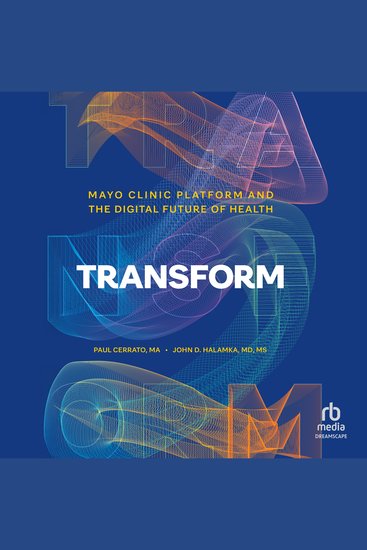
  • Transform - Mayo Clinic Platform and the Digital Future of Health - cover

    Transform - Mayo Clinic Platform...

    Paul Cerrato, John D. Halamka

    • 0
    • 0
    • 0
    Imagine a future where your smartphone could save your life, or an AI-enabled ultrasound device can make scanning more accurate. Healthcare organizations and experts around the world are coming together to transform how care is delivered. Authors Paul Cerrato, MA, and John D. Halamka, MD, MS, leaders in data science and healthcare strategy at the world-renowned Mayo Clinic, explore these ideas and Mayo Clinic Platform, the first comprehensive platform in healthcare that envisions a world where personalized, predictive, and innovative care is accessible to all. Today’s digital tools include apps that detect abnormal heart rhythms, skin cancer, and other life-threatening conditions. They can identify early-onset diabetes and improve the detection rate of colorectal cancer. High-quality, at-home cancer care is becoming a reality. Welcome to the new era of digital health, where advanced technology and big data revolutionize the way you and your loved ones receive care.Mayo Clinic Platform is the first AI-enabled comprehensive healthcare platform aimed at making top-tier healthcare available to everyone—no matter where they are—through cutting-edge data science, analytics, and innovative business applications. This ambitious project, targeted at solving some of the most pressing healthcare issues, includes healthcare service providers, pharmaceutical companies, medical device firms, health tech startups, and patients located on four continents. Touching approximately 56 million patient lives in 2024, the Platform’s groundbreaking efforts are already making a global impact. Using Platform architecture, Mayo Clinic and its partners are revolutionizing the practice of medicine, resulting in faster, more accurate and more efficient diagnosis, improved treatment approaches, and quicker delivery of new cures to patients, with more exciting developments on the horizon. Welcome to the journey.
    Show book
  • NASA’s Space Race Programs: The History and Legacy of NASA Missions in the 1950s and 1960s - cover

    NASA’s Space Race Programs: The...

    Editors Charles River

    • 0
    • 0
    • 0
    Today the Space Race is widely viewed poignantly and fondly as a race to the Moon that culminated with Apollo 11 “winning” the Race for the United States. In fact, it encompassed a much broader range of competition between the Soviet Union and the United States that affected everything from military technology to successfully launching satellites that could land on Mars or orbit other planets in the Solar System. Moreover, the notion that America “won” the Space Race at the end of the 1960s overlooks just how competitive the Space Race actually was in launching people into orbit, as well as the major contributions the Space Race influenced in leading to today’s International Space Station and continued space exploration. 
    The Apollo space program is the most famous and celebrated in American history, but the first successful landing of men on the Moon during Apollo 11 had complicated roots dating back over a decade. Landing on the Moon presented an ideal goal all on its own, but the government’s urgency in designing the Apollo program was actually brought about by the Soviet Union, which spent much of the 1950s leaving the United States in its dust (and rocket fuel). In 1957, at a time when people were concerned about communism and nuclear war, many Americans were dismayed by news that the Soviet Union was successfully launching satellites into orbit. 
    Throughout the 1960s, NASA would spend tens of billions on missions to the Moon, the most expensive peacetime program in American history to that point, and Apollo was only made possible by the tests conducted through earlier missions. Of course, by the time it was all done, Americans sure felt the cost was worth it as they watched the first live shots of astronauts Neil Armstrong and Buzz Aldrin walking on the Moon. As he left his first footprint on the Moon, Armstrong transmitted one of the 20th century’s most famous phrases: “That’s one small step for man, one giant leap for mankind.”
    Show book