Join us on a literary world trip!
Add this book to bookshelf
Grey
Write a new comment Default profile 50px
Grey
Subscribe to read the full book or read the first pages for free!
All characters reduced
The Dolphin - cover

The Dolphin

Ava Thompson

Translator A AI

Publisher: Publifye

  • 0
  • 0
  • 0

Summary

"The Dolphin" plunges readers into the captivating world of one of Earth's most intelligent marine mammals, exploring their biology, behavior, and habitats across the world's oceans. This comprehensive book takes readers on a journey from dolphins' evolutionary past as land-dwelling mammals to their current status as fully aquatic creatures, highlighting the remarkable adaptations they've developed along the way.

 
The book's holistic approach sets it apart, integrating aspects of ecology, ethology, and conservation biology to present a multifaceted view of dolphin life. It explores their complex social structures, sophisticated communication methods, and impressive cognitive abilities, drawing comparisons to primates and other highly intelligent species.

 
Readers will discover fascinating insights into dolphin echolocation, their diverse hunting strategies, and the wide range of habitats they occupy, from coastal waters to the open ocean. As it progresses, "The Dolphin" delves into the challenges these animals face in various environments and their role as indicators of ocean health.

 
The accessible yet informative writing style makes complex scientific concepts easy to grasp, appealing to both nature enthusiasts and students of marine biology. By the end, readers will gain a deeper appreciation for these remarkable creatures and their crucial role in maintaining healthy ocean ecosystems.
Available since: 10/15/2024.
Print length: 139 pages.
Other books that might interest you

  • Matter - The Magnificent Illusion - cover

    Matter - The Magnificent Illusion

    Guido Tonelli

    • 0
    • 0
    • 0
    What are we made up of? What holds material bodies together? Is there a difference between terrestrial matter and celestial matter? When Democritus stated that we are made up of atoms, few people believed him. Not until Galileo and Newton in the seventeenth century did people take the idea seriously, and it was another four hundred years before we could reconstruct the elementary components of matter. 


    Everything around us has very particular properties. These properties, which seem quite normal to us, are in fact very special, because the universe, whose evolution began almost fourteen billion years ago, is today a very cold environment. In this book, Guido Tonelli explains how elementary particles, which make up matter, combine into bizarre shapes to form correlated quantum states, primordial soups of quarks and gluons, or massive neutron stars. New questions that have emerged from the most recent research are answered: in what sense is the vacuum a material state? Why can space-time also vibrate and oscillate? Can elementary grains of space and time exist? What forms does matter assume inside large black holes? 


    In clear and lively prose, Tonelli takes listeners on an exhilarating journey into the latest discoveries of contemporary science, enabling them to see the universe, and themselves, in a new light.
    Show book
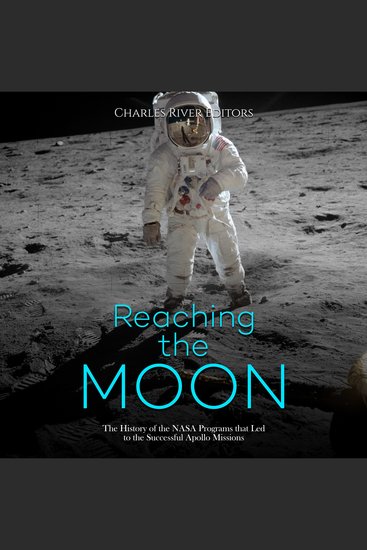
  • Reaching the Moon: The History of the NASA Programs that Led to the Successful Apollo Missions - cover

    Reaching the Moon: The History...

    Editors Charles River

    • 0
    • 0
    • 0
    The Apollo Program is the most famous and celebrated in American history, but the first successful landing of men on the Moon during Apollo 11 had complicated roots dating back over a decade, and it also involved one of NASA’s most infamous tragedies. From 1959-1963, the United States worked toward putting satellites and humans into orbit via the Mercury program, but Eisenhower’s administration was already designing plans for the Apollo program by 1960, a year before the first Russian orbited the Earth and two years before John Glenn became the first American to orbit the Earth. 
    At the same time, America would begin missions to the Moon as early as 1958. On March 27, 1958, Secretary of Defense Neil McElroy announced a lunar project for the International Geophysical Year, consisting of three Air Force launches followed by two Army launches of a JPL-designed lunar probe. ARPA directed the Air Force to launch its probes "as soon as possible consistent with the requirement that a minimal amount of useful data concerning the Moon be obtained." 
    Throughout the 1960s, NASA would spend tens of billions on missions to the Moon, the most expensive peacetime program in American history to that point, and Apollo was only made possible by the tests conducted through earlier missions, including the historic Ranger Program. Conceived as an early part of the attempt to land a man on the Moon, Ranger was designed to photograph the lunar surface in preparation for future landings. Until Ranger, images of the Moon were only available through Earth-based telescopes, which lacked the detail necessary to determine safe sites for landing a spacecraft. Ranger aimed to fill in that gap of knowledge, and like many of NASA’s missions during the 1960s, the program exemplified both the successes and the failures of the agency’s early years.
    Show book
  • In Praise of Floods - The Untamed River and the Life It Bring - cover

    In Praise of Floods - The...

    James C. Scott

    • 0
    • 0
    • 0
    James C. Scott reframes rivers as alive and dynamic, revealing the consequences of treating them as resources for our profit Rivers, on a long view, are alive. They are born; they change; they shift their channels; they forge new routes to the sea; they move both gradually and violently; they can teem (usually) with life; they may die a quasi-natural death; they are frequently maimed and even murdered. It is the annual flood pulse—the brief time when the river occupies the floodplain—that gives a river its vitality, but it is human engineering that kills it, suppressing the flood pulse with dams, irrigation, siltation, dikes, and levees. In demonstrating these threats to the riverine world, award-winning author James C. Scott examines the life history of a particular river, the Ayeyarwady (Irrawaddy) of Burma, the heartland and superhighway of Burman culture. Scott opens our understanding of rivers to encompass their entirety—tributaries, wetlands, floodplains, backwaters, eddies, periodic marshlands, and the assemblage of life forms dependent on rivers for their existence and well-being. For anyone interested in the Anthropocene and the Great Acceleration, rivers offer a striking example of the consequences of human intervention in trying to control and domesticate a natural process, the complexity and variability of which we barely understand.
    Show book
  • A Little Bit of Land - cover

    A Little Bit of Land

    Jessica Gigot

    • 0
    • 0
    • 0
    From midwifing new lambs to harvesting basil, Jessica Gigot invites the reader into her life on a small farm and the uncommon road that led her there. Fascinated by farming and the burgeoning local food movement, she spent her twenties wandering the Pacific Northwest, interning at small farms and doing graduate work in horticulture, always with an eye towards learning as much as she could about how and why people farm. Despite numerous setbacks and the many challenges of farming, she created a family and farm life defined by resilience and a genuine love of the land.   
    In A Little Bit of Land, Gigot explores the intricacies of small-scale agriculture in the Pacific Northwest and the changing role of women in this male-dominated industry. Gigot alternates between chapters describing joys, routines, and challenges of farm life and chapters reflecting on her formative experiences in agriculture, on farms and in classrooms from Ashland to the Skagit Valley. Throughout, she explores questions of sustainability, economics, health, and food systems.
    Show book
  • Teen Little Black Book - #Sadfishing Talk to Kids - cover

    Teen Little Black Book -...

    Patrice M Foster

    • 0
    • 0
    • 0
    Are You Worried About Your Teen’s Critical Life, Your Weakening Relationship With Them And Their Increasing Vulnerability To The Damaging Effects Of Modern Technology? This Book Is Here To Help You Take That Burden Away!  
    Have you always desired to improve your relationship with your teenage child by understanding them, acquainting yourself with how they think and their world in general; be able to protect and assist them survive the modern technological world with countless risks, but you don’t even have the slightest idea where to start? 
    Then keep reading… 
    Are you sick and tired of worrying about being clueless about how to handle the growing rift between you and your teenage child, amid the rising risk of cyber insecurity? 
    Have you tried creating conversations to understand them, researching on what could be going on with them or seeking parental advice to improve your situation but none of them seemed to help? 
    Do you finally want to say goodbye to being in the dark about your child’s life discover something which works for you? 
    If so, then you’ve come to the right place. 
    You see, being in touch with your growing child’s life, and understanding everything that’s going on in their minds and life, and being assured of their well-being doesn’t have to be difficult- even if you think your teenage child is a little different. 
    In fact, it’s easier than you think. 
    An article in Live Science asserts that parents can be able to decode the behavior and attitudes of their teenage kids and assist them by understanding how their brain works, as well as how it controls their desires and habits.
    Show book
  • Rockhounding and Gems: Unlocking the Secrets of Rocks Gems Minerals Agates and Fossils for Enthusiasts and Beginners - cover

    Rockhounding and Gems: Unlocking...

    Mari Silva

    • 0
    • 0
    • 0
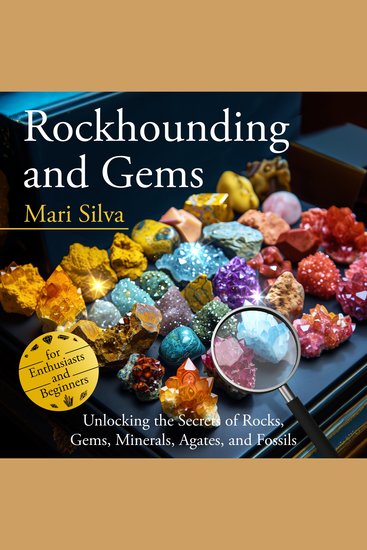
    If you want to uncover the wonders of rocks, gems, and minerals without becoming overwhelmed, keep reading… 
    Have you ever wondered about the fascinating world of rocks, gems, and minerals beneath your feet? Are you curious about finding hidden treasures like agates and fossils? Or maybe you’re eager to learn how to identify and understand these natural wonders? 
    This book combines two powerful guides to take you on a journey from beginner to rockhounding expert:Rockhounding: The Ultimate Beginner’s Guide to Finding and Studying Rocks, Gems, Minerals, Agates, and FossilsRocks, Gems, and Minerals: What You Need to Know about Crystals, Gemstones, Agates, and Other Rocks 
    Here’s what you’ll explore in the first part:Discover Different Types: Learn how to identify various rocks, minerals, gems, agates, and fossils, and understand what makes each unique.Find the Best Spots: Discover the prime locations for rockhounding and learn how to spot signs of mineral deposits.Get the Right Tools: Understand the essential tools and equipment needed for a successful rockhounding adventure and how to use them safely. 
    In the second part, you’ll:Master Identification: Gain expertise in identifying various mineral types and crystal systems.Distinguish Similar Gems: Learn the nuances of telling apart quartz, chalcedony, and agate.Explore Gemstones: Discover the rich variety of precious and semi-precious gemstones and their unique characteristics. 
    This audiobook is more than just a guide—it’s your ticket to understanding and appreciating the amazing world of rocks, gems, and minerals. 
    Ready to start your journey? Click "Add to Cart" and begin exploring today!
    Show book