Join us on a literary world trip!
Add this book to bookshelf
Grey
Write a new comment Default profile 50px
Grey
Subscribe to read the full book or read the first pages for free!
All characters reduced
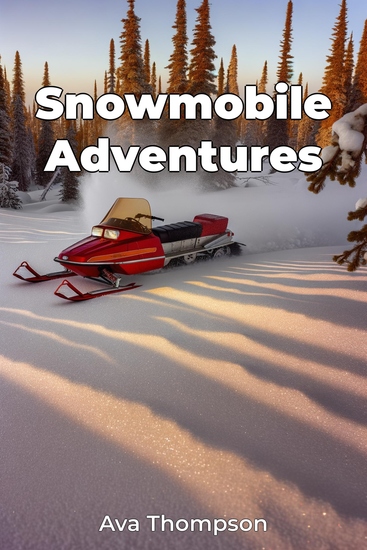
Snowmobile Adventures - cover

Snowmobile Adventures

Ava Thompson

Translator A AI

Publisher: Publifye

  • 0
  • 0
  • 0

Summary

"Snowmobile Adventures" takes readers on a fascinating journey through the evolution and impact of snowmobiles, from their origins as modified Model T Fords to today's advanced machines. The book expertly weaves together the revolutionary story of winter transportation, highlighting how Joseph-Armand Bombardier's pioneering work with the 1959 Ski-Doo transformed mobility in snow-covered regions and created a new culture of winter recreation.

 
Through a well-structured narrative divided into three main sections, the book explores the technical development of snowmobiles, their cultural significance, and environmental considerations. Readers gain insights into how these machines have become essential for everything from winter tourism to emergency rescue operations in remote communities.

 
The text balances technical details with engaging personal accounts from racers, rescue teams, and everyday enthusiasts, making complex mechanical concepts accessible while maintaining the excitement of adventure sports. The comprehensive examination extends beyond mere mechanics, incorporating environmental science, tourism economics, and social history.

 
With particular attention to practical applications, the book addresses current challenges facing the industry, including the push for cleaner technologies and adaptation to changing climate patterns. Real-world case studies of search and rescue operations and competitive racing events bring the material to life, while detailed maintenance guidelines and safety protocols provide valuable information for both newcomers and experienced riders.
Available since: 01/30/2025.
Print length: 121 pages.


Other books that might interest you

  • The Baruntse Adventure - In the footsteps of Hillary across East Nepal - cover

    The Baruntse Adventure - In the...

    Anonymous

    • 0
    • 0
    • 0
    Sherpa legend told of an enchanted valley with an invisible village, Shangri-La, that was said to be a place of great beauty. 
    The valley became the nemesis of legendary mountaineer Edmund Hillary, who travelled there to climb 7,129m Baruntse, but succumbed to the irresistible draw of Makalu, the great black mountain which towered over the valley. Makalu vanquished him, and he was never the same climber again. 
    Fifty years later, Mark Horrell embarked on a trek up the Barun Valley to follow in Hillary’s footsteps – at least some of the way. He hoped to climb Baruntse, but when he arrived, he learned of a terrible accident that had shaken the climbing community and would threaten his plans. 
    Yet one of the virtues of climbing in the Himalayas is that just reaching a mountain can be a great adventure. Join Mark on an entertaining journey across jungle, moorland, hill and valley to the frozen heights of the Barun Plateau.
    Show book
  • Following the Equator - cover

    Following the Equator

    Mark Twain

    • 0
    • 0
    • 0
    "Following the Equator" by Mark Twain is a lively, insightful, and often provocative travel narrative that documents the author's journey around the world at the end of the 19th century. Blending sharp wit with keen observation, Twain takes readers across Africa, India, Australia, and other parts of the British Empire, transforming his global lecture tour into a richly entertaining account of people, places, and cultures.
    
    As Twain travels through ports, cities, and remote regions, he offers humorous anecdotes alongside candid reflections on colonialism, race, imperial power, and human behavior. His commentary ranges from playful satire to serious moral critique, revealing both the prejudices of his era and his willingness to question injustice and cruelty. Whether describing unfamiliar customs, local traditions, or the absurdities of imperial bureaucracy, Twain's voice remains engaging, curious, and unmistakably his own.
    
    Beyond humor, Following the Equator stands out for its willingness to confront uncomfortable truths. Twain condemns exploitation, hypocrisy, and violence wherever he finds them, using his platform as a celebrated author to challenge widely accepted beliefs of his time. His observations on imperial rule and human rights make the book one of his most socially conscious works.
    
    The narrative also captures the wonder and exhaustion of long-distance travel before modern conveniences, offering vivid depictions of landscapes, climates, and everyday life across continents. Twain's ability to mix entertainment with thoughtful reflection turns the book into more than a travelogue—it becomes a global meditation on civilization, morality, and the shared flaws of humanity.
    
    Both amusing and deeply reflective, Following the Equator is an essential work for readers interested in classic travel writing, historical perspectives on globalization, and Mark Twain's evolving worldview. It remains a compelling and thought-provoking journey through the world as seen by one of America's greatest literary voices.
    Show book
  • Adventureholic - Extraordinary Journeys on Seven Continents by Land Sea and Air - cover

    Adventureholic - Extraordinary...

    Neil Laughton

    • 0
    • 0
    • 0
    More than fifty expeditions across all seven continents – by land, sea and air – have led adventurer Neil Laughton to some of the most remote places in the world. 
    Adventureholic tells the stories of Neil’s most unforgettable and daring adventures yet. From summiting Mount Everest with Bear Grylls and playing cricket at the Geographic South Pole to piloting the world’s first road-legal flying car on a 10,000km journey across the Sahara Desert to Timbuktu, running with bulls, and train-surfing in Myanmar, Neil really has seen and done it all. 
    Readers are invited to join Neil on a roller-coaster ride around the world, gaining the necessary insight, confidence and inspiration to add a little more adventure to their own lives.
    Show book
  • Little Writings - Mother India in Essays - cover

    Little Writings - Mother India...

    Jan Yashomatinandana Das Wolter,...

    • 0
    • 0
    • 0
    Essays written in India on God, Conciousness, Nature, time and social & human dilemmas. 
    Beginning with Mother Cow the Author nicely travels to all of Indias most important places of pilgrimage and writes about spiritual topics concerning the human predicament between ancient teachings and modernity. 
    FOREWORD by Caitanya Carana dasa, poet and copywriter  
    I first met Jan in Malaysia in the summer of 2023, and I was immediately struck by his earnestness and sincerity. He was simultaneously down to earth and thoughtful - a most intriguing blend. This shines through in his writing.  
    This is the first book written by Jan that I've read, and I must admit I have found it mesmerizing. His writing style captures the reader's attention and draws him into a deep analysis of life's journey.  
    Anybody who reads this wonderful book can be assured of one thing - you'll think deeply about the meaning of life.  
    I highly recommend this book for anyone who is on a quest to understand his purpose.  
    Yours sincerely,  
    Caitanya Carana dasa (author, proofreader, editor) 
    .
    Show book
  • Thai Massage - Ancient Healing Practices for Modern Wellness - cover

    Thai Massage - Ancient Healing...

    Fiona Henderson

    • 0
    • 0
    • 0
    Thai massage, also known as Nuad Thai or Nuat Thai, has a rich history rooted in ancient traditions. It is believed to have been developed over 2,500 years ago in India by Jivaka Kumar Bhaccha, a contemporary of the Buddha and a revered physician in Buddhist tradition. He is often referred to as the "father of medicine" in Thailand. As Buddhism spread to Thailand, so did the practices and principles of Thai massage. 
    The technique evolved over centuries, integrating influences from traditional Chinese medicine, Ayurvedic practices, and indigenous Thai healing methods. Thai massage is distinct from other forms of massage due to its unique combination of acupressure, Indian Ayurvedic principles, and assisted yoga postures. It is performed on a mat on the floor, and the recipient remains fully clothed during the session. The therapist uses their hands, knees, legs, and feet to move the client into a series of yoga-like stretches, while also applying deep muscle compression, joint mobilization, and acupressure. 
    The Wat Pho temple in Bangkok, a significant center for traditional Thai massage education, houses inscriptions and statues that document these ancient practices. The temple is considered the birthplace of Thai massage as it is known today. In modern times, Thai massage has become popular worldwide, recognized for its holistic approach to healing, which promotes relaxation, reduces stress, and enhances physical and emotional well-being.
    Show book
  • The Wari Empire - Pre-Incan Conquerors and the Engineers of South America - cover

    The Wari Empire - Pre-Incan...

    Rolf Hedger

    • 0
    • 0
    • 0
    The Wari Empire emerged as one of the most influential pre-Incan civilizations in the Andean region, setting the foundation for future Andean states, including the Inca. Its origins can be traced back to the highlands of present-day Peru, where early societies laid the groundwork for its rise. The unique combination of environmental adaptation, cultural influences, and political innovation allowed the Wari to establish a powerful state that would dominate much of the central Andes for centuries. 
    Before the Wari civilization took shape, the Andean region was home to various cultures that contributed to its development. Among these, the Chavín culture, which thrived from around 900 to 200 BCE, played a crucial role in spreading religious and artistic traditions that later influenced Wari art and iconography. The Nazca civilization, known for its intricate geoglyphs and advanced irrigation techniques, also left an imprint on Wari agricultural and engineering practices. However, it was the lesser-known Huarpa culture of the Ayacucho Valley that provided the most direct influence on early Wari society. The Huarpa people developed small-scale irrigation systems, terraced farming, and distinct ceramic styles, all of which became defining features of Wari civilization. 
    Sometime between 500 and 600 CE, the Wari began to expand beyond their heartland in the Ayacucho region. This expansion was driven by both environmental necessity and strategic ambition. The high-altitude valleys of the central Andes provided fertile land for agriculture, but they were also subject to fluctuating climatic conditions. To mitigate these challenges, Wari elites developed large-scale irrigation systems and storage facilities, ensuring food security for growing populations. This ability to manage resources effectively gave them an advantage over neighboring groups, allowing them to assert dominance through both diplomacy and military conquest.
    Show book