Join us on a literary world trip!
Add this book to bookshelf
Grey
Write a new comment Default profile 50px
Grey
Subscribe to read the full book or read the first pages for free!
All characters reduced
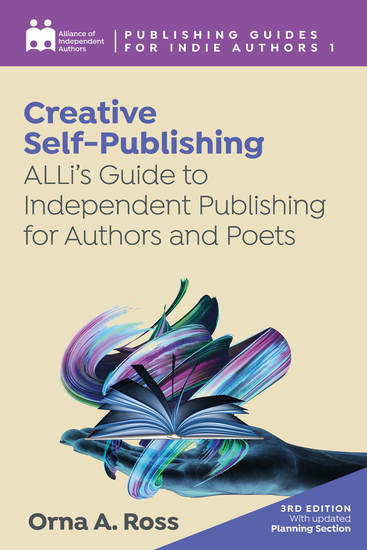
Creative Self-publishing - ALLi's Guide to Independent Publishing for Authors and Poets - cover

Creative Self-publishing - ALLi's Guide to Independent Publishing for Authors and Poets

Authors Alliance of Independent, Orna A. Ross

Publisher: Font Publications

  • 0
  • 0
  • 0

Summary

It has never been easier to publish a book, but publishing a book is never easy.
 
Creative Self-Publishing is a comprehensive guide to every step in the publishing process, written by the director of the Alliance of Independent Authors (ALLi), and drawing on the experience of thousands of ALLi members.
 
The book's focus is how to apply your creativity to publishing, as much as to writing. It takes an individual approach, beginning with you—your passion, mission and sense of purpose as a publisher and creative business owner—then guiding you through the seven processes of publishing, in ways that empower you to reach more readers and sell more books.
 
In an engaging, easy-to-read format, you’ll learn:
 
- Which creative practices and business models the most successful authors are using today
 
- Where you fit in the history of authorship and self-publishing
 
- How to overcome publishing resistance and block by fostering creative flow.
 
- Where to find your ideal readers and how to ensure they find your books
 
- A proven planning method that marries your passion, mission and purpose as writer and publisher
 
Whether you write fiction, nonfiction, or poetry books, the principles and practices outlined in this book will work for you. You’ll make better books, find more readers, turn them into keener fans, and grow your income, impact and influence as a self-directed and empowered indie author–the creative way.
Available since: 10/01/2023.
Print length: 360 pages.

Other books that might interest you

  • A Modern Utopia - cover

    A Modern Utopia

    H. G. Wells

    • 0
    • 0
    • 0
    "For a Utopia to be credible, it must be kinetic—not a static state, but a hopeful stage in an infinite development."
    
    Unlike the rigid, stagnant utopias of the past, H.G. Wells presents a "Kinetic Utopia"—a living, breathing world located on a planet identical to Earth but light-years ahead in social and technological evolution. Following two travelers who find themselves transported to this parallel world, Wells explores a global civilization governed by a World State, where poverty is abolished, technology serves humanity, and a voluntary nobility known as the "Samurai" maintains the moral fiber of the race. This is a brilliant exploration of how a planet-wide society could balance individual liberty with the common good.
    
    The "Samurai" Class: The most enduring concept of the novel is the Samurai—a voluntary order of men and women who follow a strict Rule of life to qualify for leadership. They are not a hereditary caste but an intellectual and moral meritocracy. Wells uses this concept to solve the age-old problem of governance: how to ensure that those in power are disciplined, selfless, and dedicated to the progress of the species.
    
    A World of Motion: Wells argues that a modern utopia cannot be a walled city; it must encompass the entire globe. In this world, every citizen is tracked by a universal indexing system (a startlingly prophetic vision of modern data), ensuring that while people are free to travel and change professions, the state can provide for their needs and maintain social stability. It is a world where the "Five Freedoms" are guaranteed, and the focus of human life shifts from survival to self-actualization.
    
    Rediscover the dream of a better world. Purchase "A Modern Utopia" today and explore the frontiers of human possibility.
    Show book
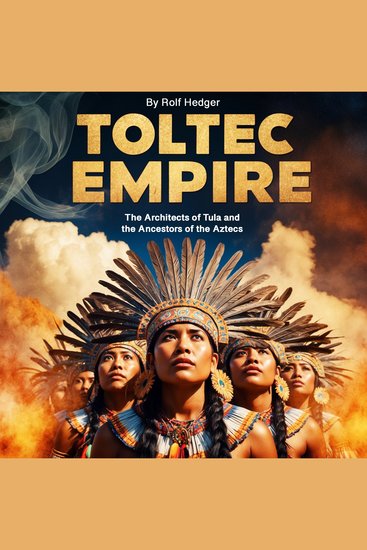
  • Toltec Empire - The Architects of Tula and the Ancestors of the Aztecs - cover

    Toltec Empire - The Architects...

    Rolf Hedger

    • 0
    • 0
    • 0
    The Toltec civilization emerged in central Mexico following the decline of Teotihuacan, one of the most powerful and influential cities of ancient Mesoamerica. With Teotihuacan’s fall around the 7th or 8th century, the region experienced a power vacuum, creating an opportunity for new societies to rise. Among them were the Toltecs, a people who would shape the political, military, and cultural landscape of Mesoamerica for centuries to come. 
    The origins of the Toltecs remain a subject of scholarly debate, but many sources trace their roots to northern Mexico, possibly the arid regions of modern-day Zacatecas or the deserts beyond. By the 10th century, they had established themselves in the Valley of Mexico, where they founded their capital, Tula. The early rulers of the Toltecs, including the semi-legendary Mixcoatl, are credited with uniting various groups under a centralized government and fostering a warrior-based society that would come to dominate the region. Mixcoatl's son, Ce Acatl Topiltzin Quetzalcoatl, is one of the most famous figures in Toltec history. Said to be both a king and a priest, he promoted the worship of Quetzalcoatl, the feathered serpent deity, and encouraged a cultural shift away from excessive militarism and human sacrifice. However, his reign was met with opposition from factions who favored more warlike practices, leading to his eventual exile. His departure, shrouded in myth, would later influence Aztec beliefs and the idea of a prophesied return. 
    Tula, the heart of the Toltec Empire, reflected the ambitions and architectural ingenuity of its people. Expanding over several square miles, the city featured impressive pyramids, colonnaded halls, and massive stone warriors that stood as sentinels over its ceremonial centers. The city's strategic location allowed the Toltecs to control trade networks that extended as far as the Yucatán Peninsula and beyond.
    Show book
  • Darshan With Divinity - Precious Moments With Neem Karoli Baba - cover

    Darshan With Divinity - Precious...

    Radha Krsna Das

    • 0
    • 0
    • 0
    * "Whoever works for God, his work will be done by itself." 
    * "Keep God in your heart like you keep money in the bank." 
     
    Neem Karoli Baba known to his followers as Maharaj-ji - was a great Hindu guru, mystic, and devotee of Lord Hanuman. He is very well known outside India for being the spiritual master of a number of prominent Americans who traveled to India in the 1960s and 70s, including spiritual teachers Ram Dass, Bhagavan Das, and musicians Krishna Das and Jai Uttal. His ashrams are in Kainchi, Vrindavan, Rishikesh, Shimla, Neem Karoli village near Khimasepur in Farrukhabad, Bhumiadhar, Hanumangarhi, Delhi in India, and in Taos, New Mexico. Maharaji was a lifelong adept of bhakti-yoga and encouraged service to others (seva) as the highest form of unconditional devotion to God. 
     
    There can be no biography of him. Facts are few, stories many. He seems to have been known by different names in many parts of India, appearing and disappearing through the years. His non-Indian devotees of recent years knew him as Neem Karoli Baba, but mostly as “Maharajji” – a nickname so commonplace in India that one can often hear a tea vendor addressed thus. Just as he said, he was "nobody". He gave no discourses; the briefest, simplest stories were his teachings. Usually, he sat or lay on a wooden bench wrapped in a plaid blanket while a few devotees sat around him. Visitors came and went; they were given food, a few words, a nod, a pat on the head or back, and they were sent away. There was gossip and laughter for he loved to joke.
    Show book
  • War Transformed - The Future of Twenty-First-Century Great Power Competition and Conflict - cover

    War Transformed - The Future of...

    Mick Ryan

    • 0
    • 0
    • 0
    War Transformed: The Future of Twenty-First-Century Great Power Competition and Conflict provides insights for those involved in the design of military strategy, and the forces that must execute that strategy. Emphasizing the impacts of technology, new era strategic competition, demography, and climate change, Mick Ryan uses historical and contemporary anecdotes to highlight key challenges faced by nations in a new era of great power rivalry. Just as previous industrial revolutions have advanced societies, the nascent fourth industrial revolution will have a similar impact on how humans fight, compete, and build military power in the twenty-first century. 


    War Transformed seeks to provide a preview of the shape of war and competition in the twenty-first century. Ryan examines both the shifting character of war and its enduring nature. He proposes important trends in warfare that will shape all aspects of human competition and conflict in the coming decades. 


    Competing and engaging in combat in this new era involves evolved strategies and warfighting concepts. As the competitive environment and potential battlefields continue to change, conceptions of combat, competition, and conflict must also evolve. Mick Ryan makes the case for transforming how Western military institutions view war in this century.
    Show book
  • The Body-Based Obsessions Workbook - CBT Skills to Manage Anxiety and Intrusive Thoughts About Your Body and Brain - cover

    The Body-Based Obsessions...

    LCPC Molly Bradley Schiffer, MFT...

    • 0
    • 0
    • 0
    If you have anxiety or obsessive-compulsive disorder (OCD), you may also struggle with body-based obsessions—constant fears and worries about your physical and mental health. You may worry that your heart will stop beating, or that you'll stop breathing. You might obsess over your physical appearance, feel like there's something physically wrong with your brain, or fear that you are "going crazy." So, how can you break free from anxiety and obsessions about your body and brain? 


    Drawing on a combination of evidence-based CBT, exposure and response prevention therapy (ERP), mindfulness, and compassion-focused therapy, The Body-Based Obsessions Workbook offers powerful skills to help you manage intrusive thoughts and obsessions, and take back your life. You'll learn the difference between body-based obsessions and other disorders such as body dysmorphic disorder or health anxiety, and find practical tools to manage your worst symptoms—such as rumination, constant checking or monitoring of your breathing or heart rate, or fears about your mental health. 


    If you struggle with intense, intrusive thoughts about your body and brain, you're not alone—and there is help. This workbook will teach you proven-effective skills to overcome your obsessions, so you can experience lasting peace and comfort in your own body.
    Show book
  • TestHH - cover

    TestHH

    HH

    • 0
    • 0
    • 0
    This is just a test.
    Show book