Join us on a literary world trip!
Add this book to bookshelf
Grey
Write a new comment Default profile 50px
Grey
Subscribe to read the full book or read the first pages for free!
All characters reduced
Gay Sissy Erotica – Young Sexy Man in Panties & Older Lover - Rough Erotic Bareback Backdoor Sex - cover

Gay Sissy Erotica – Young Sexy Man in Panties & Older Lover - Rough Erotic Bareback Backdoor Sex

Austin Gay

Publisher: Venny Books Llc

  • 0
  • 0
  • 0

Summary

EXTREMELY HOT M/M ADULT SCENES INSIDE.
A rich and very successful lawyer falls for Alex, a younger man, the minute he sets eyes on him,
But Alex has a hot, sexy secret that he needs to share,
Will this New York hotshot lawyer be too taken aback by Alex's revelation,
Or will it be the kink to win over the lawyer's heart?
Warning: Extremely hot, detailed and juicy adult MM scenes.
Available since: 03/19/2023.

Other books that might interest you

  • Swimming in the Sacred - Wisdom from the Psychedelic Underground - cover

    Swimming in the Sacred - Wisdom...

    PhD Rachel Harris

    • 0
    • 0
    • 0
    WISDOM FROM THE WOMEN HEALERS OF THE PSYCHEDELIC UNDERGROUND 


    The use of entheogens, or psychedelics, is out of the closet today. LSD, psilocybin, MDMA, and other medicines once associated only with the counterculture are now being legally studied for their healing properties. But as Rachel Harris shows, the underground use and study of psychedelics by women dates back to the Eleusinian Mysteries of ancient Greece. 


    Harris interviews the modern women elders carrying on this tradition to gather their hard-won wisdom of experience. Any listener interested in inspiration, healing, and enlightenment will find here a wonder-filled narrative packed with provocative and perhaps life-changing insight.
    Show book
  • How to Be Unmothered - A Trinidadian Memoir - cover

    How to Be Unmothered - A...

    Camille U. Adams

    • 0
    • 0
    • 0
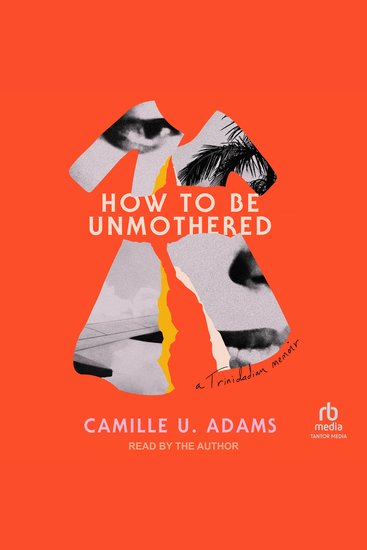
    For generations, the women of Camille U. Adams's family have left their daughters. Some follow the siren call of rum, the centuries-old vice which alighted on Trinidad's shores from European ships. Others flee the behind-closed-doors beatings of husbands, fathers, and brothers, rushing into any arms that offer refuge. Some simply disappear, their passage marked by unkept promises and open wounds. 


    As a young girl, Adams finds solace in Trinidad's whispering fever grass, sweet ixora flowers, and the cradling branches of the rose mango tree―all of their roots connecting her to the land's long memory. But where flora gives way to the rank pavement of Covigne Road, gunshots echo and men amass in the doorways of derelict garages, their mouths and hands promising violation. Home offers no safety: just an explosive father, cowed sisters, and a mother whose only reprieve is control. Cloying, suffocating, the maternal embrace threatens to blot out all else. Is it better to be choked, or not to be held at all? 


    Tormented by her mother's presence and haunted by her absence, Camille U. Adams's dazzling debut is a breathtaking account of survival and self-determination, reimagining the meaning of escape, its cost, and what comes after.
    Show book
  • Romanian Made Easy - Beginner - Volume 2 of 3 - cover

    Romanian Made Easy - Beginner -...

    Lingo Wave

    • 0
    • 0
    • 0
    We broke our new series on learning Romanian down into different learning stages. Start with the "Lower Beginner" books followed by the "Beginner" and "Upper Beginner" books. Next, progress to the "Intermediate" series, then test and reinforce your knowledge with the "Conversations" series. 
    This audiobook is divided into units.While it provides different learning patterns and accommodates various needs, this audiobook focuses on helping you improve your ability to understand, speak, and memorise Romanian.  
    In Unit 1 you will hear Romanian decoded with each syllable spoken very slowly and clearly with repetition. Immediately before each sentence is spoken, you will hear the translation, so you will always understand what is being said. 
    Unit 2 focuses solely on increasing your listening ability, which will improve your abilities to engage in dialogue with a native Romanian speaker. This chapter requires you to listen very carefully to nuances in the language. 
    By Unit 3 you will already notice progress in your abilities to speak and understand Romanian. The spoken translation is followed by two repetitions in Romanian at a completely natural speed. While you are learning to process naturally spoken Romanian, Units 3 and 4 will help you memorise new vocabulary and full sentences. 
    In Unit 5 you can test yourself on how much you have learned. If you are having difficulties, we suggest you revisit the listening, speaking, or memorisation section of Units 1, 2 3 or 4, according to what you need more help with. 
    Topics covered in this book: 
    1. Asking about family 
    2. Asking about relationship status 
    3. Expressing frequency 
    4. Talking about spare time activities and hobbies 
    5. Using quantifiers/determiners 
    6. Talking about preference 
    7. Talking about abilities 
    8. Talking about location of places 
    9. Describing appearance 
    10. Talking about personality 
    ...
    Show book
  • Franco-Prussian War - One of the Main Causes of World War I - cover

    Franco-Prussian War - One of the...

    Kelly Mass

    • 0
    • 0
    • 0
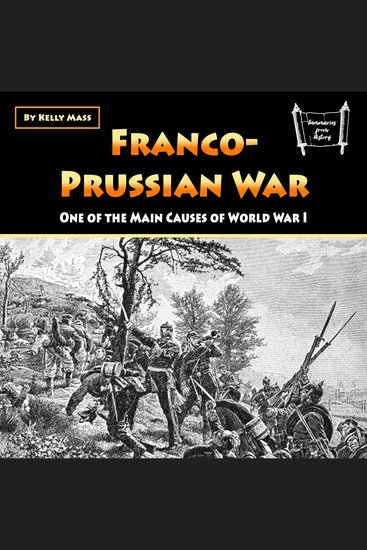
    The Franco-Prussian War, also known as the Franco-German War or, in France, the War of 1870, was a pivotal conflict between the Second French Empire and the North German Confederation, which was led by the Kingdom of Prussia. This war lasted from 19 July 1870 to 28 January 1871, and its consequences would shape European geopolitics for decades. The primary cause of the war stemmed from France's desire to reaffirm its dominance in continental Europe, which had been seriously challenged after Prussia's decisive victory over Austria in the Austro-Prussian War of 1866. This defeat shifted the balance of power in Europe, making France anxious about its standing. 
    Historians have debated the exact motivations behind the war, particularly regarding the role of Otto von Bismarck, the Prussian chancellor. Some argue that Bismarck intentionally provoked France into declaring war to unite the southern German states—Baden, Württemberg, Bavaria, and Hesse-Darmstadt—under the North German Confederation. Other historians maintain that Bismarck exploited the situation as it developed, recognizing the potential for new alliances but not necessarily seeking war. Regardless of the intent, Bismarck saw the war as an opportunity to strengthen German unity. 
    The war officially began when France mobilized its army on 15 July 1870, prompting the North German Confederation to follow suit with its own mobilization the same day. On 16 July, the French parliament declared war on Prussia, and by 2 August, France had invaded German territory. The German coalition responded swiftly and efficiently, invading northeastern France on 4 August. The Germans had several advantages: superior numbers, better training, more effective leadership, and access to advanced military technology, especially in railways and artillery.
    Show book

  • Secession and State Creation - What Everyone Needs to Know - cover

    Secession and State Creation -...

    Mikulas Fabry, James Ker-Lindsay

    • 0
    • 0
    • 0
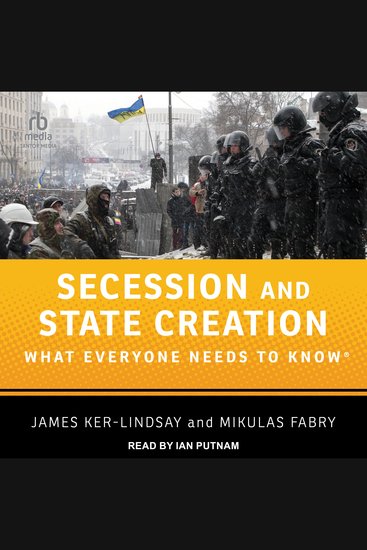
    What makes a state? This question has attracted more and more attention in recent years with Catalan's illegal vote for independence from Spain and Palestine's ongoing search for international recognition. And while Scotland chose to remain with the United Kingdom, discussions of independence have only continued as the ramifications of the Brexit vote begin to set in. Kosovo, South Sudan, and the situation in Ukraine—each in its way reveals the perils of creating a nation separate from neighbors who have dominated it. 


    As James Ker-Lindsay and Mikulas Fabry show in this new addition to the What Everyone Needs to Know® series, the road to statehood never did run smooth. Declaring independence is only the first step; gaining both local and global acceptance is necessary before a state can become truly independent. The prospect of losing territory is usually not welcomed by the parent state. Beyond this immediate conflict, the international community often refuses to accept new states without proof of defined territory, a settled population, and effective government, which frequently translates to a democratic one with demonstrated respect for human rights. Covering the legal, political, and practical issues of secession and state creation, Ker-Lindsay and Fabry provide a sure-footed guide to a complex topic.
    Show book
  • The Legends of the West Point Class of 1846 - cover

    The Legends of the West Point...

    Editors Charles River

    • 0
    • 0
    • 0
    West Point has long been America’s most famous military academy, but in the early 19th century, it was a highly unimpressive school consisting of a few ugly buildings facing a desolate, barren parade ground. Established with just five officers and ten cadets of the Corps of Engineers on March 16, 1802, the Academy was built on a spot just 50 miles north of New York City which had been a key Hudson River military fortress during the Revolutionary War. Cadets attending during the “Point's” first several decades were obliged to maintain their daily regimen knowing the school might shut down at any moment, as the U. S. government frequently questioned why it should provide free education. 
    As it turned out, West Point would become the foremost military academy in the nation, but none of the West Point classes became as famous as the Class of 1846, which boasted more than a dozen future Civil War generals. The Class of 1846 included a shy kid named Thomas Jonathan Jackson who made few friends and struggled with his studies, finishing 17th in his class 15 years before becoming Stonewall. Also in that class was A.P. Hill, who was already in love with the future wife of George McClellan, a young prodigy who finished second in the class of 1846. A popular and mischievous George Pickett would play hooky at the local bar and struggle just to finish last in the class, and the Class of 1846 also churned out critical Union generals like Jesse Reno, Darius Couch, and George Stoneman. 
    Before these men opposed each other on Civil War battlefields, they forged their own friendships and charted their future paths together at West Point and the Mexican-American War. 
    Show book