¡Acompáñanos a viajar por el mundo de los libros!
Añadir este libro a la estantería
Grey
Escribe un nuevo comentario Default profile 50px
Grey
Suscríbete para leer el libro completo o lee las primeras páginas gratis.
All characters reduced
Deep State Control - Unveiling the Hidden Network Shaping Global Policies - cover

Deep State Control - Unveiling the Hidden Network Shaping Global Policies

Austin Barlow

Editorial: ArcanaVerse Books

  • 0
  • 0
  • 0

Sinopsis

"Deep State Control: Unveiling the Hidden Network Shaping Global Policies" delves into the controversial theory that a clandestine network of unelected officials, intelligence agencies, and powerful entities secretly manipulates national and global policies. This comprehensive exploration covers the origins of the Deep State theory, key players and institutions, mechanisms of control, and significant case studies such as the JFK assassination, Watergate scandal, and the Iran-Contra affair. The book also examines the global reach of the Deep State, its impact on public perception and political discourse, and the role of technological advancements and surveillance. Through critical analysis and alternative explanations, "Deep State Control" provides a balanced perspective on this complex and often misunderstood topic. Whether you are a skeptic or a believer, this book offers valuable insights into the dynamics of power, governance, and the future of democracy.
Disponible desde: 27/03/2025.
Longitud de impresión: 140 páginas.


Otros libros que te pueden interesar

  • Historical Tales Vol IV: English - cover

    Historical Tales Vol IV: English

    Charles Morris

    • 0
    • 0
    • 0
    Volume IV of a series containing anecdotes and stories, some well-known, others less so, of particular countries. This fourth volume covers the history of England from its conversion to Christianity up to the reign of Queen Victoria, describing history for children and young adults in an exciting and novel manner. (Introduction by Kalynda)
    Ver libro
  • The Saga of the Earls of Orkney - cover

    The Saga of the Earls of Orkney

    Judith Jesch

    • 0
    • 0
    • 0
    This fascinating history of the Earldom of Orkney, which was established in the Viking Age, records the adventures, feuds and battles of powerful Norsemen during its first three centuries. The medieval earls of Orkney owed allegiance to the kings of Norway but their influence ranged from Britain and Ireland to Sweden and Russia, and they travelled as far as Narbonne, Crete and Jerusalem. Advised by bishops and formidable women, they and their henchmen jockeyed for power with each other and with neighbouring rulers in Scotland, often with murderous outcomes. In between the high politics and violence, the world of the earls was one of piety, poetry and feasting.
    The Saga also provides rare glimpses of culture and everyday life in northern Scotland when it was central to the Viking diaspora. Set in a recognisable landscape, it mentions features, sites and even buildings that can still be seen today.
    This new translation of the manuscripts of the Saga uses an innovative approach to presenting medieval sources to non-specialist audiences, highlighting textual variations that affect its interpretation. It also reflects saga style and language more closely than previous translations and is ideal for both research and reading aloud. This is an essential, detailed and up-to-date resource for academics and general readers who wish to know more about Viking and Norse Scotland.
    Ver libro
  • France in the Early Middle Ages: The History of the Dynasties that Brought about the Kingdom of France - cover

    France in the Early Middle Ages:...

    Charles River Editors

    • 0
    • 0
    • 0
    The birth of Europe as people know it today was hardly an easy and effortless process. The end of antiquity was shaped by centuries of continuous wars, raids, and the falls and rises of empires. The most turbulent of these events happened at the beginning of the Middle Ages, from the 3rd-7th centuries CE. This was the time when the old slave society gave way to the feudal system that marked the latter Middle Ages, and it was also a period of battles between the Roman Empire and various barbarian peoples. The Roman Emperors waged wars, made and broke alliances, and bribed and negotiated with chieftains of various “barbarian” tribes to preserve the territorial integrity of their Empires. 
    After Julius Caesar conquered Gaul in the mid-1st century BCE, Augustus and his successors eventually began a program of Romanization that, in a remarkably short period of time, transformed Gaul into four provinces. All of these locales added enormously to the Roman Empire in terms of manpower, material goods and wealth. Even today, historians are amazed at how such a large population that was not without its own systems of administration and vibrant culture and tradition could so easily succumb to Rome’s pacification process, and to such an extent that, within short periods of time, the indigenous language and traditions of the Celtic peoples of Gaul were totally supplanted. The reasons why Rome was able to subjugate and then transform what was for that time an immense population of over 10 million people lie not only in its military superiority but its system of organization and its conscious program of Romanization.  
    	Ironically, even as Rome’s control over Gaul kept modern France fragmented, the medieval dynasties that sprouted up in the area looked up to the Romans as their predecessors, and in essence they would attempt to recreate the Roman Empire.
    Ver libro
  • Lowdown The: A Short History of the First Gulf War - cover

    Lowdown The: A Short History of...

    Robert A. Johnson

    • 0
    • 0
    • 0
    A concise history of Saddam’s road to ruin – the denouement of Iraq. The Lowdown: A Short History of the First Gulf War gives an explanation of the causes of the Gulf War in 1990-91 and how the Iran-Iraq War of the 1980s shaped the political and diplomatic landscape that led to a confrontation between President Saddam Hussein of Iraq and a world coalition led by the United States.
    
    At the end of the Iran-Iraq War in 1988, Iraq was in significant debt. Saddam coveted Kuwait’s vast oil revenues and considered using his vast and seasoned army to get them. He presumed that there would be little resistance to an invasion – a dreadful miscalculation. When Iraqi forces poured into Kuwait, much of the world united against them. The First Gulf War opened a new chapter in the region’s politics, bringing together the Arab states and the Western world. Yet, ultimately, it was a war that convinced Saddam to continue his defiance of the West and to exercise even greater ruthlessness to stay in power - a situation which led to the Coalition invasion of Iraq in 2003.
    
    After that 2003 onslaught, many speculated as to what had gone wrong in the first Gulf War. Why had Saddam been able to survive? What was it that drove him to continue to snub the world and pursue his objectives so aggressively? “The Lowdown: A Short History of the First Gulf War” considers these questions, examines the character and experiences of Saddam himself, revisiting the First Gulf War in light of more recent events.
    
    ©2010 Creative Content Ltd (P)2010 Creative Content Ltd
    Ver libro
  • Traditional Hoodoo & Conjure - A Handbook of Spirits Spells & Rootwork - cover

    Traditional Hoodoo & Conjure - A...

    Miss Aida, Leila Marino

    • 0
    • 0
    • 0
    In this illuminating guide, Miss Aida corrects widespread misconceptions about Hoodoo―a powerful African diaspora tradition rooted in African traditional religions. She reveals authentic practices, contrasts Hoodoo with related traditions like Santeria and Haitian Vodou, and reclaims this rich spiritual craft from misrepresentation, offering listeners a genuine understanding of Hoodoo's true essence. 
     
    Hoodoo and conjure may be household words, but the popular magical craft practiced by tens of thousands of individuals has been grossly misrepresented in many modern practices. Traditional Hoodoo & Conjure seeks to reverse these misconceptions and provide practitioners with the history, mechanics, and tools to understand not only how but why each magical action serves a greater purpose. 
     
    Because Hoodoo derives its roots from African traditional religions that were initially brought to North America by enslaved people during the transatlantic era, many aspects of the craft parallel African-Caribbean practices, such as Santeria and Haitian Vodou. Miss Aida teaches listeners how to honor their ancestors in a traditional manner and petition honored entities. By offering magical baths, twenty-five traditional rituals, 125 spells, fifty recipes, and forty prayers, listeners will develop a deeper understanding of Hoodoo while becoming knowledgeable and formidable spellcasters.
    Ver libro
  • The Fireside Chats of Franklin Delano Roosevelt - cover

    The Fireside Chats of Franklin...

    Franklin Delano Roosevelt

    • 0
    • 0
    • 0
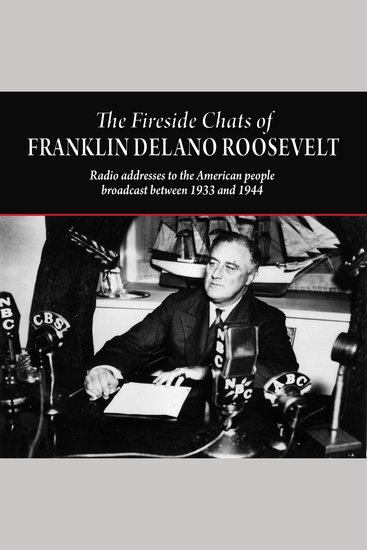
    Shortly after taking office in 1933 President Franklin Delano Roosevelt delivered the first of his radio broadcasts to the American public.  In simple, plain language, he took pains to explain the basic mechanics of the banking system, the causes of the present banking crisis, and the steps he was taking to stabilize the system.  It was an extraordinary moment – the first time an American President had bypassed the traditional channels of communication (newspapers largely owned by conservative Republicans) and taken his message directly to the people.  In doing so, he conveyed a sense of intimacy and engagement with the decision-making process that earned the trust and affection of the American people. He was able to squelch rumors and build public support for the most radical social changes and the largest war in the history of the United States. They are an astonishing testimony to what great leadership looks like, sounds like, and what it can accomplish.There are thirty addresses in all, ranging from about ten to thirty minutes, given at the rate of about one every five months, with the timing dictated by public events.  The term “fireside chat” was coined by Harry C. Butcher at CBS in a press release in 1933. Most, but not all, of the original addresses were recorded in part or in full. The sound quality, however, is often quite poor.  Thus, these new recordings of the published texts of the original addresses.  While it is impossible to capture the cheery, affable charm of President Roosevelt, we hope the readings convey the spirit of the times and the temper of the man.
    Ver libro