Begleiten Sie uns auf eine literarische Weltreise!
Buch zum Bücherregal hinzufügen
Grey
Einen neuen Kommentar schreiben Default profile 50px
Grey
Jetzt das ganze Buch im Abo oder die ersten Seiten gratis lesen!
All characters reduced
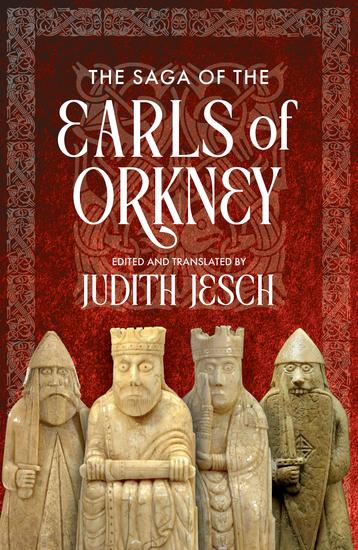
The Saga of the Earls of Orkney - cover

The Saga of the Earls of Orkney

Judith Jesch

Verlag: John Donald

  • 0
  • 0
  • 0

Beschreibung

This fascinating history of the Earldom of Orkney, which was established in the Viking Age, records the adventures, feuds and battles of powerful Norsemen during its first three centuries. The medieval earls of Orkney owed allegiance to the kings of Norway but their influence ranged from Britain and Ireland to Sweden and Russia, and they travelled as far as Narbonne, Crete and Jerusalem. Advised by bishops and formidable women, they and their henchmen jockeyed for power with each other and with neighbouring rulers in Scotland, often with murderous outcomes. In between the high politics and violence, the world of the earls was one of piety, poetry and feasting.
The Saga also provides rare glimpses of culture and everyday life in northern Scotland when it was central to the Viking diaspora. Set in a recognisable landscape, it mentions features, sites and even buildings that can still be seen today.
This new translation of the manuscripts of the Saga uses an innovative approach to presenting medieval sources to non-specialist audiences, highlighting textual variations that affect its interpretation. It also reflects saga style and language more closely than previous translations and is ideal for both research and reading aloud. This is an essential, detailed and up-to-date resource for academics and general readers who wish to know more about Viking and Norse Scotland.
Verfügbar seit: 06.11.2025.
Drucklänge: 400 Seiten.

Weitere Bücher, die Sie mögen werden

  • How to Become a Personal Fitness Trainer Career Professional Development Planning Audio Book - With Job Interview Preparation & Coaching Guide for Men Women Teens & Young Adults - cover

    How to Become a Personal Fitness...

    Brian Mahoney

    • 0
    • 0
    • 0
    End Money Worries! 
    How to Become a Personal Fitness Trainer Career Professional Development Planning Audio Book 
    With Job Interview Preparation & Coaching Guide for Men, Women, Teens & Young Adults 
    by Brian Mahoney  
           Discover... 
    * What a Personal Fitness Trainer does 
         * How to Become a Personal Fitness Trainer  
          * What is the salary of a Personal Fitness Trainer  
             * What is the Personal Fitness Trainer Work Environment like 
                 * What is the future Job outlook for a Personal Fitness Trainer  
             * how long does it take to become a Personal Fitness Trainer 
          * How to Prepare for Your Job Interview 
       * Tips the pros use to Ace their Job Interview 
    * You'll be confident with the best answers for the toughest job interview questions 
    The knowledge and ability to change your life all for less than the cost of 1 movie ticket! 
     If you are ready to get started & want the knowledge, help & motivation to change your life now!... 
    Then this Book is for you!!! 
                         So Don't wait. You'll wait your life away...
    Zum Buch
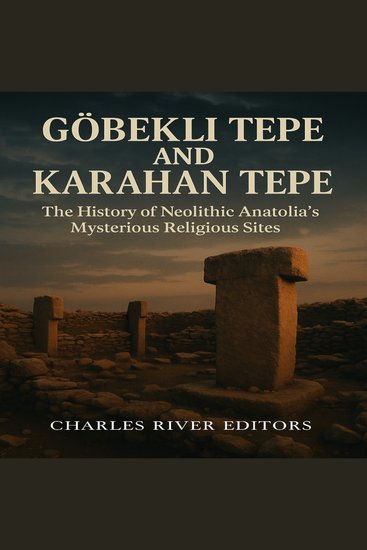
  • Göbekli Tepe and Karahan Tepe: The History of Neolithic Anatolia’s Mysterious Religious Sites - cover

    Göbekli Tepe and Karahan Tepe:...

    Charles River Editors

    • 0
    • 0
    • 0
    Despite the fact some Neolithic communities grew to considerable sizes, they’re typically not considered when people think of the first ancient civilizations or the first major cities, so when German archaeologists discovered the archaeological site of Göbekli Tepe in southeastern Turkey in the 1990s, it created an academic firestorm that is still raging. Far from being just another settlement, Göbekli Tepe has been described as the world’s first temple and perhaps one of the locations where human civilization began. Subsequent archaeological work at Göbekli Tepe has revealed that the site was a spiritual center for the local population during a time when humans were undergoing a transition as hunter-gatherers in the Paleolithic Period to a more sedentary lifestyle in the Neolithic Period, more than 10,000 years ago. Further research in the disciplines of anthropology, religion, and history indicate that the activity at Göbekli Tepe subsequently set the tone for elements of Neolithic and Bronze Age religion and ideology in the Near East, especially in Anatolia (roughly equivalent with modern Turkey).  
    Likewise, archaeologists have been able to determine when Karahan Tepe was built, possibly how long it was occupied, and that it was probably related to the larger, better-known site of Göbekli Tepe, but several important questions remain. What was the purpose of Karahan Tepe? Was Karahan Tepe a permanent or semi-permanent settlement? What was the background of the people who built the site, and how long did it take them to build it?  
    Karahan Tepe was just one of many sites in ancient modern Turkey, and as part of a greater complex, Karahan Tepe represents one of the earliest known attempts to build a complex society, so understanding more about the site can tell historians about how the process worked. 
    Zum Buch
  • Dutch History - The Age of Change in the Netherlands - cover

    Dutch History - The Age of...

    Kelly Mass

    • 0
    • 0
    • 0
    The following topics will be discussed in this combo of books: 
    1: In this book, we will shed more light on the Batavians, a people in history with much bravery, innovation, and determination to form a republic with freedom for its citizens, with opposing enemies they resisted. The Republic of the 7 United Netherlands was followed by the Batavian Republic. It started on January nineteenth, 1795, and ended on June fifth, 1806, with Louis I's succession to the Dutch throne. The political, financial, and social modifications that took place at the time of the Batavian Republic's short existence have left an enduring mark. The old Dutch Republic's confederal structure was completely changed by a unitary state. The constitution of 1798, which was developed for the first time in Dutch history, was really democratic. 
    2: The Netherlands had a great century in the 1600s, until it all ended about three-fourths along the way. Trading was all around, business was good. Their vast empire that reached across the world made money from spices, raw materials, metals, and so much more, with an extensive network of ships, merchants, and an entire army fleet. The Dutch Golden Era was a time in Dutch history varying circa from 1588 (the start of the Dutch Republic) to 1672 (the "Catastrophe Year"), throughout which Dutch trade, science, and art, and the Dutch armed force, were amongst the world's best. The Eighty Years' War, which ended in 1648, controls the first area. 
    3: Undoubtedly, Napoleon, the French revolutionist and emperor has left his mark on European history. His vast empire stretched all over the continent, his unique image and posture have been emulated by many, and his infamous defeat in Russia was a precursor of the defeat Hitler experienced for similar reasons.
    Zum Buch
  • Generation Gap - Why the Baby Boomers Still Dominate American Politics and Culture - cover

    Generation Gap - Why the Baby...

    Kevin Munger

    • 0
    • 0
    • 0
    The Baby Boomers are the largest and most powerful generation in American history—and they aren't going away any time soon. They dominate cultural and political institutions and make up the largest slice of the electorate. Generational conflict, with Millennials and Generation Z pitted against the aging Boomer cohort, has become a media staple. The generation gap is widening into a political fault line. 


    Kevin Munger marshals novel data and survey evidence to argue that generational conflict will define the politics of the next decade. He examines the historical trends that made the Baby Boomers so consequential and traces the emergence of age-based political and cultural divisions. Boomers continue to prefer the media culture of their youth, but Millennials and Gen Z are using the internet to render legacy institutions irrelevant. These divergent media habits have led more people than ever to identify with their generation. Munger shows that a common "cohort consciousness" binds aging Boomer voters into a bloc—but a shared identity and purpose among Millennials and Gen Z could topple Boomer power. 


    Bringing together expertise in data analysis and digital culture with keen insight into contemporary politics, Generation Gap explains why the Baby Boomers remain so dominant and how quickly that might change.
    Zum Buch
  • University - A Reckoning - cover

    University - A Reckoning

    Lee C. Bollinger

    • 0
    • 0
    • 0
    The American university―one of the most successful institutions in human history―is facing an unprecedented assault from the president of the US. Experts on authoritarianism have drawn comparisons to other countries where strongmen subdued universities as part of their power grabs. Yet as former Columbia president Lee C. Bollinger points out in his account of the university's significance, in such dire times one has no choice but to state clearly and forcefully what one stands for. 
     
    Bollinger reveals how the structure of the university contributes to the success of the American system―because it provides those who study and work within it a degree of creative freedom hard to find elsewhere―and why that structure is both impossible to recreate and vulnerable to outside attack. The fundamental mission of the university is to enhance knowledge, but this is not merely a high-minded idea. It is, as Bollinger demonstrates, a notion rooted deeply in the Constitution, specifically the First Amendment, the basis of our political and social life. The university helps realize the First Amendment; the First Amendment helps make the university. Bollinger argues that, with the press diminished, the university remains the only source of truth-seeking for those who still believe in democracy. The university must be defended if the American experiment is to continue.
    Zum Buch
  • The Shortest History of Austria - cover

    The Shortest History of Austria

    Nicholas T Parsons

    • 0
    • 0
    • 0
    'Incisive but comprehensive, entertaining and well-illustrated, this is the perfect introduction to what was once a huge empire and is now a small but (undeservedly) very lucky country' TIM BLANNING
    
    Austria is a small country with a glorious history but a troubled past. It sits at the crossroads of central Europe: the furthest the Ottomans reached in the seventeenth century, a back-channel between east and west during the Cold War, and today a member of the European Union with its neutrality challenged by the Russian invasion of Ukraine.
    
    In The Shortest History of Austria, Nicholas T. Parsons expertly tells the story of Austria from its origins at the outer reaches of the Roman Empire to its dominance of central Europe under the Habsburgs, and from the rebuilding of the republic after the devastation of World War II to the political tensions of today.
    
    As he ranges from the Romans to the Reformation, from the assassination of Archduke Franz Ferdinand to the Anschluss, and from Mozart to Gustav Klimt to Harry Lime, Parsons reveals the drama of Austria's history – and the crucial role the country has played in the story of Europe.
    Zum Buch