Join us on a literary world trip!
Add this book to bookshelf
Grey
Write a new comment Default profile 50px
Grey
Subscribe to read the full book or read the first pages for free!
All characters reduced
The Truth About Mom Guilt: Letting Go and Moving On - cover

The Truth About Mom Guilt: Letting Go and Moving On

Aurora Brooks

Publisher: Shuttle Systems

  • 0
  • 0
  • 0

Summary

How to Make Time for Your Kids as a Working Mom is a must-read book for any working mother who wants to find a balance between her career and her family life. In this short read, you will discover practical tips and strategies to help you make the most of your time with your children, even when you have a demanding job.The book starts with a chapter on creating a daily routine. You will learn how to structure your day in a way that allows you to spend quality time with your kids, while still being productive at work. The next chapter focuses on setting boundaries at work, so you can avoid bringing work stress home and fully focus on your family when you're with them.Delegating responsibilities is another key aspect covered in this book. You will learn how to effectively delegate tasks at work and at home, so you can free up more time for your kids. The chapter on maximizing weekends provides valuable tips on how to make the most of your weekends with your family, creating lasting memories.Technology can be a double-edged sword when it comes to balancing work and family life. This book explores how to utilize technology in a way that enhances your connection with your children, such as video calls and messaging. It also introduces family calendar apps that can help you stay organized and ensure you never miss an important event or appointment.Meal times are an excellent opportunity to bond with your kids, and this book offers practical advice on involving children in meal preparation and making family dinners a special time for everyone. Prioritizing self-care is also emphasized, as taking care of yourself is crucial for being present and engaged with your children.The book addresses common concerns and questions in the frequently asked questions section, providing additional guidance and support. Whether you're struggling with work-life balance, setting realistic expectations, or taking advantage of flexible work options, this book has got you covered.In conclusion, How to Make Time for Your Kids as a Working Mom is a valuable resource for any working mother who wants to prioritize her family while excelling in her career. With its practical tips and strategies, this book will empower you to create a meaningful and fulfilling life for both you and your children. Don't miss out on this opportunity to make the most of your time with your kids!This title is a short read. A Short Read is a type of book that is designed to be read in one quick sitting.These no fluff books are perfect for people who want an overview about a subject in a short period of time.Table of ContentsHow to Make Time for Your Kids as a Working MomCreate a Daily RoutineSet Boundaries at WorkDelegate ResponsibilitiesMaximize WeekendsUtilize TechnologyVideo Calls and MessagingFamily Calendar AppsMake the Most of Meal TimesInvolve Children in Meal PreparationFamily DinnersPrioritize Self-CareSet AsideMe TimeAsk for SupportBe Present and EngagedPut Away DistractionsActive ListeningFlexibility and AdaptabilityEmbrace ImperfectionMake Time for Special OccasionsSeek Work-Life BalanceSet Realistic ExpectationsTake Advantage of Flexible Work OptionsQuality over QuantityCreate Meaningful RitualsBe Fully Present in the MomentFrequently Asked QuestionsHave Questions / Comments?
Available since: 09/13/2023.
Print length: 31 pages.
Other books that might interest you

  • A Reading of the Inaugural Address of President James K Polk - cover

    A Reading of the Inaugural...

    President James K. Polk

    • 0
    • 0
    • 0
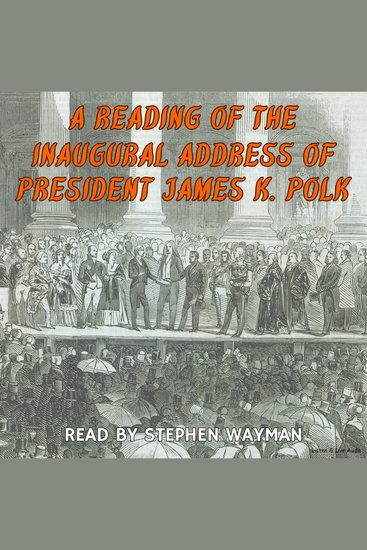
    James Knox Polk (November 2, 1795 to June 15, 1849) was the 11th president of the United States, serving from 1845 to 1849, and former governor of Tennessee. A protégé of President Andrew Jackson and a member of the Democratic Party, he was an advocate of Jacksonian democracy and extending the territory of the United States. Polk led the U.S. into the Mexican–American War, and after winning the war he annexed the Republic of Texas, the Oregon Territory, and the Mexican Cession. The following is a reading of President Polk's inaugural address on March 4, 1845.
    Show book
  • How Fascism Works: Book Summary & Analysis - cover

    How Fascism Works: Book Summary...

    Briefly Summaries

    • 0
    • 0
    • 0
    This is a concise summary and analysis of How Fascism Works, by Jason Stanley.
     
    It is not the original book and is not affiliated with or endorsed by Jason Stanley.
     
    Ideal those seeking a quick and insightful overview.
     
    How Fascism Works offers a penetrating examination of the mechanisms that fascist ideologies employ to seize and maintain power. With historical examples and contemporary insights, this book dissects the tactics of propaganda, division, and fear, revealing how these strategies exploit societal vulnerabilities to undermine democracy and promote authoritarianism. It is an essential guide for understanding the warning signs and combating the resurgence of fascist tendencies in the modern world.
    Show book
  • safe-to-fight - The Step by Step Protocol for Couples to Navigate Conflict Improve Communication and Strengthen Their Bond - cover

    safe-to-fight - The Step by Step...

    Claire Donnelly

    • 0
    • 0
    • 0
    Do arguments with your partner leave you feeling misunderstood and disconnected? You long for closeness, yet every tough conversation turns into a painful loop of blame, defensiveness, and silence. What if conflict itself isn’t the enemy—but the key to deeper intimacy, if you know how to navigate it safely? 
    In Safe to Fight, Dr. Elias Vance introduces the Conflict Resolution Protocol (CRP)—a proven, science-backed system that transforms conflict from a battleground into a bridge for understanding. Drawing from decades of research in relationship science, attachment theory, and neuroscience, Dr. Vance offers couples a practical roadmap for communicating effectively, repairing emotional wounds, and growing stronger together. 
    Inside, you’ll discover:The 4 stages of every argument—and how to interrupt destructive patterns before they spiral.The “Cooling-Off Window” that prevents emotional flooding and resets your nervous system.The “Soft Start-Up” that lets you raise tough issues without triggering defensiveness.The Speaker–Listener framework that ensures both partners feel heard and validated.How to decode your unique conflict styles and attachment needs.The step-by-step CRP system to transform fights into opportunities for connection. 
    Packed with scripts, action prompts, and practical tools, Safe to Fight is more than a book—it’s a relationship blueprint for building trust, empathy, and lasting resilience. Whether you’re newly together or decades into your marriage, this guide will help you communicate with compassion, repair effectively after conflict, and rediscover the love that brought you together in the first place. 
    Stop fearing conflict—and learn how to make it safe to fight.
    Show book
  • Great Railroad Strike of 1877 The: The History and Legacy of the Protests across America over Wages and Labor Conditions - cover

    Great Railroad Strike of 1877...

    Editors Charles River

    • 0
    • 0
    • 0
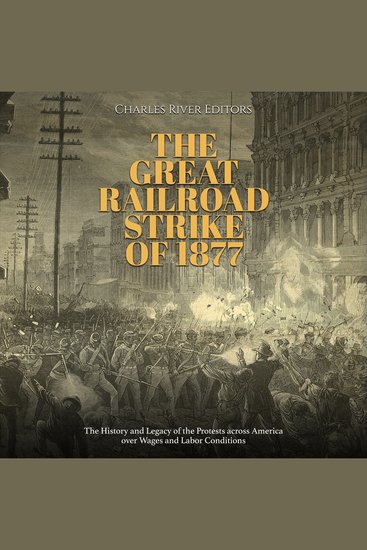
    When trains were introduced as a popular means of transportation, some of the first tracks laid terminated in New York, and the expansion of railroads led to the birth of train stations across the country. In general, these were small buildings where passenger could buy tickets and wait for their trains to arrive, and according an article written by Samuel Dunn around the turn of the 20th century, “The first Manhattan terminal was opened in 1832 at Centre Street, near the present City Hall, by the New York and Harlem road, now leased to the New York Central. Trains were run by steam as far south as Fourteenth Street and pulled from there by horses.” If it is hard to conceive of large box cars or even heavier locomotives being pulled by horse, it’s important to remember that the first train cars were little more than traditional carriages designed to move on iron tracks.  
    	Initially, the nation’s railway system was a fragmented, often chaotic system, but Cornelius Vanderbilt went about creating an interregional system, integrating a network of smaller railroads that ran according to their own policies, procedures, and even timetables. It was not only more customer-friendly, but it helped lower shipping costs and created a more efficient system of transporting goods and people. This led to the creation of one of the nation’s first corporations, the New York Central and Hudson Railroad.  
    	While companies competed with each other, the employees themselves were often squeezed, not only working long hours in hazardous conditions, but making pitiful pay. Put simply, in an age before widespread labor regulations were enacted and unions organized, the employers exercised nearly absolute power over employees. 
    Show book
  • France in the Early Middle Ages: The History of the Dynasties that Brought about the Kingdom of France - cover

    France in the Early Middle Ages:...

    Charles River Editors

    • 0
    • 0
    • 0
    The birth of Europe as people know it today was hardly an easy and effortless process. The end of antiquity was shaped by centuries of continuous wars, raids, and the falls and rises of empires. The most turbulent of these events happened at the beginning of the Middle Ages, from the 3rd-7th centuries CE. This was the time when the old slave society gave way to the feudal system that marked the latter Middle Ages, and it was also a period of battles between the Roman Empire and various barbarian peoples. The Roman Emperors waged wars, made and broke alliances, and bribed and negotiated with chieftains of various “barbarian” tribes to preserve the territorial integrity of their Empires. 
    After Julius Caesar conquered Gaul in the mid-1st century BCE, Augustus and his successors eventually began a program of Romanization that, in a remarkably short period of time, transformed Gaul into four provinces. All of these locales added enormously to the Roman Empire in terms of manpower, material goods and wealth. Even today, historians are amazed at how such a large population that was not without its own systems of administration and vibrant culture and tradition could so easily succumb to Rome’s pacification process, and to such an extent that, within short periods of time, the indigenous language and traditions of the Celtic peoples of Gaul were totally supplanted. The reasons why Rome was able to subjugate and then transform what was for that time an immense population of over 10 million people lie not only in its military superiority but its system of organization and its conscious program of Romanization.  
    	Ironically, even as Rome’s control over Gaul kept modern France fragmented, the medieval dynasties that sprouted up in the area looked up to the Romans as their predecessors, and in essence they would attempt to recreate the Roman Empire.
    Show book
  • A Call to Farms - Reconnecting to Nature Food and Community in a Modern World - cover

    A Call to Farms - Reconnecting...

    Jennifer Grayson

    • 0
    • 0
    • 0
    Hope for the future lies with a new generation of regenerative farmers. 


    Within a decade, nearly half of all American farmland will change hands as an older generation of farmers steps aside. In their place, a groundswell of new growers will face numerous challenges, including soil degradation, insufficient income, and investors devouring farmland at a staggering pace. These new farmers are embracing regenerative agriculture—the holistic approach to growing food that restores the soil and biodiversity—in the movement to reclaim our health and the planet's. But can their efforts help reverse an epidemic of diet-related disease, food inequality, and even climate change? 


    To answer that question and more, award-winning journalist Jennifer Grayson embedded herself in a groundbreaking farmer training program, then embarked on this investigative journey. The diverse array of farmers, graziers, and food activists whom she profiles here are working toward better, more sustainable foodways for all. From a one-acre market garden in Oregon to activists reviving food sovereignty in South Carolina, A Call to Farms tells the captivating story of these new agrarians finding hope and purpose in reconnecting to the land and striving to improve the future of American food.
    Show book