Join us on a literary world trip!
Add this book to bookshelf
Grey
Write a new comment Default profile 50px
Grey
Subscribe to read the full book or read the first pages for free!
All characters reduced
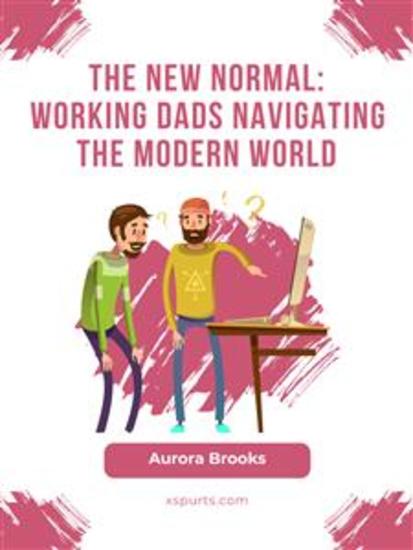
The New Normal: Working Dads Navigating the Modern World - cover

The New Normal: Working Dads Navigating the Modern World

Aurora Brooks

Publisher: Shuttle Systems

  • 0
  • 0
  • 0

Summary

The Evolution of Fatherhood: Working Dads Breaking Barriers is a thought-provoking and insightful short read that explores the changing landscape of fatherhood in today's society. This book delves into the various aspects of fatherhood, from shifting gender roles to the impact on children, and everything in between. With its comprehensive table of contents, readers can easily navigate through the different topics and gain a deeper understanding of the challenges and opportunities faced by working dads.The first chapter, ""Shifting Gender Roles,"" examines how traditional gender roles have evolved over time and the implications this has had on fathers. It explores the changing expectations and responsibilities placed on men in both the workplace and the home.""Work-Life Balance"" delves into the delicate juggling act that working dads face as they strive to balance their professional and personal lives. It offers practical tips and strategies for achieving a harmonious equilibrium.""The Rise of Paternity Leave"" sheds light on the increasing recognition of the importance of fathers' involvement in their children's lives. This chapter explores the benefits of paternity leave and the progress that has been made in terms of parental leave policies.""Flexible Work Arrangements"" explores the various ways in which companies are adapting to the needs of working dads. It discusses the rise of flexible work arrangements, such as remote work and flexible hours, and how these initiatives can support fathers in their quest for work-life balance.""Supportive Work Environments"" delves into the importance of creating a supportive and inclusive workplace culture that values and supports working dads. It explores the initiatives and programs that companies can implement to foster a more father-friendly work environment.""Mental Health and Well-being"" addresses the often-overlooked aspect of fathers' mental health. It discusses the unique challenges that working dads face and offers strategies for maintaining mental well-being in the face of stress and burnout.""Breaking Stigmas"" challenges societal stereotypes and stigmas surrounding fatherhood. It explores the misconceptions and biases that can hinder fathers' involvement and offers insights on how to overcome these barriers.""Role Models and Representation"" highlights the importance of positive role models and representation for working dads. It explores the impact of media portrayals and the need for diverse and relatable father figures.""Community Support"" emphasizes the significance of community support networks for working dads. It discusses the benefits of connecting with other fathers and the resources available to support them.""Impact on Children"" explores the profound influence that involved fathers have onThis title is a short read. A Short Read is a type of book that is designed to be read in one quick sitting.These no fluff books are perfect for people who want an overview about a subject in a short period of time.
Available since: 09/13/2023.
Print length: 35 pages.
Other books that might interest you

  • Redefining Racism - How Racism Became "Power + Prejudice" - cover

    Redefining Racism - How Racism...

    Joseph (Jake) Klein

    • 0
    • 0
    • 0
    Have you heard that racism requires more than just prejudice, but also “power”? 
    Have you been told the dictionary definition of racism isn’t correct? 
    Where did this all come from? And why is it being taught at your school or workplace? 
    The rabbit hole goes deeper than you might have imagined. Joseph (Jake) Klein’s Redefining Racism tells the story of the group of radical white “anti-racist” corporate and high-school educators who in the late 1960s and early 70s, taking inspiration from the anti-integrationist Marxist-Leninist Stokely Carmichael, funded by an organization seeking to pay off rioters to stop, and using manipulative techniques developed in part by U.S. intelligence’s director of the “psychological warfare center for the Far East,” created and spread the “Power + Prejudice” redefinition. And the late famed crack-addicted serial bank robber “Zombie Bandit” played a role too. 
    In tracing the history of this redefinition, Redefining Racism also tells the story of the origins of “Racism Awareness Training,” today frequently called “diversity training,” in the tradition of Robin DiAngelo and White Fragility that have taken American corporations, schools, and universities by storm. 
    Redefining Racism is the definitive rebuttal for why racism is not best defined as “Power + Prejudice” and a damning origin story for much of the modern so-called “anti-racist” movement, reminding us why the best way to be an anti-racist is to look at the content of one’s character and not the color of their skin. 
    “For anyone genuinely committed to realizing an American future where race, racism, and ‘anti-racism,’ cease to be the tools used to divide us, this is an indispensable text. With Redefining Racism, Jake Klein has provided a national service.” — Thomas Chatterton Williams, author of Self-Portrait in Black and White and Losing My Cool
    Show book
  • Capitalism Socialism and Democracy - cover

    Capitalism Socialism and Democracy

    Joseph A. Schumpeter

    • 0
    • 0
    • 0
    "Capitalism, Socialism, and Democracy," authored by Joseph A. Schumpeter and first published in 1942, stands as a cornerstone in the study of economics and political science. In this profound and ambitious work, Schumpeter delves into the intricate mechanisms that drive capitalist economies and the transformative forces that shape them. Central to his analysis is the concept of "creative destruction," a process through which old industries and economic structures are continuously dismantled and replaced by innovative enterprises and technologies. This relentless cycle of innovation, while fostering economic growth and progress, also brings about significant disruption and dislocation, posing challenges to established businesses and labor markets.Schumpeter's exploration of capitalism is multifaceted. He acknowledges the system's remarkable capacity for innovation and wealth creation but also highlights its inherent vulnerabilities. These include tendencies toward monopolistic practices, social inequality, and cyclical crises. Schumpeter provocatively argues that capitalism, despite its successes, harbors the seeds of its own decay. As capitalism progresses, he suggests, it creates conditions—such as the rise of large corporations and bureaucratic structures—that may eventually undermine its dynamic and entrepreneurial spirit.Turning his attention to socialism, Schumpeter offers a nuanced examination of its potential as an alternative to capitalism. He considers socialism's promise to address the inequities and inefficiencies of capitalism, particularly through the redistribution of wealth and more centralized economic planning. However, he also recognizes significant obstacles, such as the potential stifling of individual initiative and the complexities of managing a planned economy on a large scale. Schumpeter's analysis of socialism is neither purely optimistic nor wholly dismissive; instead, it reflects a balanced inquiry into its feasibility and implications.A key component of Schumpeter's work is his discussion on democracy and its interaction with economic systems. He questions whether democratic institutions can withstand the pressures and demands of a rapidly evolving economic landscape. Schumpeter introduces the idea of "democratic elitism," suggesting that modern democracies are managed by a select group of individuals rather than by the populace at large. This perspective leads to critical reflections on the sustainability of democratic governance in the face of economic upheaval and social change.Overall, "Capitalism, Socialism, and Democracy" is a thought-provoking and comprehensive treatise that continues to resonate with scholars and policymakers. Schumpeter's insights into the dynamics of economic change, the potential trajectories of capitalist and socialist systems, and the challenges facing democratic governance remain relevant in understanding the complexities of contemporary economic and political life.
    Show book
  • Byzantine-Seljuk Wars The: The History and Legacy of the Battles for Asia Minor in the 11th Century - cover

    Byzantine-Seljuk Wars The: The...

    Editors Charles River

    • 0
    • 0
    • 0
    By the end of the Byzantine Empire’s existence, the old age had weakened both the state and church, making it an easy target for invading forces.  
    	The most notable invaders were the the Turkish-speaking Seljuks, led through a series of battles by Kutalmishouglu Suleiman, who supported different usurpers against the Byzantine emperor. The expansion of the Seljuks was so successful that when Suleiman died, he had put all of Bithynia under his control as well as several important harbor towns along the shores on the Asian side of Bosphorus. With that accomplishment, he had managed to separate the Byzantines living in Anatolia from their emperor in Constantinople. This immediately weakened the unity of the Byzantine Empire.  
    	When another invading Muslim army took control of what is now Syria, Israel, and Northern Africa, the dismembered Byzantine Empire lost significant portions of land, but that allowed it to grow into a smaller and stronger unity. It took a lot of power struggles and battles on many fronts for the empire to recapture some of the lands, but gradually the Byzantine Empire lost all influence in Anatolia. By the end of the 11th century, the Hellenic culture and Greek language were replaced by Islam and Turkish.  
    	Of all the conflicts that brought this state of affairs into being, few were as instrumental as the Battle of Kapetron, the culmination of one of the first major Seljuk raids into Byzantine territory. It represented not just a clash of ethnicities, cultures, and religions, but also a harbinger of a changing of the guard, and one that would shape geopolitics in the region for the next several centuries. 
    Show book
  • Barred - Why the Innocent Can’t Get Out of Prison - cover

    Barred - Why the Innocent Can’t...

    Daniel S. Medwed

    • 0
    • 0
    • 0
    A groundbreaking exposé of how our legal system makes it nearly impossible to overturn wrongful convictions Thousands of innocent people are behind bars in the United States. But proving their innocence and winning their release is nearly impossible.  In Barred, legal scholar Daniel S. Medwed argues that our justice system’s stringent procedural rules are largely to blame for the ongoing punishment of the innocent. Those rules guarantee criminal defendants just one opportunity to appeal their convictions directly to a higher court. Afterward, the wrongfully convicted can pursue only a few narrow remedies. Even when there is strong evidence of a miscarriage of justice, rigid guidelines, bias, and deference toward lower courts all too often prevent exoneration.  Offering clear explanations of legal procedures alongside heart-wrenching stories of their devastating impact, Barred exposes how the system is stacked against the innocent and makes a powerful call for change.  “In our screwed-up legal system, it’s fairly easy to convict an innocent person and send them to prison. Tragically, and as Daniel S. Medwed explains so clearly in Barred, it is almost impossible to get them out. Punishing the innocent is not just a problem in other places. We do it every day in America.” ―John Grisham“By blending tales of real-life wrongful convictions with straightforward explanations of legal procedures, Medwed’s Barred demystifies the mysterious path for the innocent after trial. His clear and engaging writing style makes the topic accessible to anyone interested in the hazards of our criminal justice system. A must-read!”―Sister Helen Prejean, author of Dead Man Walking“Barred is a stunning account of the myriad procedural roadblocks that keep innocent people trapped in our nation’s prisons. With harrowing stories from his public-defense practice, Medwed reveals how prosecutors, judges, and other officials revere finality and efficiency over fairness and truth. By exposing this rampant disregard for defendants’ culpability, Barred powerfully calls into question the justice of the entire criminal punishment system and proposes urgent ways to mitigate its damage.”―Dorothy Roberts, author of Torn Apart“For every innocent prisoner we’ve freed over the past three decades, countless others remain behind bars. Barred brilliantly illustrates the absurdity of this situation: how it is far too easy to convict the innocent, and far too hard to correct those mistakes.” ―Barry Scheck, cofounder of the Innocence Project“For every newspaper photo of an innocent person exiting the prison gates, clutching the hand of their triumphant lawyer, there are uncountable others whom we will never allow to see that day—who will die in prison because our laws make it so difficult to prove their innocence in court. In Barred, Daniel S. Medwed gives us an urgent tour of the darkest corners of our judicial system, where persuasive evidence becomes trapped in a labyrinth of legal procedure. Underlying Medwed’s sharp legal analysis is a political question: Is this the country we want to be?” ―Maurice Chammah, author of Let the Lord Sort Them“A lucid and persuasive call for change.”―Publishers Weekly“Informative and poignant… [An] important addition to the literature on America’s addiction to incarceration.”―Kirkus“Eye-opening… Readers interested in criminal justice will find an elucidating look at the challenges and possibilities for the wrongfully convicted.”―Booklist
    Show book
  • A Rare Recording of US Army Corporal Leander Herron Recalling An Indian Attack in 1868 - cover

    A Rare Recording of US Army...

    Leander T. "Lee" Herron

    • 0
    • 0
    • 0
    Leander T. "Lee" Herron (December 29, 1846 - April 5, 1937) was a Corporal in the United States Army who, on September 2, 1868, while detailed as mail courier from Fort Larned to Fort Dodge in Kansas, voluntarily went to the assistance of a party of 4 enlisted men who had been attacked by 50 Indians, and remained with them until the party was relieved. Fifty-one years after his heroic actions, Herron received the Medal of Honor, the nation's highest medal for valor. In this audio recording, Herron recalls the heroic event.
    Show book
  • How the Paranormal Affects Mental Illness - And What Additional Therapies Apply - cover

    How the Paranormal Affects...

    Martin K. Ettington

    • 0
    • 0
    • 0
    My career was being trained as and working as an Engineer mostly for Fortune 100 companies. 
    In parallel with that I’ve also been working on spiritual enlightenment and developing my paranormal abilities for the last fifty years. 
    This unusual combination of skills has led me to my passion of writing about the paranormal and many “out of the box” concepts and topics. I’ve actually written twelve books about the paranormal based on my experiences and research into these topics. 
    One topic which has always fascinated me has been how many paranormal experiences are usually interpreted by mental health professionals as delusional and mentally ill behaviors. 
    My thinking is that most people have spiritual and paranormal abilities and these cause experiences which can overwhelm some people to make them fit the diagnosis of them having mental illnesses. 
    Certainly there are a lot of legitimate mental illnesses which cause the need for treatments by mental health professionals. 
    But what happens when persons having these experiences may be normal and stable in their other behaviors but these experiences are so far beyond the norms of society that others think they are “crazy” and therefore treat them as such? 
    I’ve heard and read a number of stories over the years where I wonder if they were real experiences which might have just caused the person who lived them to have a nervous breakdown. 
    This book is my effort to help people understand the interfaces of real paranormal experiences and mental illness and how to tell which is which. 
    Also, what additional therapies can be used to help people who may be overwhelmed by these experiences?
    Show book