Join us on a literary world trip!
Add this book to bookshelf
Grey
Write a new comment Default profile 50px
Grey
Subscribe to read the full book or read the first pages for free!
All characters reduced
The Changing Role of Fathers: Working Dads on the Rise - cover

The Changing Role of Fathers: Working Dads on the Rise

Aurora Brooks

Publisher: Shuttle Systems

  • 0
  • 0
  • 0

Summary

From Office to Diaper Duty: The Modern Working Dad is a must-read for any father who is navigating the challenges of balancing work and family life in today's modern world. This insightful book provides practical advice, personal anecdotes, and valuable resources to help dads thrive in their dual roles as breadwinners and caregivers.In Changing Gender Roles, the author explores how traditional gender roles have evolved over time and the impact this has had on fathers. The Balancing Act delves into the juggling act that working dads face, offering strategies for managing time, setting priorities, and maintaining a healthy work-life balance.Flexible Work Arrangements examines the various options available to fathers, such as remote work, flexible hours, and job sharing, and how these arrangements can benefit both dads and their families. Parental Leave Policies explores the importance of parental leave and the different policies in place around the world, providing dads with the information they need to advocate for their rights.Challenges and Stigmas addresses the unique challenges and stigmas that working dads may face, including societal expectations, workplace discrimination, and the pressure to conform to traditional gender roles. Mental Health and Well-being focuses on the importance of self-care and offers practical tips for maintaining mental and emotional well-being.Positive Father-Child Relationships explores the vital role that fathers play in their children's lives and provides guidance on building strong, loving relationships. Role Models and Inspirations showcases real-life stories of successful working dads who have overcome obstacles and achieved a healthy work-life balance.Future Outlook looks at the changing landscape of fatherhood and predicts what the future holds for working dads. Frequently Asked Questions addresses common concerns and provides expert answers to help dads navigate their unique challenges.Whether you're a new dad or a seasoned pro, From Office to Diaper Duty: The Modern Working Dad is an invaluable resource that will empower you to thrive in both your professional and personal life. Have Questions / Comments? The author encourages readers to reach out with any questions or comments they may have, fostering a sense of community and support among working dads.This title is a short read. A Short Read is a type of book that is designed to be read in one quick sitting.These no fluff books are perfect for people who want an overview about a subject in a short period of time.Table of ContentsFrom Office to Diaper Duty: The Modern Working DadChanging Gender RolesThe Balancing ActFlexible Work ArrangementsParental Leave PoliciesChallenges and StigmasMental Health and Well-beingPositive Father-Child RelationshipsRole Models and InspirationsFuture OutlookFrequently Asked QuestionsHave Questions / Comments?
Available since: 09/13/2023.
Print length: 29 pages.

Other books that might interest you

  • Parenting That Works - Building Skills That Last a Lifetime - cover

    Parenting That Works - Building...

    PhD Edward R. Christophersen,...

    • 0
    • 0
    • 0
    Being a parent is probably the most important job many of us will ever have. In this book, clinical psychologist Dr. Edward Christophersen and his colleague, child psychologist Dr. Susan Mortweet, show parents how to raise their child to become the adult we'd all like to be—one who is happy and compassionate, confident but not aggressive, and able to make and keep friends. 


    They point out that from babyhood on through the school years, children learn these qualities by observing and interacting with their parents. In clearly written, easy-to-follow chapters, parents are shown how to model and reward positive behaviors and avoid the need for ineffective, punitive discipline. 


    Two key areas are covered in the book: building one's own skills as a parent, and then building one's child's competencies. Scores of practical examples show parents how to teach their children what is important in life, how to communicate clearly, and how to effectively discipline their child. Special parenting topics such as managing a child's behavior in public, monitoring TV, toys, and games, and handling fallout from divorce are also discussed. Listeners then learn how to build their child's basic skills by teaching him or her how to quickly get over upsets and how to play independently.
    Show book
  • What Is Property? - An Inquiry into the Principle of Right and of Government - cover

    What Is Property? - An Inquiry...

    Pierre-Joseph Proudhon

    • 0
    • 0
    • 0
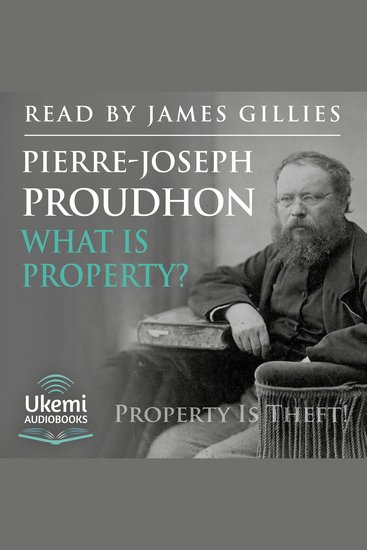
    ‘Property is Theft’, a phrase which has passed into common parlance, was the rallying call of Pierre-Joseph Proudhon’s political treatise What Is Property? Proudhon (1809-1865) was both admired and excoriated. A political theorist of the first order, he was vilified in his native France by the Communists and the Monarchists alike, though admired by Karl Marx as well as many in the nation’s academia and judiciary who valued the clarity of his thought and analytical method.  
     
    He criticised both Right and Left (the very definition of French political thinking), describing them as two sides of the same coin. Their solutions to society’s ills, he said, were like Thesis and Antithesis, based on a common error and both inadequate to the task of healing society. He offered, instead, a third way, which he called his Synthesis. Regarded as the founder of modern Anarchism, his aim was not to engender chaos, as the word anarchy often connotes, but to suggest a workable, political, and economic foundation for society which would promote order and equity for all under the most unfettered conditions of individual liberty.  
     
    Proudhon grew up in poverty, and was home schooled as a child, but received a bursary in his youth sufficient to allow him to attend the City College in his home town (though not sufficient, it seems, to buy him shoes). There, he discovered the library which introduced him to a world, classical and contemporary, previously denied him. Lacking wealth or contacts, he worked variously as a printer, a compositor and proof-reader by day and an essayist by night, learning Latin along the way to assist in his work. In 1830, a friend, a scholar, invited Proudhon to join him in Paris to pursue his philosophical writings full time. When a cholera outbreak forced his return home, Proudhon spent the next few years juggling his two careers. In 1839, he applied for a pension (bursary) at the Academy of Besançon which obliged him to write works on its behalf.  
     
    What Is Property?, published in France in 1840, was his first. It was so controversial that little else followed. However, it established his reputation, and he was eventually able to pursue his philosophical work full time. What Is Property? (First Memoir) attempts to uncover the roots of poverty and associated social ills and examines different attitudes to poverty and wealth from the Greeks to the present day. Proudhon quickly identifies a common thread, property, which he distinguishes from possession, and argues that only a fundamental, though gradual, abandonment of property (as an asset) and all that flows from it, can rescue society from its current conflicts. The memoir seeks to illuminate the underlying causes of war, poverty, slavery, and oppression and points the way to a solution. In effect, it is a practical manual for the survival of mankind. The Second Memoir (1841), included on this recording, is Proudhon’s response to the criticisms of the First Memoir, initially uncomprehending and then self-assured by turns. What Is Property? is Proudhon’s masterwork. It divides opinion, but no one who hears it can come away with their view of their own world unchanged.  
     
    Translation: Benjamin R. Tucker.
    Show book
  • Portuguese Empire - Historical Overview of One of the Most Powerful Trading Routes in Europe - cover

    Portuguese Empire - Historical...

    Kelly Mass

    • 0
    • 0
    • 0
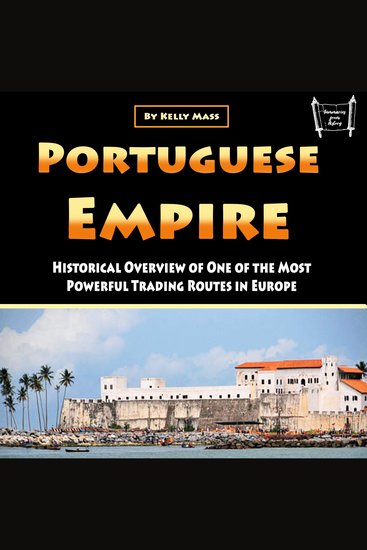
    The Portuguese Empire comprised a vast network of colonies, factories, and overseas territories established by Portugal. Beginning with the capture of Ceuta in North Africa in 1415 and continuing until the handover of sovereignty over Macau to China in 1999, it stands as one of the longest-lasting empires in European history. The empire's roots can be traced back to the 15th century, and by the early 16th century, it had established a global presence with strategic bases in North and South America, Africa, Asia, and Oceania. 
    The rise of the Portuguese Empire coincided with the dawn of the Age of Discovery, a period characterized by exploration and expansion. Following the Reconquista, which concluded in 1492, Portuguese sailors embarked on expeditions along the African coast and the Atlantic archipelagos starting in 1418. Leveraging advancements in navigation, mapping, and maritime technology, particularly the caravel—a vessel adept at oceanic travel—they aimed to uncover a sea route to the lucrative spice trade of the East. Key milestones during this era included Bartolomeu Dias’s successful rounding of the Cape of Good Hope in 1488 and Vasco da Gama’s historic arrival in India in 1498. Around 1500, Pedro Álvares Cabral arrived at the shores of Brazil, either by chance or as part of a broader imperial strategy.
    Show book
  • Purpose - 'But what about you?' Jesus asked' (Matthew 16:15) - cover

    Purpose - 'But what about you?'...

    Peter Walker

    • 0
    • 0
    • 0
    When we enter through the Gate of Jesus – by repentance and faith - we enter into his eternal kingdom. In that moment, we become citizens of heaven. Yes, we still find ourselves here on earth, but everything has changed. Earth is no longer our home nor our future. Once we belonged to this world, and it was all we had, all we could invest in and ‘build’. But now we belong to a different kingdom, we serve a different King, and we live to advance his kingdom. We have a mission now – sometimes in secret, sometimes overt – but always a mission: to build the kingdom of God.‘I laid a foundation… someone else is building on it… their work will be shown for what it is, because the Day will bring it to light…’ (1 Corinthians 3:10-13)(Philippians 3:20; 2 Corinthians 5:16; Matthew 16:15-20)
    Show book
  • Lift Off - 12 Things to Know Before Selling Your Business - cover

    Lift Off - 12 Things to Know...

    Sharon B. Heaton

    • 0
    • 0
    • 0
    You may have contemplated selling your business for some time. Perhaps someone recently approached you with an offer, catching you off guard. You don't know whether it's a fair price or how to proceed. 
     
    No matter where you are in the process, Lift Off! What You Need to Know to Sell Your Business will guide you through preparing your company for sale and navigating the M&A journey. It explains in simple terms what you need to do. 
     
    You'll get a working knowledge of the entire sale process. You'll understand how potential buyers calculate your company's value as a "machine" that generates revenue and profit. You'll recognize pitfalls ahead and learn to maintain confidentiality. 
     
    The book will help you determine if your business is valuable to a buyer and what it may be worth. You want the best possible deal and to fully grasp the terms. There are likely aspects of the sale preparation you are unaware of. 
     
    Lift Off! will prepare you to: 
    • Evaluate if your business has value to a new owner 
    • Learn how outsiders calculate a company's value 
    • Identify potential issues in the process 
    • Ensure confidentiality 
    • Manage the emotions all owners feel when selling their "machine" 
     
    Whether you've done lots of preparation or none at all, this book will guide you through the process of selling your business and lifting off to your next life stage.
    Show book
  • Freedom For All - cover

    Freedom For All

    Neville Goddard

    • 0
    • 0
    • 0
    Freedom For All by Neville Goddard is a profound exploration of the principles of spiritual freedom and the power of human imagination. In this concise yet impactful work, Goddard delves into the idea that true freedom is achieved through the conscious control of one's thoughts and beliefs, which in turn shape one's reality.Central to Goddard's teachings is the concept that the imagination is a divine tool that can transform circumstances and bring about personal liberation. He posits that every individual has the innate ability to create their desired life through focused imagination and faith. By aligning one's inner beliefs with the feeling of the wish fulfilled, Goddard asserts that external conditions will inevitably conform to these inner convictions.The book is structured to guide readers through the key steps to attaining spiritual and personal freedom:Understanding the Creative Power of Imagination:Goddard explains how imagination is the driving force behind all creation and how it can be harnessed to bring about desired changes in one's life.The Law of Assumption:This principle is about assuming the feeling of the wish fulfilled. Goddard emphasizes that by living in the state of the wish already realized, one sets the stage for its manifestation in reality.Faith and Belief:Goddard highlights the importance of unwavering faith in the process of manifestation. He teaches that belief in the unseen and persistence in the feeling of the desired state are crucial for achieving freedom.Practical Application:Throughout the book, Goddard provides practical exercises and meditations designed to help readers internalize and apply these principles in their daily lives.Freedom For All is not just a theoretical exposition but a practical guide that empowers readers to take control of their mental and emotional states. By doing so, they can break free from limiting beliefs and circumstances, achieving true freedom and fulfillment.Neville Goddard's teachings in this book continue to inspire and empower individuals seeking to unlock their creative potential and live a life of freedom and abundance. Through clear and accessible language, Goddard offers timeless wisdom on the transformative power of the human mind and spirit.
    Show book