Join us on a literary world trip!
Add this book to bookshelf
Grey
Write a new comment Default profile 50px
Grey
Subscribe to read the full book or read the first pages for free!
All characters reduced
The Sun Never Sets - A History of British Global Influence - cover

The Sun Never Sets - A History of British Global Influence

Asif Ahmed Srabon

Publisher: BookRix

  • 0
  • 0
  • 0

Summary

Prepare to be transported through time and across continents with Asif Ahmed Srabon's "The Sun Never Sets: A History of British Global Influence". This richly detailed narrative immerses you in the epic saga of the British Empire, from its modest origins to the pinnacle of power, weaving a captivating tale of triumphs, challenges, and the indelible legacy that shaped our world.
Available since: 12/20/2023.
Print length: 53 pages.

Other books that might interest you

  • WORKBOOK & SUMMARY for The 7 Habits of Highly Effective People by Stephen R Covey - cover

    WORKBOOK & SUMMARY for The 7...

    BOOK TIGERS

    • 0
    • 0
    • 0
    Do you sometimes look at others and wonder how they became so successful? 
    Would you like to emulate them and build your own success? 
    Successful people seem to have the ability to attract it to them. The reality is most of them follow just 7 simple habits that keep them on the right track. By following these habits, you have the best chances of success, and the good news is that you can now learn them for yourself. 
    Inside Workbook for The 7 Habits of Highly Successful People by Stephen R. Covey, is information to help you discover the secrets of success, with chapters on: 
    ·      An overview of the 7 essential habits 
    ·      How to be always proactive 
    ·      The importance of personal management 
    ·      How to think like a winner 
    ·      Empathy in communication 
    ·      And lots more… 
    Covering the 7 most important habits for success, this book promises to change your perspective and your prospects, just by adopting them and providing yourself with the platform you always wanted. 
    DISCLAIMER: 
    This is an UNOFFICIAL Workbook and Summary, and not the original book. It is designed to record all the key points of the original book. It helps you get an overview before or after reading the original book.
    Show book
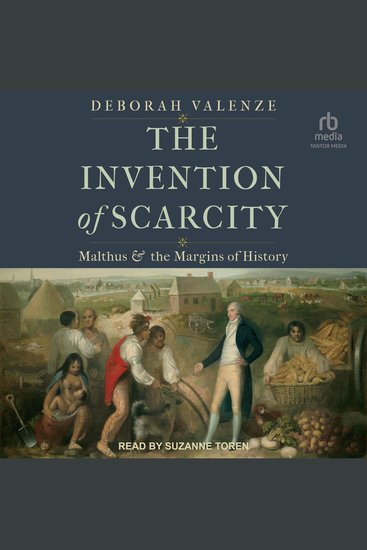
  • The Invention of Scarcity - Malthus and the Margins of History - cover

    The Invention of Scarcity -...

    Deborah Valenze

    • 0
    • 0
    • 0
    With the publication of Essay on the Principle of Population and its projection of food shortages in the face of ballooning populations, British theorist Thomas Robert Malthus secured a leading role in modern political and economic thought. In this startling new interpretation, Deborah Valenze reveals how canonical readings of Malthus fail to acknowledge his narrow understanding of what constitutes food production. 


    Valenze returns to the eighteenth-century contexts that generated his arguments, showing how Malthus mobilized a redemptive narrative of British historical development and dismissed the ways that people adapted to the challenges of subsistence needs. She uses history, anthropology, and food studies to redirect our attention to the margins of Malthus's essay, where activities such as hunting and gathering were rendered extraneous. She demonstrates how Malthus's omissions and his subsequent canonization provided a rationale for colonial imposition of British agricultural models, regardless of environmental diversity. 


    By broadening our conception of human livelihoods, Valenze suggests pathways to resistance against the hegemony of Malthusian political economy. She invites us to imagine a world where monoculture is in retreat and the margins are recentered as spaces of experimentation, nimbleness, and human flourishing.
    Show book
  • England’s Entry into North America: The History of the First English Expeditions and Settlements in the Western Hemisphere - cover

    England’s Entry into North...

    Editors Charles River

    • 0
    • 0
    • 0
    Nearly 20 years before Jamestown was settled, the English established one of the earliest colonies in North America around the Chesapeake Bay region, until the colony had over 100 inhabitants. Like other early settlements, Roanoke struggled to survive in its infancy, to the extent that the colony’s leader, John White, sailed back to England in 1587 in an effort to bring more supplies and help. However, the attempts to bring back supplies were thwarted by the Spanish in the midst of the Anglo-Spanish War going on at the time, and it was not until 1590 that White reached Roanoke again. What White found when he came back to Roanoke led to one of the most enduring mysteries in American history. Despite the fact he had left over 100 people in Roanoke in 1587, White returned to literally nothing. 
    	Jamestown is fondly remembered today for being the first permanent English settlement in the colonies, but it was not fondly remembered by those who lived and died there. The English quickly learned it would be difficult to establish a permanent settlement because of the poor weather, the swampy terrain, the hostile natives living nearby, and the general inexperience and ineptitude of the English settlers. During their first winter, everyone nearly starved, and more than half of the settlers died. By the end of the winter of 1609-1610, known as the “starving time”, barely 10% of the settlers were still alive.  
    	Though the Virginian colonists had difficulty in the beginning, by the late 1620s the Chesapeake area was thriving, having become a haven for those seeking economic opportunity in the new world. Pressures in England were growing as King Charles I was on the throne. Though Charles I himself was an Anglican, many suspected him of Catholic sympathies, a suspicion not alleviated by Charles I marriage to a French Catholic princess.
    Show book
  • The Super Cadres - ANC Misrule in the Age of Deployment - cover

    The Super Cadres - ANC Misrule...

    Pieter Du Toit

    • 0
    • 0
    • 0
    After taking power, the ANC implemented its policy of cadre deployment. It sought command of all levers of power, from the Cabinet, through the civil service, down to municipal level.
    Despite the party recently lasing its majority, cadre deployment will ensure that the ANC maintains its iron grip on power and patronage, and it remains fused with the state.
    In The Super Cadres, bestselling author Pieter du Toit exposes how Nelson Mandela and Thabo Mbeki laid the foundation for complete ANC control of the state, how Jacob Zuma's ANC exploited it and why Cyril Ramsphosa is complicit in the destruction that followed.
    It is a searing critique of the ANC's desire for untrammelled power.
    Show book
  • 369 Manifestation Method - Overcome Hidden Blocks & Manifesting Mistakes Unlock Inner Alignment & Abundance Mindset and Transform Your Life with Clarity and Confidence - cover

    369 Manifestation Method -...

    S. C. Rowse

    • 0
    • 0
    • 0
    Unlock the secret to manifesting your dream life, even if you've tried countless Law of Attraction techniques before and saw no results.  
    Are you constantly dreaming about the life you truly desire but feel stuck in your current reality?  
    Have you tried every manifestation technique out there, but still don't see results?  
    Are you tired of self-proclaimed gurus promising quick fixes, but leaving you with shattered dreams?  
    Don't let these struggles dictate your fate!  
    You see, the art of manifesting your dream life doesn’t have to be an uphill battle. It can be quite simple, even if you've tried and failed before. Based on the principles of quantum physics and the revered 369 method, this book is the answer to your dreams.  
    This transformative guide helps you unlock your inner alignment, develop an abundance mindset, and implement proven success strategies for achieving your life goals.  
    Here's just a glimpse of the empowering strategies that you will discover inside this book:  
    ★ Understand the quantum physics behind manifestation, demystifying the art of making your dreams a tangible reality.  
    ★ Explore the obscure origin, theory, and science behind the powerful 369 manifestation method - Nikola Tesla's 'divine code.'  
    ★ Discover the most common manifestation and law of attraction mistakes made by beginners and veterans alike – and how you can avoid them.  
    ★ Uncover your hidden blocks and limiting beliefs that are holding you back from manifesting your desires and replace them with a growth mindset.  
    ★ Develop a foolproof daily manifestation routine using the 369 method that aligns your vibrations with the universe to bring your desires to fruition.  
    If you are ready to embark on a journey that overflows with abundance, success, and fulfillment, don't hesitate! Listen to it now! 
    Download your gift below!
    Show book
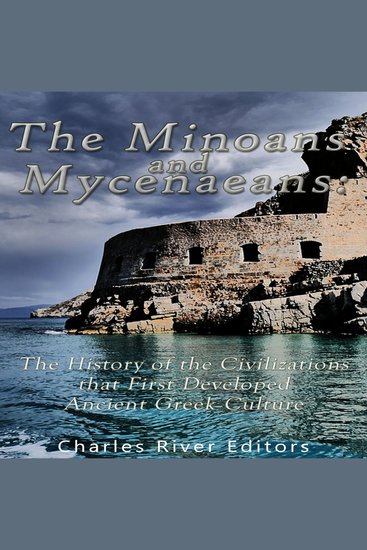
  • Minoans and Mycenaeans The: The History of the Civilizations that First Developed Ancient Greek Culture - cover

    Minoans and Mycenaeans The: The...

    Editors Charles River

    • 0
    • 0
    • 0
    Nearly 2,500 years after the Golden Age of Athens, people across the world today continue to be fascinated by the Ancient Greeks. But who did the Ancient Greeks look up to? The answer to that question can be found in Homer’s The Odyssey, in which Odysseus makes note of “a great town there, Cnossus, where Minos reigned.” It was perhaps the earliest reference to the Minoan civilization, a mysterious ancient civilization that historians and archaeologists still puzzle over, but a civilization that renowned historian Will Durant described as "the first link in the European chain.” 
    Nearly 2,000 years before Homer wrote his epic poems, the Minoan civilization was centered on the island of Crete, a location that required the Minoans to be a regional sea power. And indeed they were, stretching across the Aegean Sea from about 2700-1500 BCE with trade routes extending all the way to Egypt. 
    The Minoans may have been the first link in the “European chain”, leading to the Ancient Greeks and beyond, but questions persist over the origins of the civilization, the end of the civilization, and substantial parts of their history inbetween, including their religion and buildings.  
    In the wake of the Minoans, a Greek culture flourished and spread its tentacles throughout the western Mediterranean region via trade and warfare. Scholars have termed this pre-Classical Greek culture the Mycenaean culture, which existed from about 2000-1200 BCE, when Greece, along with much of the eastern Mediterranean, was thrust into a centuries long dark age. However, before the Mycenaean culture collapsed, it was a vital part of the late Bronze Age Mediterranean system and stood on equal footing with some of the great powers of the region, such as the Egyptians and Hittites. At the same time, the Mycenaeans had more in common with their neighbors from the island of Crete.
    Show book