Junte-se a nós em uma viagem ao mundo dos livros!
Adicionar este livro à prateleira
Grey
Deixe um novo comentário Default profile 50px
Grey
Assine para ler o livro completo ou leia as primeiras páginas de graça!
All characters reduced
Letting Stories Breathe - A Socio-Narratology - cover
LER

Letting Stories Breathe - A Socio-Narratology

Arthur W. Frank

Editora: The University of Chicago Press

  • 0
  • 0
  • 0

Sinopse

Stories accompany us through life from birth to death. But they do not merely entertain, inform, or distress us—they show us what counts as right or wrong and teach us who we are and who we can imagine being. Stories connect people, but they can also disconnect, creating boundaries between people and justifying violence. In Letting Stories Breathe, Arthur W. Frank grapples with this fundamental aspect of our lives, offering both a theory of how stories shape us and a useful method for analyzing them. Along the way he also tells stories: from folktales to research interviews to remembrances. Frank’s unique approach uses literary concepts to ask social scientific questions: how do stories make life good and when do they endanger it? Going beyond theory, he presents a thorough introduction to dialogical narrative analysis, analyzing modes of interpretation, providing specific questions to start analysis, and describing different forms analysis can take. Building on his renowned work exploring the relationship between narrative and illness, Letting Stories Breathe expands Frank’s horizons further, offering a compelling perspective on how stories affect human lives.
Disponível desde: 15/11/2010.
Comprimento de impressão: 297 páginas.
Outros livros que poderiam interessá-lo

  • Cherokee Civil Warrior - Chief John Ross and the Struggle for Tribal Sovereignty - cover

    Cherokee Civil Warrior - Chief...

    W. Dale Weeks

    • 0
    • 0
    • 0
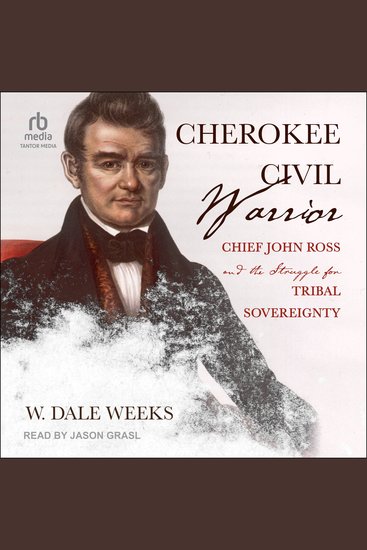
    John Ross served the Cherokee Nation in a public capacity for nearly fifty years, thirty-eight as its constitutionally elected principal chief. Historian W. Dale Weeks describes Ross's efforts to protect the tribe's interests amid systematic attacks on indigenous culture throughout the nineteenth century. At the outset of the Civil War, Ross called for all Cherokees to remain neutral in a war they did not support—a position that became untenable when the US withdrew its forces from Indian Territory. The vacated forts were quickly occupied by Confederate troops, who pressured the Cherokees to align with the South. 


    Viewed from the Cherokee perspective, these events can be seen in their proper context, as part of the history of US "Indian policy," failed foreign relations, and the Anglo-American conquest of the American West. This approach also clarifies President Lincoln's acknowledgment of the federal government's abrogation of its treaty obligation and his commitment to restoring political relations with the Cherokees—a commitment abruptly ended when Andrew Johnson sought to punish the Cherokees for their perceived disloyalty. 


    Centering a Native point of view, this book recasts and expands what we know about John Ross, the Cherokee Nation, its commitment to maintaining its sovereignty, and the Civil War era in Indian Territory.
    Ver livro
  • The Shortest History of The Crown - cover

    The Shortest History of The Crown

    Stephen Bates

    • 0
    • 0
    • 0
    'There have been scores of books about the monarchy but few, if any, as fearless and perceptive as this is... Bates tells it like it is, covering every aspect with rare humour and intelligence. I couldn't recommend it more highly.' LITERARY REVIEW on ROYALTY INCAmidst the turbulence and invasions, upheaval and dissent that characterise British history, one thing has remained remarkably stable. Although there are other monarchies, Britain's Crown stands out due to the continuity of its traditions, and its ability to adapt.There's a reason why schoolchildren still learn about the Kings and Queens: it's their power struggles and subtle compromises that have shaped the nation we inhabit today. When members of the Royal family go on 'walkabouts', they do so because monarchs stretching back to King Alfred understood the need to be seen by their subjects, and the dire consequences of remaining aloof (or abroad). When they give interviews, or accept taxes, they do so as part of a long series of engagements with other, almost-equally powerful operators: Church, Parliament, the nobility.In this sprightly commentary on the Crown's 1,800-year-long story, Stephen Bates provides a dazzling insight into Royal custom and ritual, whilst depicting the individuals behind the myth with compassion and wit. And as our ageing Queen prepares to pass the baton, he asks us all to consider: could we ever do without the Crown?
    Ver livro
  • Rise and Fall of the Stuart Dynasty in Britain The: The History of the Stuarts from the Tudor Era to the Glorious Revolution and the Jacobites - cover

    Rise and Fall of the Stuart...

    Editors Charles River

    • 0
    • 0
    • 0
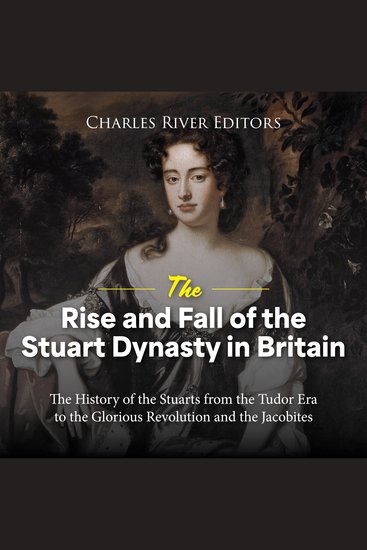
    England has more often been faced with the claims of competing kings and queens than with a period of no monarch at all. The major exception to that rule came in the 11 years between 1649 and 1660, when England was a republic. Following the disastrous reign of Charles I and the civil wars that led to his execution, Parliament and the army ruled England. England’s republican experiment started out as a work of collaboration and compromise; lords, army officers and members of Parliament (MPs) worked together to find a political settlement that did not include the despised royal House of Stuart. Nonetheless, religious and political division made collective rule unworkable, and ultimately, one man emerged from the chaos to rule the country. He had risen from a humble background to become the leading general of the Civil Wars, and as a man of staunch beliefs and ruthless pragmatism, he controlled England from 1653-1658 under the title of Lord Protector. In essence, he was a king in all but name. That man was Oliver Cromwell, and in the popular imagination, Cromwell has overshadowed the rest of the leaders of the parliamentary cause and the New Model Army.  
    Cromwell’s death would lead to a restoration of the royal line, but an uprising of a completely different nature would soon unfold on English soil – the Glorious Revolution, an intriguing story of a power war exacerbated by ruthless ambition, under-the-table plotting, and the treachery of familial betrayal. That said, it’s important to remember that the deposed James II did try to return to England, and there would be generations of war waged for the Stuart cause by the Jacobites, who were not only supporters of the exiled Stuart monarchy, but also against the political and religious settlements agreed to across the British Isles. It’s no surprise the Jacobites continue to interest so many people, as do the plot twists, near misses, and “what-ifs” involved. 
    Ver livro
  • Headlines That Matter - How News Moves Markets - cover

    Headlines That Matter - How News...

    Kavita Chandran, Saldene Lyte,...

    • 0
    • 0
    • 0
    An in-depth exploration of how breaking news affects investor sentiments and trader decisions―and ultimately the stock marketGlued to their screens for news alerts, financial traders must quickly decipher which ones are most reliable in order to make effective trading decisions. Journalists know that the headlines they craft must instantly grab the attention of a trader.This book focuses on the relatively unknown "Headlines" desk in newswire services, where journalists type breaking news for subscribers and the public. Drawing on their experiences as former Bloomberg headline writers, Chandran and Lyte reveal the processes of these teams that deftly link the two sides of news: information and interpretation.The insights this book offers will benefit students of both business journalism and finance, as well as CEOs, corporate communications directors, wealth managers, investors, and traders.
    Ver livro
  • Inside the Nazi Ring - A Naval Attaché in Sweden 1940-45 - cover

    Inside the Nazi Ring - A Naval...

    H.M. Denham

    • 0
    • 0
    • 0
    On the morning of April 9, 1940, German forces occupied Denmark and invaded Norway, leaving Sweden as the only neutral country in Scandinavia. 


    It was to this country, surrounded by Axis forces, that Captain H. M. Denham was posted as Naval Attaché, arriving after evading capture by the Nazi Wehrmacht in the summer of 1940. 


    Over the course of the next five years Captain Denham used his position to covertly provide valuable intelligence to the British military, such as the Bismarck's attempt to break into the Atlantic Ocean and raid Allied shipping. Thanks to his information, the terrifying battleship was sunk just eight days later. 


    The Swedish were suspicious of Denham, resulting in the Swedish Secret Police even bugging his flat, yet he remained free and continued to acquire and pass on information throughout the war. 


    In Inside the Nazi Ring, Denham gives vivid accounts of his meetings with numerous important political and military figures, such as King Gustav V of Sweden, Field Marshal Mannerheim of Finland, Admiral Raeder, leader of the German Navy, and the Soviet minister, Alexandra Kollontay, as well as various members of the Nordic intelligence services.
    Ver livro
  • Rare Recording of Carl Jung A - Volume 2 - cover

    Rare Recording of Carl Jung A -...

    Carl Jung

    • 0
    • 0
    • 0
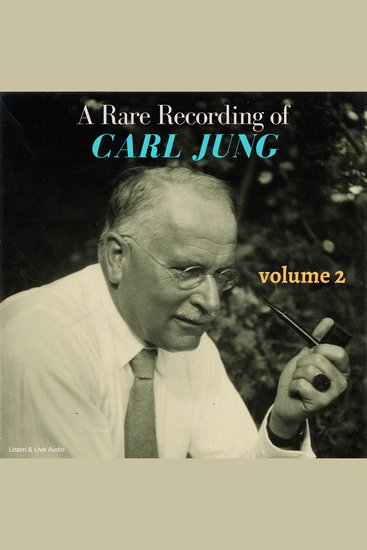
    Carl Gustav Jung (July 26, 1875 - June 6, 1961) was a Swiss psychiatrist and psychoanalyst who founded analytical psychology. Jung's work was influential in the fields of psychiatry, anthropology, archaeology, literature, philosophy, and religious studies. Working as a research scientist, Jung came to the attention of Sigmund Freud, and the two men conducted a lengthy correspondence for a while. However, while Jung worked on his Psychology of the Unconscious, tensions manifested between him and Freud because of various disagreements, including those concerning the nature of libido. While Jung did think libido was an important source for personal growth, unlike Freud, he did not believe that libido alone was responsible for the formation of the core personality.
    Ver livro