Junte-se a nós em uma viagem ao mundo dos livros!
Adicionar este livro à prateleira
Grey
Deixe um novo comentário Default profile 50px
Grey
Assine para ler o livro completo ou leia as primeiras páginas de graça!
All characters reduced
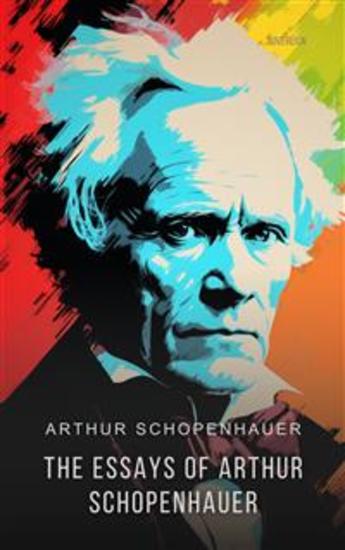
The Essays of Arthur Schopenhauer - The Wisdom of Life - cover
LER

The Essays of Arthur Schopenhauer - The Wisdom of Life

Arthur Schopenhauer

Editora: Interactive Media

  • 0
  • 0
  • 0

Sinopse

"The Essays of Arthur Schopenhauer: The Wisdom of Life" is a collection of thought-provoking essays by the renowned philosopher Arthur Schopenhauer. In this captivating compilation, Schopenhauer offers profound insights into the human condition, the pursuit of happiness, and the quest for meaning in life. Drawing upon his keen observations and introspective analysis, Schopenhauer explores various aspects of human existence, shedding light on the complexities of life's challenges and the search for fulfillment. He delves into the nature of desires, the importance of self-awareness, and the ways in which we can navigate the inevitable hardships of existence.
Disponível desde: 14/07/2023.
Comprimento de impressão: 102 páginas.

Outros livros que poderiam interessá-lo

  • On My Watch - Leading NATO in a Time of War - cover

    On My Watch - Leading NATO in a...

    Jens Stoltenberg

    • 0
    • 0
    • 0
    From the former secretary general of NATO, an honest and candid account of a dramatic decade as the leader of the world’s most important military alliance. 
      
    When Jens Stoltenberg took office as secretary general of NATO in 2014, the world was already changing. What followed was a decade marked by war, diplomatic crises, and decisions that helped shape the West’s shared security. 
      
    On My Watch takes readers behind closed doors and offers rare insight into how the world’s most powerful military alliance handles crises. Stoltenberg describes the effort to keep NATO united and addresses key issues, such as the war in Ukraine, NATO’s withdrawal from Afghanistan, relations with Russia and China, and cooperation with world leaders including Angela Merkel, Donald Trump, and Volodymyr Zelenskyy. 
      
    This is not a book about division. It is a story of unity, of friendship—and of why NATO still matters. Through his reflections on disagreements and dilemmas, he offers a unique view into the art of diplomacy and the hard choices that must be made when global peace is at stake. He ultimately shows why openness is essential to preserve cohesion—and to face the challenges of tomorrow.
    Ver livro
  • A Journey into Buddhism - cover

    A Journey into Buddhism

    Elizabeth J. A. Harris

    • 0
    • 0
    • 0
    This is an audiobook of Bodhi Leaves No. 134 by Elizabeth J. A. Harris, A Journey into Buddhism narrated by Ethan Christy. 
     
    Excerpt: 
    "The themes of the talks are rooted in my journey, as a Christian, into Buddhism. In the mid-1980s I felt the need to ’let go’ of my own religious conditioning to enter the world of another faith. It grew from a conviction that people with an interest in religion should not remain imprisoned within one framework but should explore others. The choice of Buddhism and Sri Lanka was a natural one for me. Buddhism’s emphasis on meditation and non-violence touched my own interests as a Christian, and a visit to Sri Lanka in 1984 had left me with the feeling that my link with the island was not finished. 
    I originally intended to be in Sri Lanka for one year. One year, however, became seven and a half, from 1986 until 1993. My aim throughout was not only to study Buddhism but to practise it. I did not consider myself involved in ’interfaith dialogue’ although I’m sure some perceived my actions in this way. I wanted to enter Buddhism on its own terms, as a human being rather than as a Christian." 
     
    The print edition can be found in the Pariyatti Edition of Collected Bodhi Leaves Vol. V. The eBook of Bodhi Leaves No. 134 can be downloaded from the BPS website.
    Ver livro
  • Scottish Uprisings The: The History of Scotland’s Most Famous Battles against England - cover

    Scottish Uprisings The: The...

    Charles River Editors

    • 0
    • 0
    • 0
    From their very beginnings, England and Scotland fought each other. Emerging as unified nations from the early medieval period, their shared border and inter-related aristocracy created endless causes of conflict, from local raiders known as border reivers to full blown wars between their monarchies. Every century from the 11th to the 16th was colored by such violence, and there were periods when not a decade went by without some act of violence marring the peace. 
    	Out of all of this, the most bitterly remembered conflict is Edward I's invasion during the late 13th century. After Edward’s death, the English were eventually beaten back at the famous Battle of Bannockburn in 1314, and thus the early 14th century was a period featuring some of Scotland's greatest national heroes, including William Wallace and Robert the Bruce. It still resonates in the Scottish national memory, all the more so following its memorable but wildly inaccurate depiction in the 1995 film Braveheart, which had Scottish audiences cheering in cinemas. William Wallace is one of the most famous freedom fighters in history, and over 700 years after his death he is still remembered as Scotland’s beloved hero. But while the movie Braveheart helped make him a household name, and he is commemorated across Scotland as a natural leader and a loyal son of his homeland, he is also “the most mysterious of the leaders of the Scottish resistance to Edward I.” 
    England has more often been faced with the claims of competing kings and queens than with a period of no monarch at all. The major exception to that rule came in the 11 years between 1649 and 1660, when England was a republic. Following the disastrous reign of Charles I and the civil wars that led to his execution, Parliament and the army ruled England. That situation was one that would not have been possible without the Bishops’ Wars that preceded it.
    Ver livro
  • Her Lesbian Lover - Complete Bundle - cover

    Her Lesbian Lover - Complete Bundle

    Rainbow Press

    • 0
    • 0
    • 0
    It all began on New Years, on a bar top, in front of an entire crowd. 
      
    But the next day, Jenna wasn’t sure what to do with her coworker Stacy. The bar top scene was hot, yes, but she’s into guys – or is bi – she isn’t sure. 
      
    She isn’t expecting for Stacy to be the one to reject her… which only works to turn Jenna on more. 
      
    What’s hotter than a secret office love affair? 
      
    Screwing your lesbian coworker. 
      
    Stacy and Jenna can’t get enough of one another, even though their hot new boss threatens to come between them. 
      
    When an innocent flirtation goes too far, will Jenna confess just how deeply she cares for Stacy… and will Stacy let her naughty girlfriend go without a spanking?
    Ver livro
  • Mexico a transterritorial nation The challenge of the 21st century - cover

    Mexico a transterritorial nation...

    Tonatiuh Guillén López

    • 0
    • 0
    • 0
    This book is dedicated to the study of the Mexican nation, providing an overview of its two-hundred-year evolution, and particularly analyzing its contemporary profile, which is characterized by unprecedented social reconfiguration sustained by Mexicans residing abroad. As we will show throughout this book´s chapters, the Mexican nation has over the past two centuries followed a complex, sinuous trajectory, conflictive at many points, which step by step built the nation as we know it today, a nation that has not by any means exhausted its vitality or its impetus for continuing to evolve.From now on, the Mexican nation cannot be understood solely on the basis of the population residing within its borders. It must be recognized comprehensively, considering, simultaneously and in equal conditions, people living abroad who hold Mexican nationality. The path ahead is extraordinarily complex, without a doubt. Taking into account its social composition, the 21st century Mexican nation is based and reproduces itself simultaneously within and outside of the territory; therein lies its transterritorial nature.The author is a professor in the UNAM University Program in Development Studies. He has been president of the El Colegio de la Frontera Norte and Commissioner for the National Migration Institute. He is a member of the National System of Researchers and has published widely on topics of migration, northern and southern border studies, regional political issues and modernization of local governments.
    Ver livro
  • Creative Evolution - cover

    Creative Evolution

    Henri Bergson

    • 0
    • 0
    • 0
    Henri Bergson’s highly influential book, ‘Creative Evolution’ (‘Evolution Creatrice’, 1907) established a theory of evolution - called ‘Creative Evolution Theory’ - which gained a considerable following in the first half of the 20th Century. It also helped the author to win the Nobel Prize in 1927 for his work investigating the origins of biological information and divergence in the evolutionary process.  
     
    In this work, Bergson seeks an alternative explanation as to how new forms of life emerge compared to those prevailing at the time. This included both the ‘mechanistic’ or deterministic explanations of biological science on the one hand, and on the other the ‘finalist’ or strictly teleological explanation of those who believed in the hand of a ‘Creator’ or God, coordinating life in a divine plan. 
     
    Creative Evolution proposes a third explanation in what Bergson calls élan vital’ or ‘vital impetus’, a force that infuses all matter and drives it forward into an ever-changing and infinite variety of living forms. This appears as a vital impetus that can also be related to humanity’s own creative life force. Bergson’s book builds on his ‘Theory of Time’ as set forth in works such as ‘Matter and Memory’ and ‘Time and Free Will’.  In these works, and in the present volume, Bergson sees continuous ‘duration’ as real time, as opposed to the way in which time is divided up into measured units by the ‘organising’ mind of science. 
     
    Life, as we really experience it, is subject to constant change and our tendency to explain evolutionary change by looking only at ‘ends’ achieved rather than the processes by which they emerge, divorces us from the life force itself.  
     
    Instead, Bergson feels we need to reengage with our instincts as well as with our intelligence in order to understand the evolutionary process, as both co-exist to some extent within us, all forms of life having a common origin in that instinctual, innate knowledge of simpler life forms. Though these may be unconscious or semi-conscious, they are, in Bergson’s view, much more in touch with the ever-changing nature of real time than the analytical and rational knowledge of our species 
     
    As he writes:  “Our thought, in its purely logical form, is incapable of presenting the true nature of life, the full meaning of the evolutionary movement. Created by life, in definite circumstances, to act on definite things, how can it embrace life, of which it is only an emanation or an aspect?”  
     
    It is to attempt an answer to this question that ‘Creative Evolution’ directs its attention.
    Ver livro