Join us on a literary world trip!
Add this book to bookshelf
Grey
Write a new comment Default profile 50px
Grey
Subscribe to read the full book or read the first pages for free!
All characters reduced
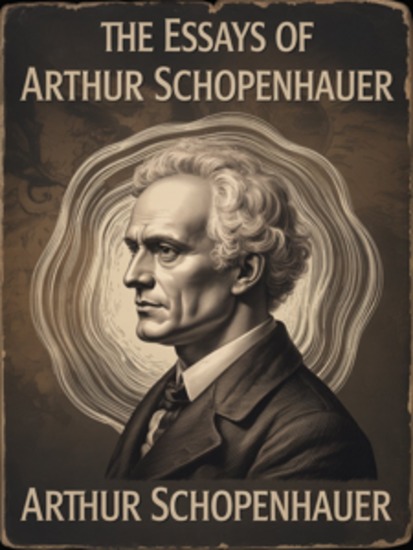
The Essays of  Arthur Schopenhauer (translated) - cover

The Essays of  Arthur Schopenhauer (translated)

Arthur Schopenhauer

Translator David De Angelis

Publisher: David De Angelis

  • 0
  • 0
  • 0

Summary

If my goal in these pages were to present a comprehensive set of advice and maxims to guide life, I would have to repeat the numerous rules, some of them excellent, that have been elaborated by thinkers of all ages, from Theognis and Solomon 1 to La Rochefoucauld; and in doing so, I would inevitably impose on the reader a great deal of trite and hackneyed platitudes. But the fact is that in this work I claim even less to exhaust the subject than in any of my other writings.
Available since: 09/05/2025.

Other books that might interest you

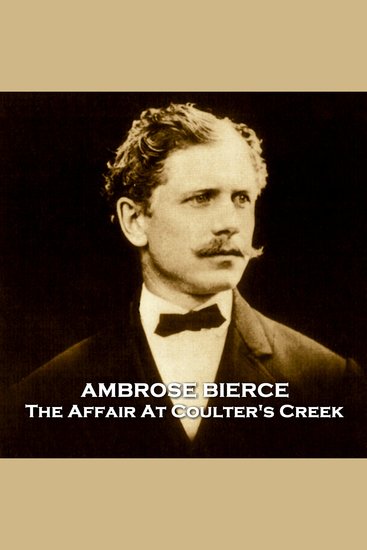
  • The Affair At Coulter's Creek - From their pens to your ears genius in every story - cover

    The Affair At Coulter's Creek -...

    Ambrose Bierce

    • 0
    • 0
    • 0
    Ambrose Gwinnett Bierce was born on 24th June 1842 at Horse Cave Creek in Meigs County, Ohio. His parents were poor but they introduced him to literature at an early age, instilling in him a deep appreciation of books, the written word and the elegance of language.  
    Growing up in Koscuisko County, Indiana poverty and religion were defining features of his childhood, and he would later describe his parents as “unwashed savages” and fanatically religious, showing him little affection but always quick to punish. He came to resent religion, and his introduction to literature appears to be their only positive effect. 
    At age 15 Bierce left home to become a printer’s devil, mixing ink and fetching type at The Northern Indian, a small Ohio paper. Falsely accused of theft he returned to his farm and spent time sending out work in the hopes of being published. 
    His Uncle Lucius advised he be sent to the Kentucky Military Institute. A year later he was commissioned as an Officer.  As the Civil War started Bierce enlisted in the 9th Indiana Infantry Regiment.  
    In April 1862 Bierce fought at the Battle of Shiloh, an experience which, though terrifying, became the source of several short stories. Two years later he sustained a serious head wound and was off duty for several months. He was discharged in early 1865.  
    A later expedition to inspect military outposts across the Great Plains took him all the way to San Francisco. He remained there to become involved with publishing and editing and to marry, Mary Ellen on Christmas Day 1871.  They had a child, Day, the following year.  
    In 1872 the family moved to England for 3 years where he wrote for Fun magazine. His son, Leigh, was born, and first book, ‘The Fiend’s Delight’, was published.  
    They returned to San Francisco and to work for a number of papers where he gained admiration for his crime reporting. In 1887 he began a column at the William Randolph Hearst’s San Francisco Examiner.  
    Bierce’s marriage fell apart when he discovered compromising letters to his wife from a secret admirer. The following year, 1889 his son Day committed suicide, depressed by romantic rejection. 
    In 1891 Bierce wrote and published the collection of 26 short stories which included ‘An Occurrence at Owl Creek Bridge’.  Success and further works including poetry followed.  
    Bierce with Hearst’s resources helped uncover a financial plot by a railroad to turn 130 million dollars of loans into a handout. Confronted by the railroad and asked to name his price Bierce answered “my price is $130 million dollars. If, when you are ready to pay, I happen to be out of town, you may hand it over to my friend, the Treasurer of the United States”.  
    He now began his first foray as a fabulist, publishing ‘Fantastic Fables’ in 1899.  But tragedy again struck two years later when his second son Leigh died of pneumonia relating to his alcoholism.  
    He continued to write short stories and poetry and also published ‘The Devil’s Dictionary’.  
    At the age of 71, in 1913 Bierce departed from Washington, D.C., for a tour of the battlefields where he had fought during the civil war. At the city of Chihuahua he wrote his last known communication, a letter to a friend. It’s closing words were “as to me, I leave here tomorrow for an unknown destination,” Ambrose Bierce then vanished without trace.
    Show book

  • From CIA to CEO - Unconventional Life Lessons for Thinking Bigger Leading Better and Being Bolder - cover

    From CIA to CEO - Unconventional...

    Rupal Patel

    • 0
    • 0
    • 0
    From CIA to CEO is an ops manual for entrepreneurs that reveals how the esoteric techniques of the CIA can help anyone find their voice, discover their potential, and thrive in the world of business. 


    Agent-turned-entrepreneur Rupal Patel shares the unique skills she developed as a woman and as a field agent in the high-octane, alpha-male world of the CIA, and combines those clandestine insights with her experience as a business leader and mentor. She reveals how methods such as Profiling and Situational Awareness help amplify strengths and build resilience. How game-changing new frameworks like Identity Driven Leadership and Personal Energy Mapping instill drive, purpose, and conviction. And how the CIA mindset encourages you to remake the rules to find your own path and reach your goals. 


    Full of motivating stories and unique exercises, From CIA to CEO will equip you with the all the tools you'll need for achieving Mission Success.
    Show book
  • Forgotten Authors The - Volume 9 - Rina Ramsay to James Stephens - cover

    Forgotten Authors The - Volume 9...

    Rina Ramsay, William Pett Ridge,...

    • 0
    • 0
    • 0
    Throughout the long centuries of human history is the want, and the need, to share information, to exchange ideas and for that knowledge and experience, for curiosity and learning, to be the basis of a civil society. 
    In literature the ambition is much narrower.  In order to be known, to be popular, you had to be published.  And for that people had to know you existed and your ideas worth reading.  Obviously for most of humanity’s time people couldn’t read and texts couldn’t be published in any great number. 
    In the 15th Century Gutenberg’s printing press began the revolution to address the second and by the 19th century had gathered pace with startling speed and mass distribution.  Education for the many was brought in to help people understand more of their world and, with new skills, how to have a better place within it.  Now, if the powers that owned the presses and means of distribution agreed an audience would now be able to avail themselves of your ideas, your printed words.  
    Sadly, in the thirst for the new, the recent and the past fell from sight, relegated to dark corners and dusty shelves.   
    But the printed word is rarely without someone, somewhere busying themselves through piles of papers and books rediscovering what a good story is, whatever its age. 
    Sadly, in the thirst for the new, the recent and the past fell from sight, relegated to dark corners and dusty shelves.    
    But the printed word is rarely without someone, somewhere busying themselves through piles of papers and books rediscovering what a good story is, whatever its age. 
    In this volume we offer up a small selection of those talents whose time has now come again.
    Show book
  • The Insider - How the Kiplinger Newsletter Bridged Washington and Wall Street - cover

    The Insider - How the Kiplinger...

    Rob Wells

    • 0
    • 0
    • 0
    When Willard M. Kiplinger launched the groundbreaking Kiplinger Washington Letter in 1923, he left the sidelines of traditional journalism to strike out on his own. With a specialized knowledge of finance and close connections to top Washington officials, Kiplinger was uniquely positioned to tell deeper truths about the intersections between government and business. With careful reporting and insider access, he delivered perceptive analysis and forecasts of business, economic, and political news to busy business executives, and the newsletter's readership grew exponentially over the coming decades. 


    More than just a pioneering business journalist, Kiplinger emerged as a quiet but powerful link between the worlds of Presidents Hoover and Roosevelt, and used his Letter to play a little-known but influential role in the New Deal. Part journalism history, part biography, and part democratic chronicle, The Insider offers a well-written and deeply researched portrayal of how Kiplinger not only developed a widely read newsletter that launched a business publishing empire but also how he forged a new role for the journalist as political actor.
    Show book
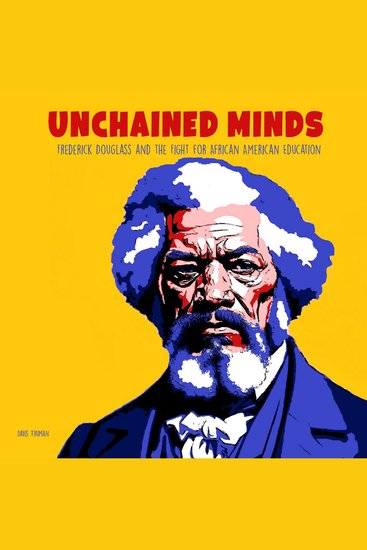
  • Unchained Minds - Frederick Douglass And The Fight For African American Education - cover

    Unchained Minds - Frederick...

    Davis Truman

    • 0
    • 0
    • 0
    This audiobook is narrated by an AI Voice.   
    *Unchained Minds: Frederick Douglass and the Fight for African American Education* delves into the extraordinary life of Frederick Douglass, a man who defied the shackles of slavery through the transformative power of literacy. Born into bondage, Douglass dared to learn what was forbidden: the ability to read and write. This audacious act set him on a path to freedom and made him one of his time's most influential African American voices. 
    This book examines Douglass's relentless pursuit of education as a means of liberation, not just for himself, but for all African Americans. It examines how Douglass's passion for learning fueled his activism and unyielding belief that education was the key to overcoming the horrors of slavery and achieving true equality.  
    *Unchained Minds* is a biography and a powerful testament to the enduring belief that education is the cornerstone of freedom. This compelling account of Frederick Douglass's life and his fight for educational equality will inspire readers to reflect on the transformative power of knowledge and the ongoing fight for justice.
    Show book
  • Wilderness Mum - How I left city life behind to raise a family in nature - cover

    Wilderness Mum - How I left city...

    Kate Barron

    • 0
    • 0
    • 0
    Read by the author, Kate Barron'A truly inspiring story of courage, resilience and the call of the wild. Wilderness Mum is a testament to the extraordinary things we are capable of' - Tim PeakeMost people believe the wild years end when motherhood begins. For me, that’s when they truly started.For years, Kate Barron lived a conventional life as a dedicated teacher in London – but her spirit longed for wilder horizons. Trading her classroom for a backpack, she embarked on a journey that led her from the jungles of Colombia to a windswept Scottish clifftop, where a chance encounter changed everything.There she met Chris Lewis, a homeless ex-paratrooper walking the UK’s entire coastline to heal his past. Their meeting sparked an epic love story and a shared mission: living in a tent for years while raising hundreds of thousands of pounds for charity. But Kate’s biggest challenge was yet to come. Choosing to have a baby without pausing their journey, she navigated pregnancy, childbirth and the realities of new motherhood while living completely outdoors.Wilderness Mum is the extraordinary true story of what happens when you refuse to follow the script. It’s a love letter to the wild, a testament to the strength of the human spirit and an inspiring guide to embracing motherhood without sacrificing the adventure of a lifetime.
    Show book