Join us on a literary world trip!
Add this book to bookshelf
Grey
Write a new comment Default profile 50px
Grey
Subscribe to read the full book or read the first pages for free!
All characters reduced
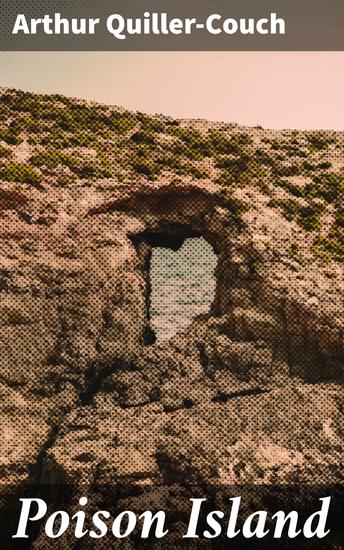
Poison Island - A Thrilling Sea Adventure of Pirates Treasure and Intrigue - cover

Poison Island - A Thrilling Sea Adventure of Pirates Treasure and Intrigue

Arthur Quiller-Couch

Publisher: Good Press

  • 0
  • 0
  • 0

Summary

In "Poison Island," Arthur Quiller-Couch masterfully weaves a narrative that explores the themes of love, betrayal, and redemption against the backdrop of a remote, enigmatic island. The novel is characterized by its lush, descriptive prose and a fluid, almost poetic style that draws the reader into its richly constructed world. Quiller-Couch employs a blend of adventure and psychological complexity, evocatively capturing the isolation of his characters while delving into their intricate emotional landscapes. The novel also reflects the early 20th-century British literary movement, resonating with the works of contemporaries like Joseph Conrad, utilizing vivid imagery and deep psychological insight to engage the reader's imagination. Quiller-Couch, a noted scholar and literary critic, was deeply influenced by his academic background in classical literature and his rich Cornish heritage. His personal experiences in Cornwall, intertwined with his interest in folklore, contribute to the novel's evocative setting and nuanced characterizations. This background imbues the text with a sense of authenticity and emotional resonance, showcasing his ability to blend storytelling with deeper philosophical inquiries. "Poison Island" is not just a tale of adventure but an exploration of the human psyche and interpersonal dynamics. I recommend this book to readers who appreciate lyrical prose and nuanced character development, offering both escapism and introspection in a compelling narrative.
Available since: 08/22/2023.
Print length: 205 pages.

Other books that might interest you

  • A Knot of Ribbon - From their pens to your ears genius in every story - cover

    A Knot of Ribbon - From their...

    Laurence Alma-Tadema

    • 0
    • 0
    • 0
    The bookshelves of British literature are incredible collections that have gathered together centuries of very talented authors.  From these Isles their fame spread and whilst among their number many are now forgotten or neglected their talents endure.  Among them is Laurence Alma-Tadema.
    Show book
  • The Celebrated Jumping Frog of Calaveras County - cover

    The Celebrated Jumping Frog of...

    Mark Twain

    • 0
    • 0
    • 0
    "The Celebrated Jumping Frog of Calaveras County" is an 1865 short story by Mark Twain. It was his first great success as a writer and brought him national attention. The story has also been published as "Jim Smiley and His Jumping Frog" (its original title) and "The Notorious Jumping Frog of Calaveras County". In it, the narrator retells a story he heard from a bartender, Simon Wheeler, at the Angels Hotel in Angels Camp, California, about the gambler Jim Smiley. 
    Jim loves to gamble and will offer to bet on anything and everything, from horse races to dogfights, to the health of the local parson's wife. He catches a frog, whom he names Dan'l Webster, and spends three months training it to jump. When a stranger visits the camp, Jim shows off Dan'l and offers to bet $40 that it can out-jump any other frog in Calaveras County...
    Show book
  • The Escape - cover

    The Escape

    Katherine Mansfield

    • 0
    • 0
    • 0
    " The Escape" is a short story by Katherine Mansfield. It was published in Bliss and Other Stories.
    It was his fault, wholly and solely his fault, that they had missed the train. What if the idiotic hotel people had refused to produce the bill? Wasn’t that simply because he hadn’t impressed upon the waiter at lunch that they must have it by two o’clock? Any other man would have sat there and refused to move until they handed it over.
    Show book
  • 20000 Leagues under the Sea - cover

    20000 Leagues under the Sea

    Jules Verne

    • 0
    • 0
    • 0
    "Around the World in 80 Days" is a classic adventure novel written by Jules Verne, first published in 1872. The story follows Phileas Fogg, a wealthy and precise Englishman, who makes a daring bet that he can circumnavigate the globe in just 80 days. Accompanied by his loyal valet, Passepartout, Fogg embarks on a whirlwind journey using various modes of transportation, from trains and ships to elephants. Along the way, they face numerous obstacles and challenges, including being pursued by a detective who mistakenly believes Fogg is a bank robber. The novel is a thrilling tale of adventure, ingenuity, and perseverance.
    Show book
  • The Quicksand - and other stories - cover

    The Quicksand - and other stories

    J. D. Beresford, P. G....

    • 0
    • 0
    • 0
    Embark on an extraordinary auditory adventure with our digital audiobook version of "The Quicksand and Other Stories." Immerse yourself in timeless tales by renowned authors, where each story unfolds like a carefully crafted masterpiece. Let's delve into the enchanting worlds crafted by J.D. Beresford, P.G. Wodehouse, Stacy Aumonier, and Edith Wharton: 
     
    Looking-Glass, The by J.D. Beresford 
    Journey into the mysterious and thought-provoking realm as Beresford weaves a tale that will challenge your perceptions and leave you questioning reality itself. 
     
    Pots o' Money by P.G. Wodehouse 
    Indulge in the wit and humor of Wodehouse as he takes you on a hilarious escapade filled with quirky characters, unexpected twists, and, of course, the pursuit of pots o' money! 
     
    Where was Wych Street? by Stacy Aumonier 
    Travel back in time to the streets of Wych as Aumonier unfolds a historical mystery that will keep you on the edge of your seat, craving to uncover the secrets hidden within the cobblestone paths. 
     
    The Quicksand by Edith Wharton 
    Immerse yourself in the evocative storytelling of Wharton as she skillfully crafts a tale of love, desire, and the complexities of human relationships set against the backdrop of "The Quicksand."
    Show book
  • Aloysha the Pot - From their pens to your ears genius in every story - cover

    Aloysha the Pot - From their...

    Leo Tolstoy

    • 0
    • 0
    • 0
    Leo Tolstoy was born in 1828 in the Russian province of Tula to a wealthy noble family. As a child, he had private tutors but he showed little interest in any formal education. When he went to the University of Kazan in 1843 to study oriental languages and law, he left without completing his courses.  Life now was relaxed and idle but with some writing also taking place.  Gambling debts forced an abrupt change of path and he joined the army to fight in the Crimean War.  He was commended for his bravery and promoted but was appalled at the brutality and loss of life.  He recorded these and other earlier experiences in his diaries which formed the basis of several of his works. 
    In 1852 ‘Childhood’ was published to immediate success and was followed by ‘Boyhood’ and ‘Youth’. 
    His experience in the army and the horrors he witnessed resulted in ‘The Cossacks’ in 1862 and the trilogy ‘Sevastopol Tales’. After the war he travelled around Europe, visiting London and Paris and meeting such luminaries as Victor Hugo and Charles Darwin.  
    It was now that Tolstoy began his masterpiece, ‘War and Peace’. Published in 1869 it was an epic work that changed literature. He quickly followed this with ‘Anna Karenina’.  
    These successes made Tolstoy rich and helped him accomplish many of his dreams but also brought problems as he grappled with his faith and the lot of the oppressed poor. These revolutionary views became so popular that the authorities now kept him under surveillance.  
    He led a life of asceticism and vegetarianism and put his socialist ideals into practice by establishing numerous schools for the poor and food programmes. He also believed in giving away his wealth, which caused much discord with his wife.  
    His writing continued to bring forth classics such as ‘The Death of Ivan Ilyich’ and many brilliant and incisive short stories such as ‘How Much Land Does A Man Need’.  
    In 1901 Tolstoy was excommunicated from the Church and controversially deselected for the Nobel Prize for Literature. 
    Whilst undertaking a pilgrimage by train in October 1910 with his daughter Aleksandra he caught pneumonia in the nearby town of Astapovo.  Leo Tolstoy died on November 9th, 1910, he was 82.
    Show book