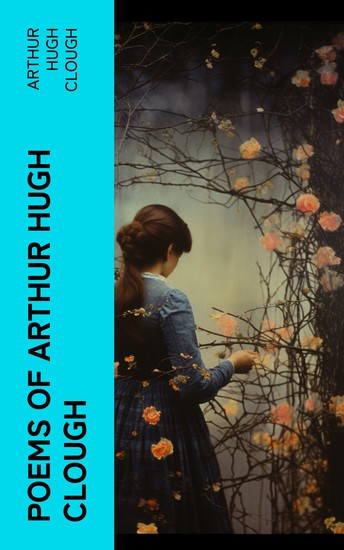
Poems of Arthur Hugh Clough
Arthur Hugh Clough
Publisher: e-artnow
Summary
The author was a nineteenth-century English poet. This book of his collected poems is divided into different sections by subject, starting with his earliest poems.
Publisher: e-artnow
The author was a nineteenth-century English poet. This book of his collected poems is divided into different sections by subject, starting with his earliest poems.
‘Talisman for the Soul’ is an immersive and illuminating collection that expresses a powerful intensity of emotion, exploring overarching themes of human interaction, as well as the human need to transform and adapt as individuals. Written by a poet of rare descriptive power, the poems speak to a world of increasing disconnection, one that is careering towards climate breakdown and ecological destruction. The poems seek to reconnect with the mystery and sacredness of human life by exploring the foundations of human identity through themes that touch us all: love and loss, humour, beauty, joy, relationships, and the natural world.Show book
A short story about an Egyptian young man who wanders around Cairo until he finds himself in the zoo to look at an elephant. He is surprised that the elephant looks at him with the same look as he does, so their minds unite and separate to see the world from the perspective of an elephant tied with a rope to its leg.Show book
The Ravens A flock of ravens floats upon the air over their prey, Like a looming black storm cloud of gloom, In the later hours of the death of the day, They fight each other for room, In the melee, one is injured it falls, Blood and gore fill the air, The air is filled with their dire calls, Little did the observers of this carnage care, To them, it was merely a display of the nature of the raven, Upon the hour they fled, They were neither crazed nor craven, They were happy and well-fed.Show book
An astonishing collection about interconnectedness—between the human and nonhuman, ancestors and ourselves—from National Book Critics Circle Award winner, National Book Award finalist and U.S. Poet Laureate Ada Limón.“I have always been too sensitive, a weeper / from a long line of weepers,” writes Limón. “I am the hurting kind.” What does it mean to be the hurting kind? To be sensitive not only to the world’s pain and joys, but to the meanings that bend in the scrim between the natural world and the human world? To divine the relationships between us all? To perceive ourselves in other beings—and to know that those beings are resolutely their own, that they “do not / care to be seen as symbols”?With Limón’s remarkable ability to trace thought, The Hurting Kind explores those questions—incorporating others’ stories and ways of knowing, making surprising turns, and always reaching a place of startling insight. These poems slip through the seasons, teeming with horses and kingfishers and the gleaming eyes of fish. And they honor parents, stepparents, and grandparents: the sacrifices made, the separate lives lived, the tendernesses extended to a hurting child; the abundance, in retrospect, of having two families.Along the way, we glimpse loss. There are flashes of the pandemic, ghosts whose presence manifests in unexpected memories and the mysterious behavior of pets left behind. But The Hurting Kind is filled, above all, with connection and the delight of being in the world. “Slippery and waddle thieving my tomatoes still / green in the morning’s shade,” writes Limón of a groundhog in her garden, “she is doing what she can to survive.”Show book
drRapture's first collection of [scribbles] consist of his very special[& silly] brand of NSFW/SFW writings. He reads his own works in this [first] collection [True-Lies]. Follow him on the Quinn app or join him on Patreon for more of his contentShow book
Khairani Barokka's uncompromising third collection of poetry amuk sheds light on the devastating and ongoing effects of a single word's mistranslation, and emphasises what exists in opposition to such hostile histories and presents: hope, resistance, and joy. Groundbreaking in its use of form and poetics, amuk deconstructs the brutal workings of oppressive systems to examine how, "through macheted etymology", violence and suffering is replicated through (mis)translation. These radical poems of fury and prayer look towards the vital, living resistance of persisting languages, and resilient peoples.Show book