Join us on a literary world trip!
Add this book to bookshelf
Grey
Write a new comment Default profile 50px
Grey
Subscribe to read the full book or read the first pages for free!
All characters reduced
The Rome Express - cover

The Rome Express

Arthur Griffiths

Publisher: Delhi Open Book

  • 0
  • 0
  • 0

Summary

A mysterious murder on a flying express train, a wily Italian, a charming woman caught in the meshes of circumstantial evidence, a chivalrous Englishman, and a police force with a keen nose for the wrong clue, are the ingredients from which Major Griffiths has concocted a clever, up-to-date detective story.Arthur George Frederick Griffiths was an English author. His works include: The Chronicles of Newgate (1884), In Tight Places: Some Experiences of an Amateur Detective (1900), The Thin Red Line, and Blue Blood (1900), Tales of a Government Official (1902), A Bid for Empire (1902), The Silver Spoon (1903), The Passenger from Calais (1905), Agony Terrace: Some Secrets of the Cynosure Club (1907), The Rome Express (1907) and Thrice Captive (1908).
Available since: 05/28/2024.
Print length: 124 pages.
Other books that might interest you

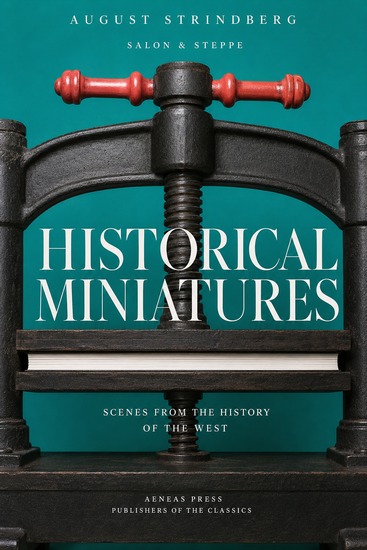
  • Historical Miniatures - Scenes from the History of the West - cover

    Historical Miniatures - Scenes...

    August Strindberg

    • 0
    • 0
    • 0
    Some two dozen scenes from history, each a few pages: the Egyptian bondage, Alcibiades, Socrates, Julian the Apostate, Attila, Peter the Hermit, the Great Czar — Strindberg walking into a room at the moment a life turns, and walking out again. He was a librarian, a telegraph clerk and a journalist before The Red Room made him famous, and painted seascapes when he could not write. These late miniatures are his argument that history is made by people who do not know what they are doing. Fifty-nine plates of portraiture and sea pieces, from David's revolutionary faces to storm scenes by Bonavia and Schaap, run alongside Strindberg's turning points in history.
    Show book
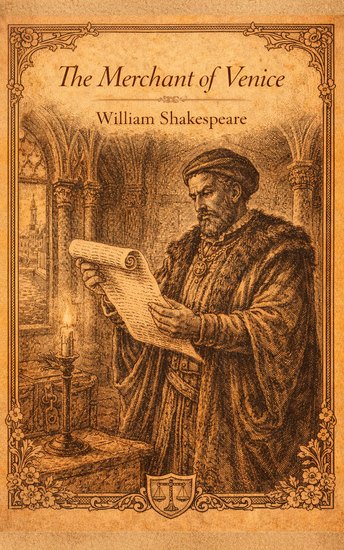
  • The Merchant of Venice - cover

    The Merchant of Venice

    William Shakespeare

    • 0
    • 0
    • 0
    A rich and thought-provoking blend of comedy and drama, The Merchant of Venice is one of William Shakespeare's most complex and compelling plays. Set in the vibrant trading world of Renaissance Venice, the story weaves together themes of mercy and justice, love and loyalty, prejudice and forgiveness.
    
    At the center of the play is Antonio, a Venetian merchant whose fortunes are tied to ships sailing distant seas. When his dear friend Bassanio seeks financial help to court the wealthy heiress Portia, Antonio agrees to secure a loan on his behalf. The money comes from Shylock, a Jewish moneylender who harbors deep resentment toward Antonio. As collateral, Shylock demands a shocking bond: if the loan is not repaid on time, he may claim a pound of Antonio's flesh.
    
    While Bassanio travels to Belmont to win Portia's hand through a test of character and wisdom, Antonio's ships are reported lost, placing him at the mercy of Shylock's unforgiving contract. What follows is one of the most famous courtroom scenes in literature—a tense confrontation where the meaning of justice, mercy, and humanity is fiercely debated.
    
    Through its vivid characters and powerful dialogue, The Merchant of Venice explores enduring moral questions. The play examines the consequences of vengeance, the complexities of religious and cultural conflict, and the transformative power of compassion. Portia's intelligence and courage stand at the heart of the resolution, offering a plea for mercy that resonates far beyond the confines of the stage.
    
    Balancing romance, wit, and high drama, Shakespeare creates a story that challenges audiences to reflect on fairness, tolerance, and the price of rigid justice. Both entertaining and provocative, The Merchant of Venice remains a cornerstone of world literature—a work that continues to spark discussion and interpretation across generations.
    
    Layered, dramatic, and emotionally charged, this timeless play endures as a powerful exploration of human motives and moral choice in a world shaped by commerce, law, and love.
    Show book
  • The Bustan - cover

    The Bustan

    Saadi Shirazi

    • 0
    • 0
    • 0
    The Bustan is one of the greatest masterpieces of Persian literature, written by the celebrated poet and philosopher Saadi Shirazi. Completed in 1257, this timeless work is a collection of poetic narratives and moral reflections that explore the virtues of justice, compassion, humility, wisdom, and righteous living. Through beautifully crafted stories, parables, and verses, Saadi illustrates the enduring values that guide individuals toward ethical conduct and spiritual fulfillment. Drawing upon his extensive travels and keen observations of human nature, he presents memorable tales of kings, scholars, merchants, travelers, and ordinary people, each offering profound lessons on generosity, honesty, patience, gratitude, and the pursuit of virtue.
    Show book
  • The Island of Doctor Moreau - A Castaway Finds a Vivisectionist's Island - cover

    The Island of Doctor Moreau - A...

    H. G. Wells

    • 0
    • 0
    • 0
    A shipwrecked man is taken in on an island where a surgeon works nights and the servants do not walk quite right. Wells wrote it a year after The Time Machine, at the height of the anti-vivisection quarrel, and reviewers called it disgusting; he later called it an exercise in youthful blasphemy. The Law the beast-folk recite is the coldest thing in the book. Sixty moonlit plates by painters including Aivazovsky and Joseph Heard carry the castaway's night sea and its lonely coasts through the whole volume.
    Show book
  • Pride and Prejudice - cover

    Pride and Prejudice

    Jane Austen

    • 0
    • 0
    • 0
    Jane Austen's literary classic.   
    This is the love story of Elizabeth Bennet and Fitzwilliam Darcy, who misjudge, then challenge and change each other. 
    It is also a novel about the search for happiness and self- knowledge in a world of strict social rules, where a woman must marry well to survive.
    Show book
  • The Purloined Letter - cover

    The Purloined Letter

    Edgar Allan Poe

    • 0
    • 0
    • 0
    In one of Edgar Allan Poe’s most brilliant detective tales, C. Auguste Dupin faces a crime that is as much about intellect as it is about cunning. When a highly sensitive letter is stolen from the royal apartments by a shrewd and unscrupulous minister, the police search tirelessly—yet fail to find it. Called upon for help, Dupin applies his unparalleled powers of observation and deduction, proving that the best hiding place may be in plain sight. 
    The Purloined Letter is a masterclass in psychological intrigue and logical reasoning, a classic that continues to inspire the detective fiction genre.
    Show book